You’re staring at a living room that should feel cozy, but instead it feels crowded, blocked, and somehow disorganized even when you’ve already bought a dozen clever storage solutions. The problem isn’t just the square footage—it’s how the furniture you’ve accumulated forces awkward traffic, blocks natural light, and makes daily routines feel chaotic. This article breaks down concrete, actionable fixes you can implement this weekend, tailored to real homes: apartments with rental restrictions, busy households, limited storage, and modest budgets. Expect specific steps, practical trade-offs, and clear decision rules that actually work in small spaces.
1) Create a Use-First Zone: Put the Things You Reach Most Within Easy Reach
A. The Problem
You reach for the same items repeatedly—remote, chargers, coasters, a notebook, the TV guide—yet they’re buried under piles or on the far side of a couch. This creates daily friction, makes the room feel cluttered, and tempts you to move furniture just to access the essentials.
B. Why It Happens
In small living rooms, homeowners often scatter “everyday” items across surfaces and corners because they have nowhere designated to keep them. When there’s no clear home for the things used every day, you end up either stacking items on any available surface or repeatedly shifting furniture to reach them. This is the root of visual clutter and daily annoyance.
C. The Fix
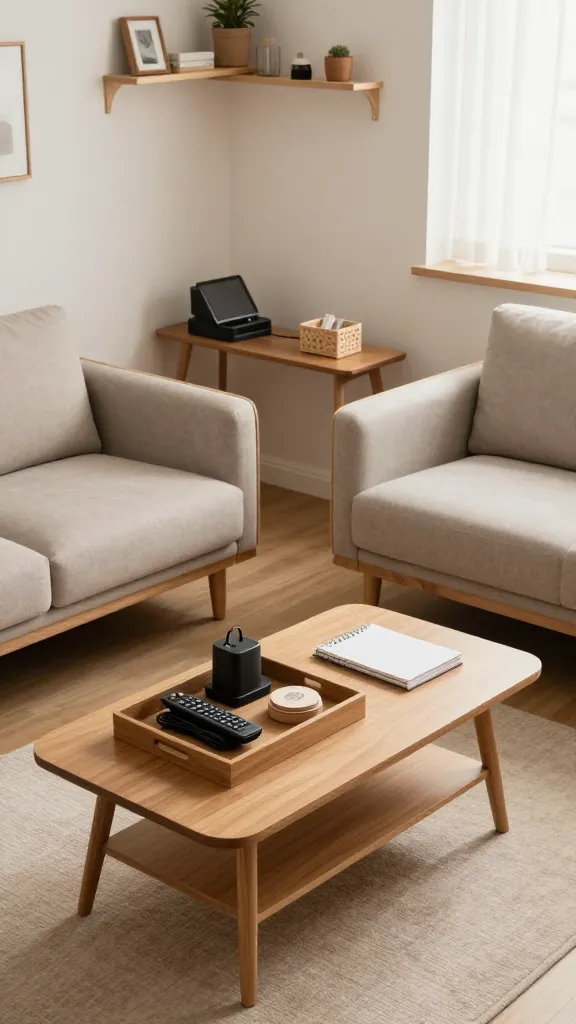
Designate a compact “Use-First” zone that lives within arm’s reach of your primary seating. This is not a full pantry—but a focused pocket of storage for the essentials you touch most during a typical day.
D. How to Do It
1) Identify 5–7 items you use every day in that room (remote, coasters, hand sanitizer, notebook, charging cables, eye drops, reading glasses, snacks).
2) Choose one small, shallow tray or tray-like organizer that fits on a coffee table or on a slim sofa table. If you have a chest or console behind the sofa, use a shallow tray on top of it.
3) Add a second, similar tray or a dedicated drawer insert in a nearby media console for cords, chargers, and small devices. Label only if necessary for multiple users.
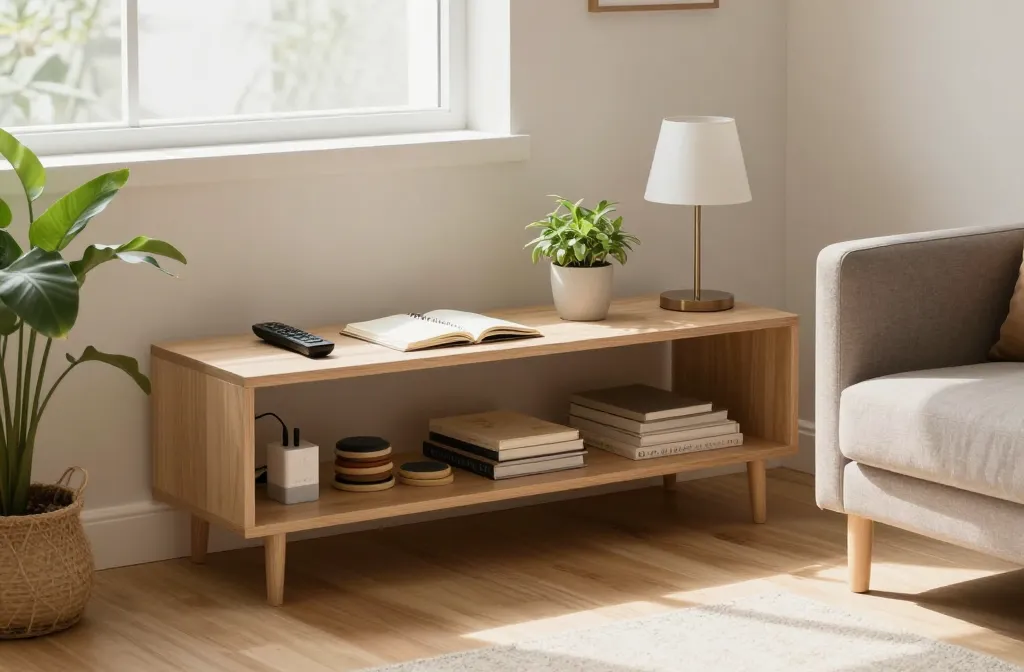
4) Place a small basket or a vertical magazine holder near the seating area for papers, mail, and quick-draw items that otherwise accumulate on surfaces.
5) Establish a 60-second nightly reset routine: return items to their Use-First zones, straighten the surface, and hide any loose papers in a minimal inbox.
E. Real-Life Consideration
– Small spaces: Choose multi-compartment trays (one level for remotes and glasses, a lower section for chargers) to maximize vertical use.
– Apartments/renters: Use non-permanent, lightweight trays that won’t damage finishes or walls; avoid heavy furniture that blocks the view when you want to reconfigure.
– Budget: The simplest plastic or bamboo tray set, plus a small fabric basket, often solves this without new furniture.
F. Common Mistake
Trying to keep every item in sight or using a large ottoman as a catch-all—this creates a faux “storage” zone that becomes a surface you must clear constantly.
G. Better Alternative
A single, flat tray for daily items plus a compact vertical organizer or a slim wall-mounted shelf next to the seating to hold items that would otherwise drift onto the coffee table.
2) Reclaim Traffic Loops: Rethink Furniture Placement for Flow
Related Posts:





A. The Problem
Heavy furniture in a small room tends to block pathways and create tight, frustrating aisles that make the room feel smaller. You end up stepping around chairs, and the space loses its sense of openness and ease of movement.
B. Why It Happens
When you bring in more seating than the footprint allows, you force yourself into a pattern that prioritizes seating volume over usable space. The result is a crowded center with little room to walk, play, or watch TV without weaving around furniture.
C. The Fix
Map a clear traffic loop and reduce seating to what actually supports daily life. In a small living room, the goal is to keep one primary pathway and avoid creating an additional “secondary” path that makes the space feel busy.
D. How to Do It
1) Grab a tape measure and sketch the room footprint. Mark doorways, windows, and typical human paths (you walking from sofa to chair to coffee table and back).
2) Identify any piece that sits squarely in a traffic path. If you can’t walk around it comfortably, reposition or remove it.
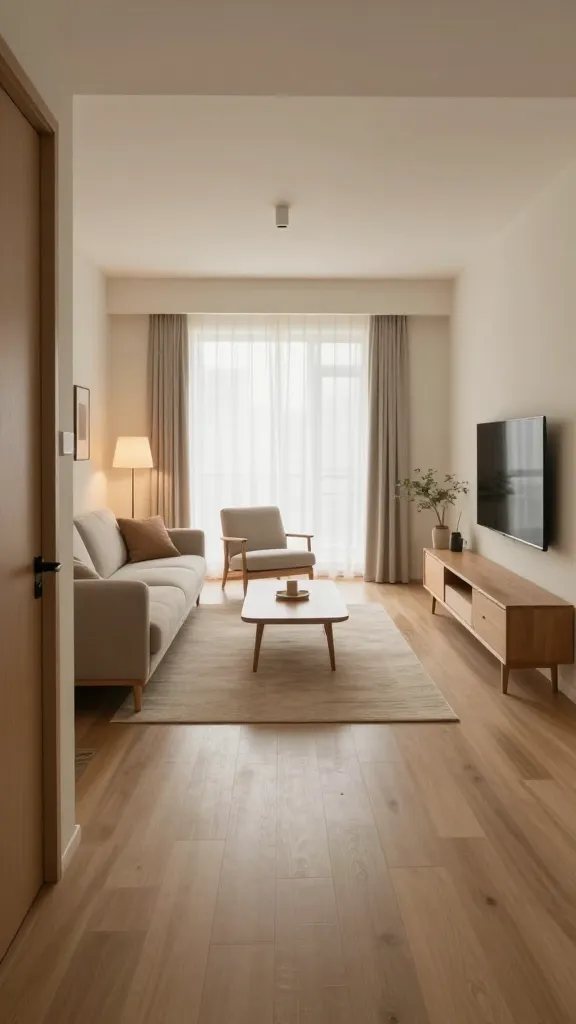
3) Prioritize a three-piece seating arrangement: one sofa or two loveseats plus a chair. If you have overflow seating, consider a compact bench or poufs that can be tucked away when not in use.
4) Use slender furniture with exposed legs; it reads as lighter and helps the eye travel. If you must have a bulky piece, place it against a wall rather than in the center.
5) Create a defined zone with a rug that anchors the seating area, ensuring all seats are clearly within the rug’s boundaries to improve perception of space.
E. Real-Life Consideration
– Small spaces: Lean toward sofa with legs, a loveseat, and a small accent chair that can be moved if needed.
– Rentals: Avoid built-in changes; opt for freestanding pieces that can be rearranged or sold later.
– Budget: A single, inexpensive rug can dramatically alter perceived space and help define the traffic path.
F. Common Mistake
Using an oversized sectional to “maximize seating”—it makes circulation nearly impossible and visually compresses the room, especially when the window light is blocked.
G. Better Alternative
Three compact seating pieces arranged to form a light, conversational arc, with a single, unobtrusive coffee table that can be moved or tucked away.
3) Visual Clarity Over Surface Abundance: Choose the Right Surfaces and Storage
A. The Problem
Surfaces become a collision of electronics, papers, decorations, blankets, and miscellaneous gadgets. The eye doesn’t know where to rest, and everything feels out of reach or out of place.
B. Why It Happens
When you layer too many textures and colors in a small area, or when you place decor on every available surface, your brain interprets the space as cluttered even if items are technically contained. The problem compounds when visible cords and devices pull attention away from the room’s actual function—sitting, relaxing, conversing.
C. The Fix
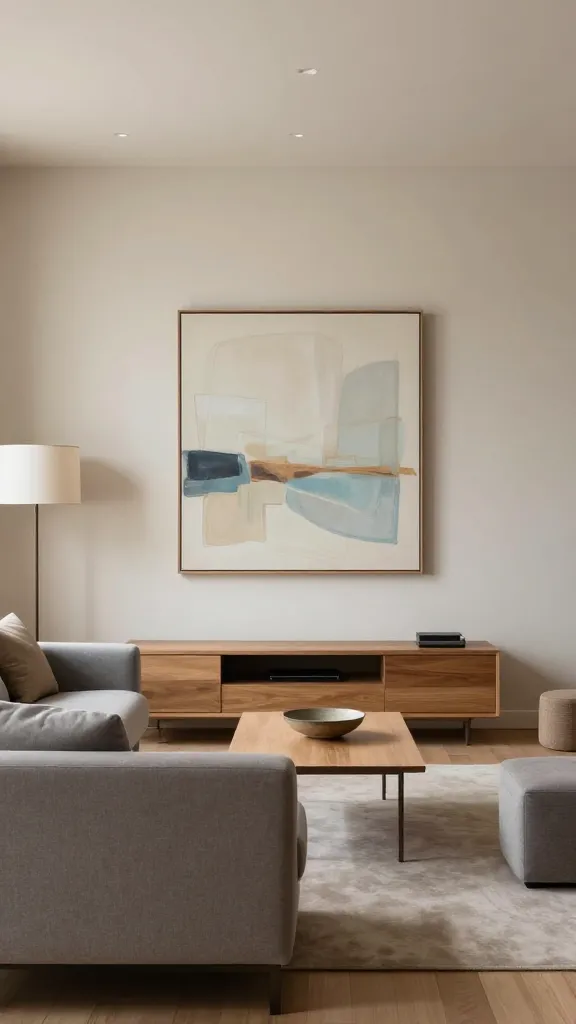
Adopt a hierarchy of surfaces: one primary surface for daily use (coffee table), one secondary surface for display (console or slim shelf), and one hidden surface for electronics and charging (media console with cord management).
D. How to Do It
1) Choose a coffee table with a shallow profile and integrated storage (or a table with a lower shelf) to keep remotes and coasters out of sight but easy to reach.
2) Use a slim console behind the sofa or along a wall to hold a lamp, a small stack of coasters, and one or two decorative objects. Keep it visually simple (2–3 items max).
3) Tidy the media wall with a media console that hides cords in a cord-management channel or grommet. If cords are visible, consider adhesive cable clips in the back corners to route them neatly.
4) For the floor, upgrade to one low-profile storage ottoman that doubles as a stool or extra seating, with a lid that lifts for hidden storage.
5) Use wall space for vertical storage: a slim bookshelf or wall-mounted cubes above eye level to keep visual clutter away from the seating area.
E. Real-Life Consideration
– Small spaces: Favor furniture with built-in storage or multipurpose roles (ottomans, storage benches) to avoid adding more devices on surfaces.
– Renters: Use freestanding pieces with non-damaging feet; avoid drilling or wall-mounted heavy units unless allowed.
– Budget: A simple, two-shelf wall unit can replace multiple decorative items and reduce surface clutter.
F. Common Mistake
Over-matching decor for the sake of “styled surfaces.” This creates a visually heavy room that reduces airiness and makes the space feel smaller.
G. Better Alternative
One clean, small-scale coffee table with drawer or shelf, plus a simple wall shelf for decorative items and a compact console for essentials. The goal is one necessary surface plus a hidden storage path.
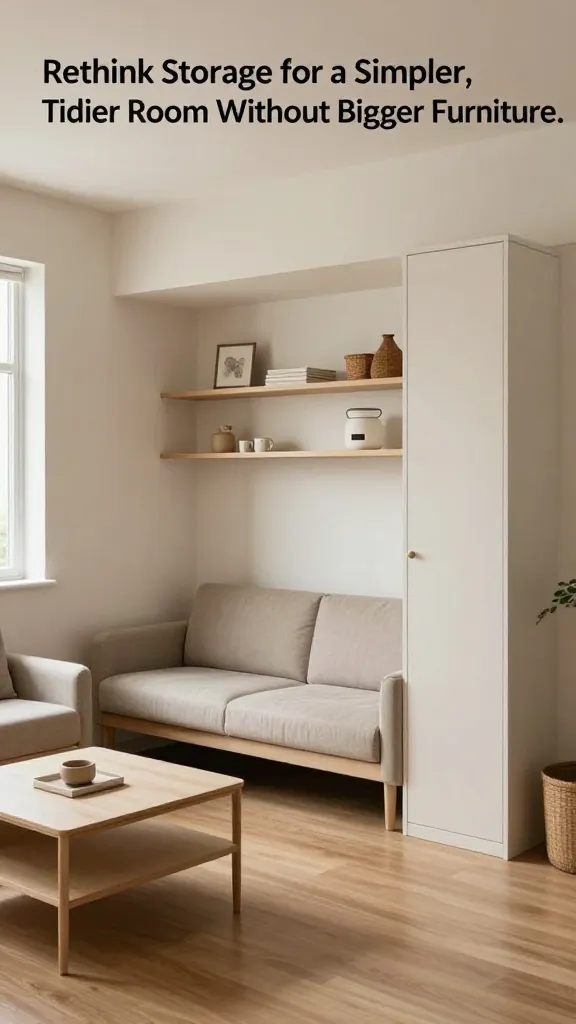
4) Rethink Storage for a Simpler, Tidier Room Without Bigger Furniture
A. The Problem
You have too much furniture, but not enough storage, so the room still feels cluttered as soon as you sit down. You’re tempted to add more storage furniture, which only worsens traffic and reduces space to move.
B. Why It Happens
Storage that’s too deep or poorly located can become a black hole—perfectly usable items drift to the back and get forgotten, while the front “front-and-center” items crowd the space. In small rooms, this hidden stash is a daily obstacle to flow and calm.
C. The Fix
Reorganize existing storage into clearly defined zones with visible, quick-access items. Avoid filling every inch with oversized storage; instead, optimize the space you already own.
D. How to Do It
1) Inventory the room’s furniture with true storage capacity: do a quick check of each piece for hidden space (ottomans, coffee tables with storage, media consoles with drawers).
2) Choose a few pieces to keep for storage and remove or repurpose the rest. For instance, swap a blanket-laden coffee table for a transparent tray and a small storage bin that slides under a sofa.
3) Improve accessibility: store the items you use most in front-facing drawers or open shelves; store rarely used items in back compartments.
4) Use shallow bins and labeled organizers inside storage pieces to keep items visible and easy to retrieve.
5) Create a quarterly review ritual to assess what remains in storage and what isn’t used, with a simple discard-or-donate rule.
E. Real-Life Consideration
– Small spaces: Favor furniture with one clear storage surface and one hidden storage section.
– Rentals: Use fabric or silicone bins inside drawers to avoid sticking or damage.
– Budget: Replace a cumbersome storage chest with a slim, open bin system that’s easier to access and less visually heavy.
F. Common Mistake
Over-stuffing a single storage piece in pursuit of “one and done.” It becomes a dense, difficult-to-use unit that actually slows access to everyday items.
G. Better Alternative
A compact, modular storage system that can be reconfigured as needs change. For example, a low-profile storage cart with wheels that can slide to the side when not in use, plus a few stackable shallow bins for easy categorization.
5) A Color and Texture Strategy That Keeps the Room Feeling Spacious, Not Busy
A. The Problem
Too many fabrics, patterns, and bold colors all competing for attention. In a small living room, this creates visual noise that makes the space feel smaller and more chaotic.
B. Why It Happens
When every rug, pillow, and throw is different, the eye has to work harder to find a place to rest. This can lead to a sense of clutter even if the room is organized behind the scenes.
C. The Fix
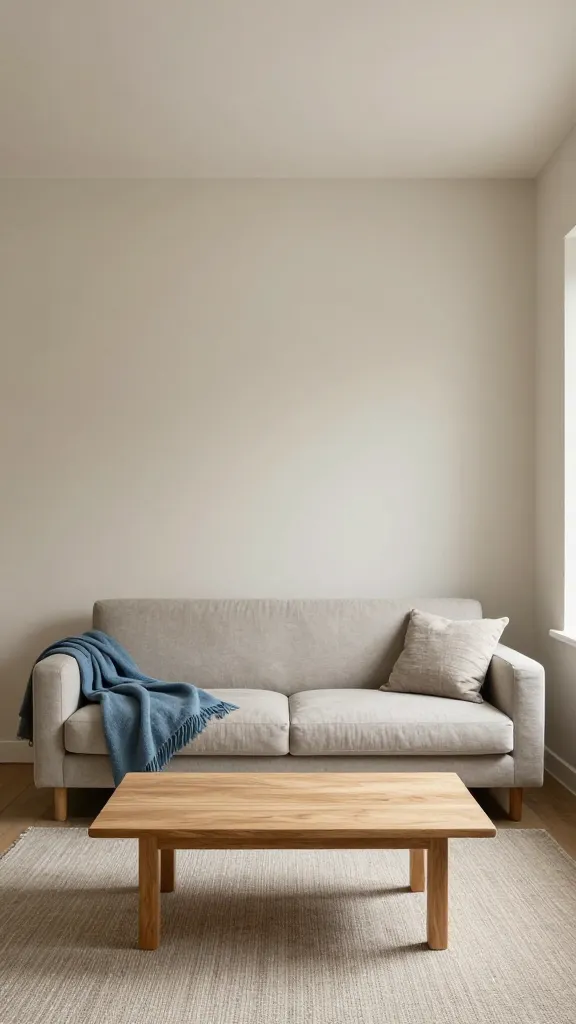
Adopt a restrained palette with a unifying anchor. Use one base color for walls and larger pieces, with 1–2 accent hues carried by textiles and decor items. Texture should add interest rather than color chaos.
D. How to Do It
1) Pick a calm base color (off-white, warm gray, or soft taupe) for walls and larger furniture pieces. 2) Choose one accent color (e.g., warm terracotta or sage green) and use it in a few textiles: one rug, two pillows, one throw, and a small decor item.
2) Use varied textures to create depth: a plush rug, a linen sofa, a textured throw, and a woven basket.
3) Keep surfaces visually calm: limit art to one or two significant pieces in proportion to the wall, and avoid a wall full of small frames.
4) If you must introduce a bold pattern, keep it on a single item (pillow or small rug) and balance with solid surrounding pieces.
E. Real-Life Consideration
– Small spaces: Large-scale patterns on a single item can overwhelm; use scale-appropriate patterns and keep the rest of the room quiet.
– Rentals: Use removable wall art and non-damaging decor to maintain flexibility.
– Budget: A single statement cushion or a large-area rug can anchor the space without changing many pieces.
F. Common Mistake
Tiling the room with a dozen coordinating textiles and no single “hero” piece, which creates a busy, exhausting look rather than a cohesive calm.
G. Better Alternative
Adopt a language of 2–3 textures and 2–3 colors max. Let one large item (the sofa or rug) carry the dominant color, and bring in the other colors sparingly through a couple of textiles and a small decorative element.
Before You Buy: A Quick, Realistic Shopping Check
One of the biggest culprits in a small living room with too much furniture is the impulse to buy more to solve the problem. Before you buy anything new, run through these checks to avoid adding clutter or creating a new storage headache.
- Measure the space accurately: measure room length and width, door openings, and the clearance you need to move around each furniture piece. Include the path you’d use daily (how you’d walk from the sofa to the sofa table and back).
- Identify what really needs storing versus what can live visibly on compact surfaces. If something is rarely used, it should not live in an oversized storage piece.
- Assess existing containers: can you repurpose baskets, bins, or a tote you already own? Do you have appropriate lids or clear fronts to see contents at a glance?
- Determine how often items are used. If a piece is used weekly, keep it within easy reach; if it’s seasonal or occasional, it belongs in a less-accessible place.
- Set a hard budget for the week: allocate funds to a single, purposeful improvement (e.g., a slim console, a storage ottoman, a single rug) rather than multiple small purchases that compound clutter.
Final Thoughts: A Simple, Realistic Path Forward
The core problem with a small living room stuffed with too much furniture is not the number of pieces—it’s how those pieces interact with your daily life. The fixes above focus on real-world constraints: rental restrictions, busy households, limited storage, and budgets that don’t tolerate vanity purchases. By prioritizing a Use-First zone, ensuring clear traffic flow, simplifying surfaces, reorganizing storage, and aligning color and texture, you transform the room from a crowded catch-all into a space that actually supports living in it—not just looking good in a photo.
Take one actionable step today: choose one area to implement a single change—install a shallow tray in your Use-First zone, or reposition one piece to open a path through the room. Then repeat this process over the next week. Small, incremental changes compound into a space that finally feels calm, usable, and true to your real life.
Frequently Asked Questions
How do I decide which furniture to remove first?
Start with items that sit in primary pathways or block light and access to seating. If removing one piece makes the path easier and improves lighting or sightlines, you’ve found your first target. If a piece serves multiple roles (storage, seating, decor) and the space would lack function without it, consider relocating its function to a different piece rather than removing it entirely.
What if I can’t remove any furniture due to family needs or layout?
Focus on reconfiguring rather than removing. Move a chair to a more open angle, switch a piece to a wall with fewer obstructions, or repurpose a coffee table with storage into a slim ottoman with hidden space. The goal is to improve flow without sacrificing daily comfort.
Are removable wall options allowed in rentals useful here?
Yes. Removable wall options like freestanding shelves or modular wall grids provide vertical storage without drilling. Use tension-mounted solutions or removable adhesive products designed for rental spaces to keep the structure intact while gaining much-needed organization.
What should I do about electronics and cords?
Use a single media console with built-in cord management or add a cord cover that sits along the back edge of the furniture. Route cords through grommets if your furniture includes them, or use adhesive cord clips to keep cables tidy and out of sight.
How can I upgrade looks without adding clutter?
Choose 1–2 statement textiles (a rug and a throw) in a calm palette and keep all other decor minimal. This creates a focal point without overwhelming the space. Use mirrors or glass surfaces to reflect light and visually expand the room, but avoid placing multiple reflective objects that bounce light in distracting ways.
If you’d like, I can tailor these strategies to your exact room measurements and furniture list. Share a few photos or dimensions, your daily routines, and any rental constraints, and we can draft a zone-by-zone plan you can execute in a weekend.