When you want to show gratitude, a thoughtfully assembled basket can speak volumes without shouting. But a simple “basket idea” post often falls short in real homes. Wary of clutter, limited storage, rent-friendly restrictions, and tight budgets, you’re looking for something that actually solves a problem while feeling personal. This guide is written for real-life U.S. homes—from tiny city apartments to bustling households where space is precious and every square foot earns its keep. Each basket idea below tackles a specific challenge, explains why the problem happens, and delivers practical, actionable steps you can implement today.
1. Create a “Use First” Reading and Wellness Basket (Prevent Overbuying Essential Items)
A. The Problem
We buy duplicates, or we forget items we already own, leading to wasteful spending and cluttered storage.
B. Why It Happens
In busy lives, important items get pushed to the back of a cabinet or into a tote that’s rarely opened, so we lose track of what’s actually on hand.
C. The Fix
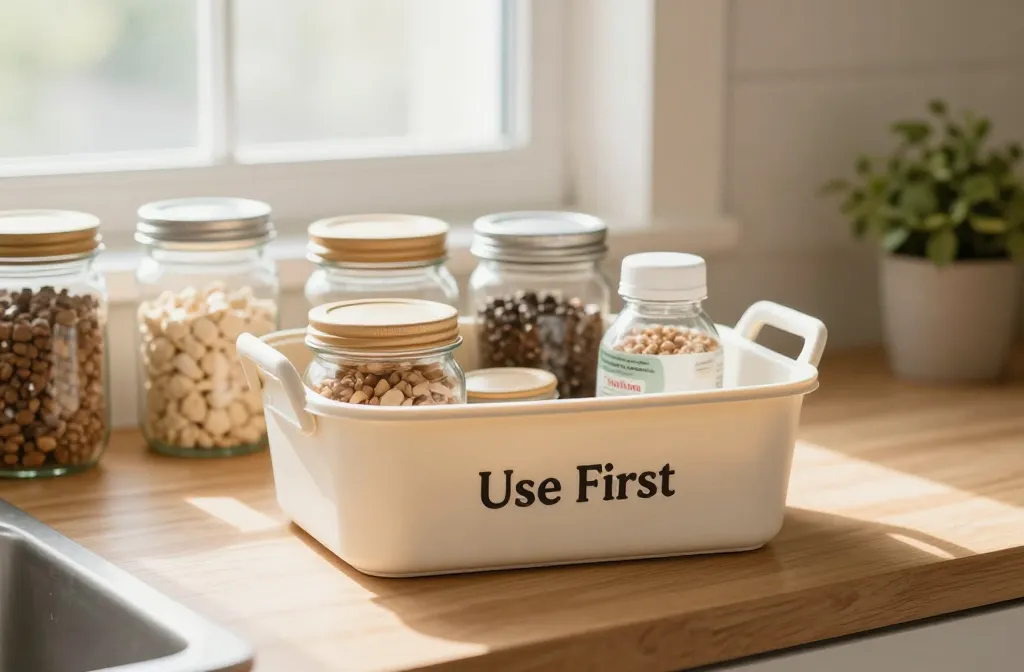
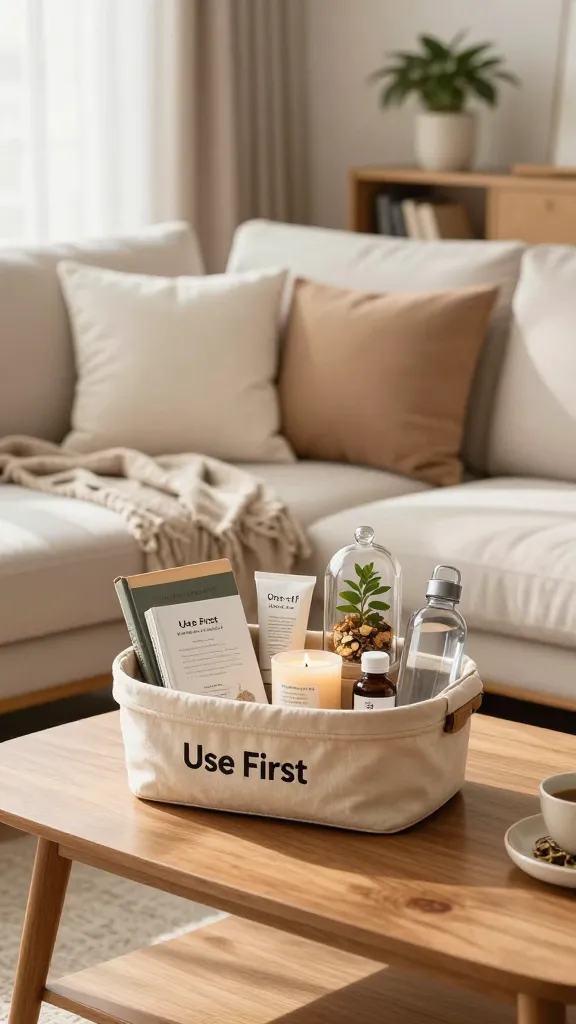
Create a dedicated “Use First” basket that sits in a visible, reachable spot. It contains two to three daily essentials you don’t want to run out of, plus one “one-off” item that you’re likely to forget but will use in the current week.
D. How to Do It
- Choose a shallow, open-front basket or bin (clear or neutral tone) that fits on a countertop or small shelf—ideally 12–14 inches wide.
- Fill with: a favorite daily stimulant (coffee pods, tea bags, or hot chocolate sachets), a staple like toothpaste or moisturizer, and one item you often misplace (lip balm, small hand sanitizer, or a travel-sized lotion).
- Label the basket with a simple tag: “Use First This Week.” Place it at eye level where you prepare your day (kitchen counter, vanity, or near the entryway).
- Set a weekly reminder to rotate items and refresh the basket every Sunday.
E. Real-Life Consideration
– Small spaces: Pick a compact basket that sits on a small shelf or inside a medicine cabinet’s door shelf. Consider a magnet strip or slim shelf above a sink to keep it visible but out of the way.
F. Common Mistake
Keeping the basket hidden in a deep drawer—out of sight means out of mind, reducing its effectiveness.
G. Better Alternative
If a weekly rotation feels heavy, consolidate into a two-bin system: one for daily essentials, one for “this week’s must-not-forget” item, placed near the area where you use them most.
2. The 3-Item Calm Corner Basket (Taming Visual Clutter in Small Spaces)
Related Posts:




A. The Problem
Clutter grows where there’s no designated home, especially in entryways, living rooms, or narrow hallways.
B. Why It Happens
Small homes often lack a clean “home base” for miscellany like mail, keys, and small gifts, so everyday items drift into piles.
C. The Fix
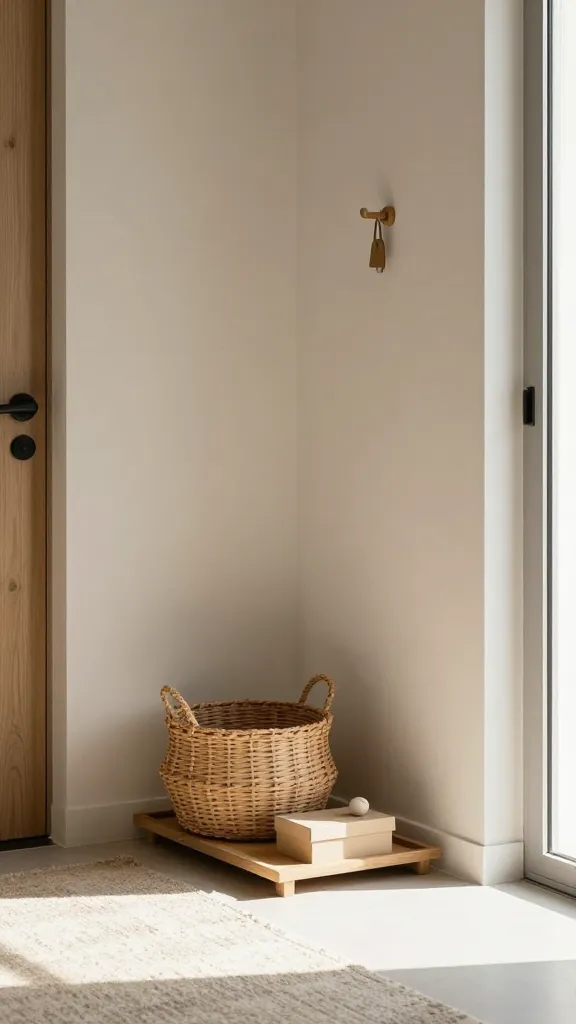
Designate a single 3-item calm corner near the main doorway or living area—a small, shallow basket, a tray, and a lidless box—to corral everyday items with clear purpose.
D. How to Do It
- Choose a low-profile basket (6–8 inches wide) for mail or loose-change items.
- Add a shallow tray (to corral keys and loose cords) and a lidless box for receipts or small repairs you’ll organize weekly.
- Label each component if multiple people use the space (e.g., “Mail,” “Keys,” “Receipts”).
- Place near the entryway or sofa end table where it’s visible but not in the way.
E. Real-Life Consideration
– Renters/small apartments: Use over-the-door hooks to free surface space and a shallow box on a wall shelf to keep items reachable yet contained.
F. Common Mistake
Using a large, decorative basket that swallows items, making the space look neat but actually hiding clutter.
G. Better Alternative
Opt for a small, modular trio that matches your existing hardware (metal, wood, or plastic) so each piece has a distinct role and remains visually legible.
3. The “Notes and Nods” Appreciation Basket (Genuine Gratitude In Plain Sight)
A. The Problem
Expressing appreciation is often one-offs rather than sustained, leaving you to scramble for ideas or materials when the moment arises.
B. Why It Happens
Building a habit around giving requires a consistent, low-effort system that doesn’t rely on last-minute shopping or fancy purchases.
C. The Fix
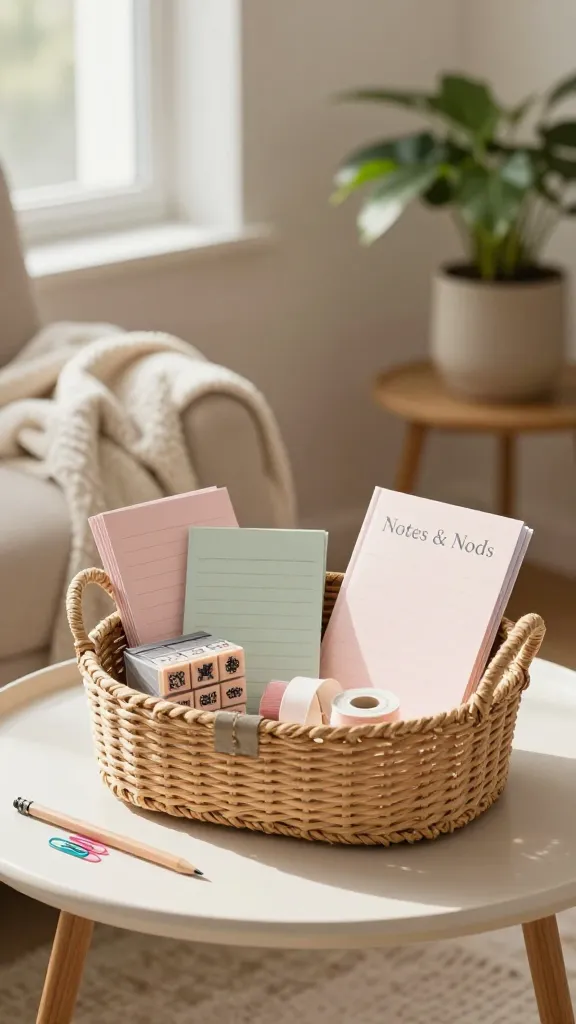
Create a small, refillable “Notes & Nods” basket that contains note cards, a few stamps, a pack of ribbon, and a few pre-written appreciation prompts. Make it easy to personalize and deliver.
D. How to Do It
- Select a compact container (either a shallow basket or a small box with a lid). 8–10 inches wide works well.
- Stock with 10–12 blank note cards, a small roll of decorative ribbon, and a handful of stamps (forever stamps work well for most cards).
- Keep a small “inspiration pad” with prompts such as “Thanks for listening this week,” “Your kindness made my day,” or “You brighten our home.”
- Place near mail area or a coffee station where you’re likely to think of someone you appreciate.
E. Real-Life Consideration
– Limited storage: Use a slim box or an organizer tray that fits into a shallow cabinet or a kitchen drawer.
F. Common Mistake
Writing generic notes that might feel insincere; personalize with specific moments you appreciated.
G. Better Alternative
Create a “delivery-ready” setup with one or two pre-addressed envelopes and a set of quick, specific prompts that can be completed in minutes.
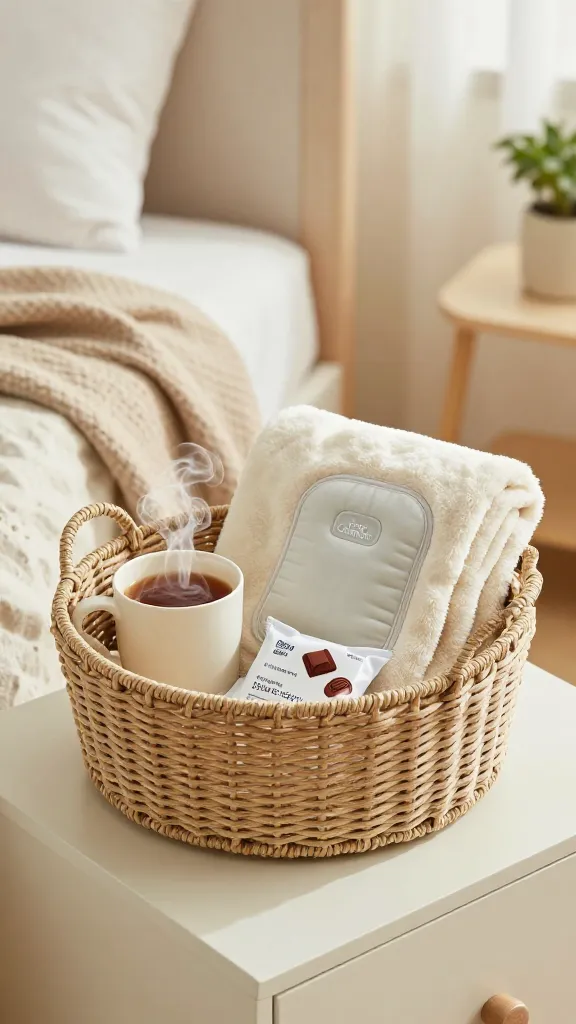
4. The Cozy Comfort Basket for Sick or Stressed Days (Thoughtful Care Without the Bulk)
A. The Problem
When someone is sick or overwhelmed, they don’t want to wade through a big basket of items; they want simple, comforting relief delivered quickly.
B. Why It Happens
Care packages often overpromise on luxury while under-delivering on real-use items—especially in rental kitchens or compact homes where big packages simply don’t fit.
C. The Fix
A compact “Cozy Comfort” basket with essential, no-fuss items—hot beverage, single-serve snack, a small blanket or warmer, and a single-use self-care item.
D. How to Do It
- Choose a 10–12 inch wicker or fabric basket that isn’t heavy to lift.
- Include: a mug or insulated cup, a single-serve beverage (tea sachets or coffee pod), a small throw blanket or fleece wrap, and a pampering item (lip balm, hand cream, or a face mask).
- Add one thoughtful note explaining you’re thinking of them and a quick personal reminder of when you’ll visit or check in next.
- Deliver in a single, easy-to-carry moment; avoid bulky items that require storage space beyond a small closet.
E. Real-Life Consideration
– Apartments/rental homes: Avoid anything that smells strong or may cause allergies in shared spaces; opt for unscented or lightly scented items.
F. Common Mistake
Packing too many items that require ongoing storage or heavy use items that will be forgotten after a week.
G. Better Alternative
Keep it lean: one beverage, one comfort item, one consumable, and a small note. That’s enough to convey care without creating clutter.
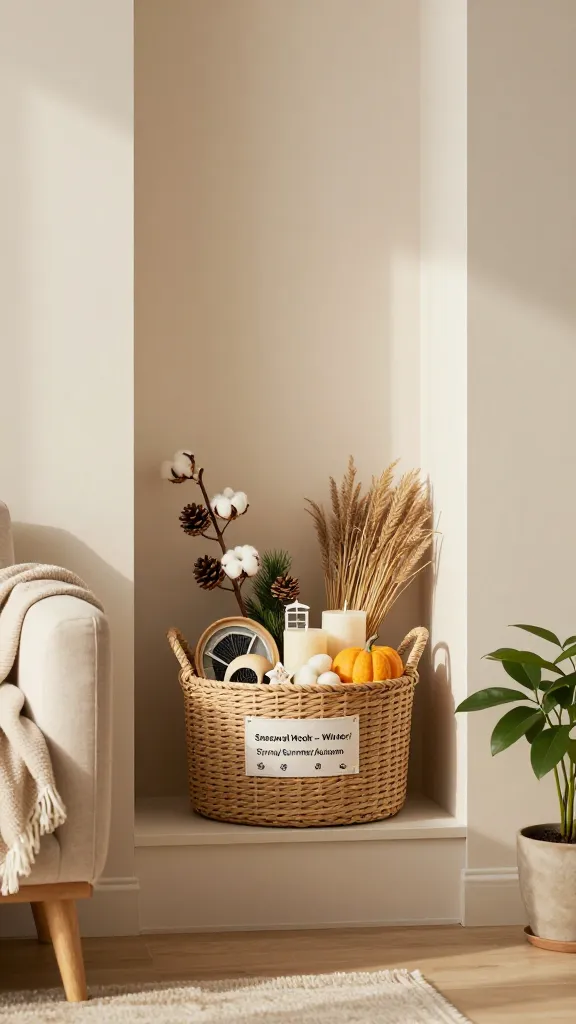
5. The “Seasonal Nook” Basket (Seasonal Pleasures, Minimal Footprint)
A. The Problem
Seasonal items accumulate—candles, decorations, and small accessories—yet many homes lack a dedicated, organized seasonal home for them.
B. Why It Happens
Limited storage and the temptation to “collect now, sort later” leads to a chaotic mix of mismatched items that are hard to find when needed.
C. The Fix
Create a compact Seasonal Nook basket that holds a rotating set of season-specific items. Keep it minimal and clearly labeled for quick switchovers.
D. How to Do It
- Choose a medium-sized, shallow basket that fits on a closet shelf or under a bed storage box lid.
- Limit contents to: 2 seasonal decor pieces, 1 seasonal candle, 2 small rituals or snack items tied to the season, and 1 storage tag or tag-on system.
- Create a simple rotation schedule: swap items at the start of each season or when you notice clutter forming.
- Label with the season and store in a consistent location so it’s easy to locate and return items after use.
E. Real-Life Consideration
– Small spaces: Use a slim, under-bed or closet shelf basket to compress storage footprint while remaining accessible.
F. Common Mistake
Overstuffing the Seasonal Nook with items you don’t actually use or love, turning it into a storage dumping ground.
G. Better Alternative
Rotate items by need rather than by decoration trend. Keep a short list of 2–3 items you actually use and enjoy annually.
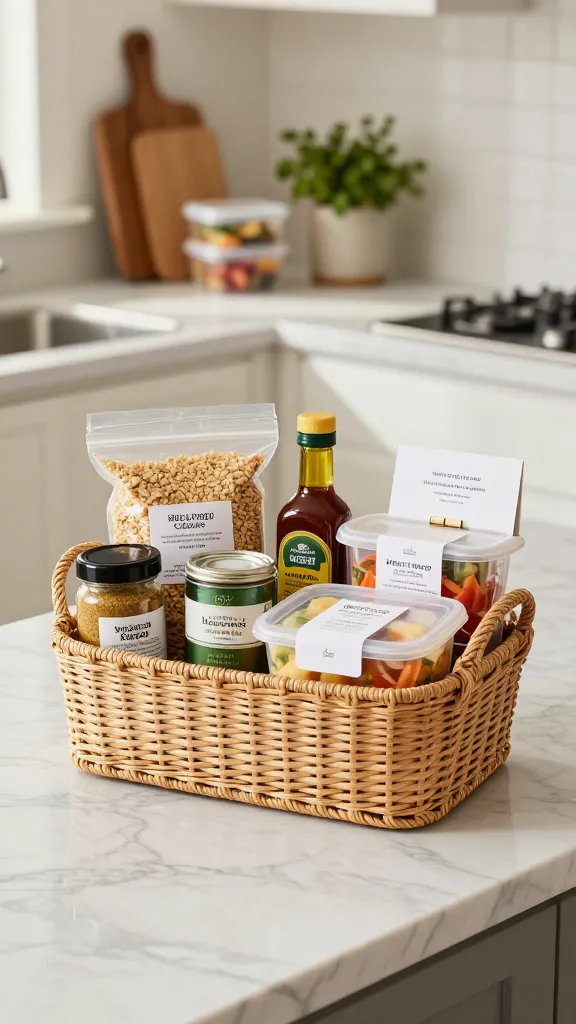
6. The Meal-Prep Cheer Basket (Practical Gift for Busy Households)
A. The Problem
Friends or family who are juggling work, kids, and errands may miss meals or rely on quick, unhealthy options.
B. Why It Happens
Gift offerings often focus on luxury rather than everyday utility, which tends to be more valuable in a busy home with limited time and storage.
C. The Fix
A compact Meal-Prep Cheer basket that helps simplify a week of meals—think a few ready-to-use ingredients, a simple spice mix, and a quick recipe card.
D. How to Do It
- Limit to 6–8 items that are easy to store and widely usable (e.g., a jar of pasta sauce, a pack of olive oil, a spice blend, a ready-to-cook grain, a simple recipe card).
- Choose packaging that fits a small fridge or cabinet: a shallow basket with a removable liner is ideal.
- Include a single, printable recipe card with substitutions for dietary restrictions or pantry gaps.
- Label the basket “Meal-Prep Cheer” and place near the fridge or pantry for quick reference.
E. Real-Life Consideration
– Renters/small kitchens: Ensure all items are shelf-stable and won’t cause cross-contamination or require special storage. Use compact jars and pouches rather than bulky tins.
F. Common Mistake
Choosing perishables or large items that require fridge space, making the gift impractical for immediate use.
G. Better Alternative
If you want to include perishables, swap to sealed, shelf-stable options and add a note offering to re-supply with a fresh batch later.
7. The “Tiny Tech-Help” Basket (Smart Helpers for Everyday Tech Clutter)

A. The Problem
Cables, chargers, and small devices end up tangled in drawers or coffee tables, creating visual noise and potential safety hazards.
B. Why It Happens
Tech gear multiplies, but storage solutions aren’t always proportionate to the number of cords and devices you actually own, especially in small spaces.
C. The Fix
A compact tech-hygiene basket that houses a few well-chosen organizers: a cable sleeve, a small USB hub, a set of labeled cords, and a device-friendly cleaning wipe kit.
D. How to Do It
- Pick a shallow, long tray or a small basket (about 12 inches) that fits on a coffee table or media stand.
- Include: 1 roll of cord organizers, 1 compact USB hub, 1 set of labeled micro-USB and USB-C cords, and 1 small cleaning wipe for screens.
- Label sections with simple tags: “Cables,” “Devices,” and “Cleaning.”
- Rotate items as devices are swapped or upgraded; keep the hardware selection minimal to avoid overflow.
E. Real-Life Consideration
– Small spaces: Use a wall-mounted cord organizer behind the sofa or a slim tray on a side table to keep wires off the floor.
F. Common Mistake
Over-purchasing multiple types of organizers, which wastes space and creates more clutter to manage.
G. Better Alternative
Limit to one organizer system that is easy to reconfigure as needed, and pair with a predictable routine: once a quarter, assess what tech items are truly used.
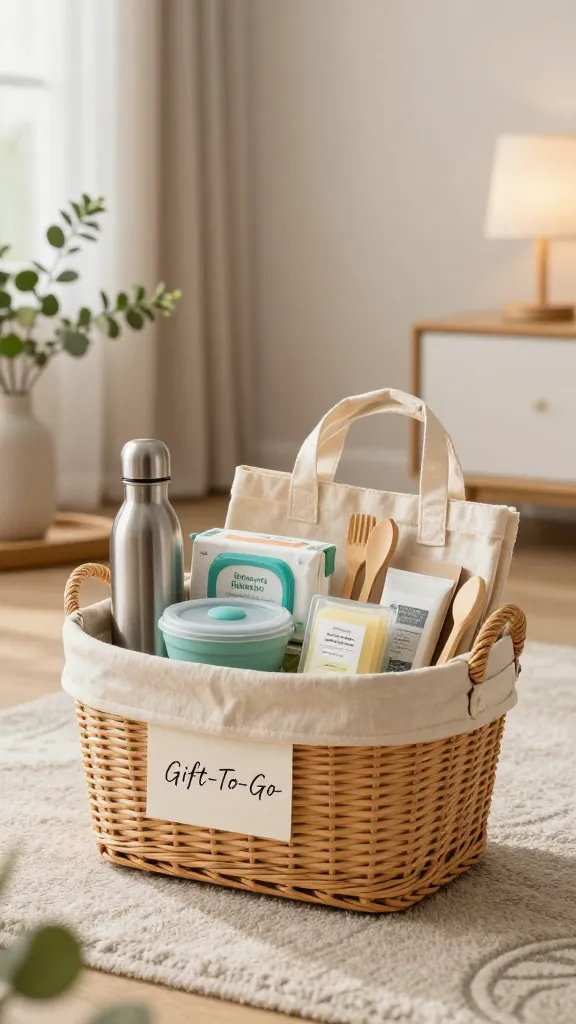
8. The Gift-To-Go Basket (Thoughtful, Reusable, Low-Impact)
A. The Problem
Gifting often becomes a guessing game: will they like it, will it be used, is it sustainable? Cumbersome gifts that end up unused contribute to clutter and waste.
B. Why It Happens
People feel pressure to give something special, but “special” sometimes misses practical daily value.
C. The Fix
A “Gift-To-Go” basket that contains a practical, easily consumable or reusable item with a universal appeal and a thoughtful note. Focus on items that can be moved, shared, or returned easily if needed.
D. How to Do It
- Pick a compact, durable container (11–14 inches wide) that can be reused as a storage tray or organizer after the gift is given.
- Fill with: a high-quality, versatile item (like a reusable tote or durable water bottle), a small practical accessory (compact umbrella, keychain multitool), and a card with a personal message and a suggestion of how to use or gift the basket to someone else.
- Consider a “you pick the time” card that invites the recipient to redeem a small service (coffee date, home-cooked dinner, or a help-with-basket organization at their place).
E. Real-Life Consideration
– Budget: Choose items with a longer lifespan and utility to maximize value per dollar spent.
F. Common Mistake
Going for trend items that will be quickly outdated or not genuinely useful to the recipient.
G. Better Alternative
Focus on universally useful items (reusable, practical) with a personal touch. Skip “gifting fads” that may not align with the recipient’s routine.
9. The Quiet Kitchen Makeover Basket (Small Upgrades, Big Impact)
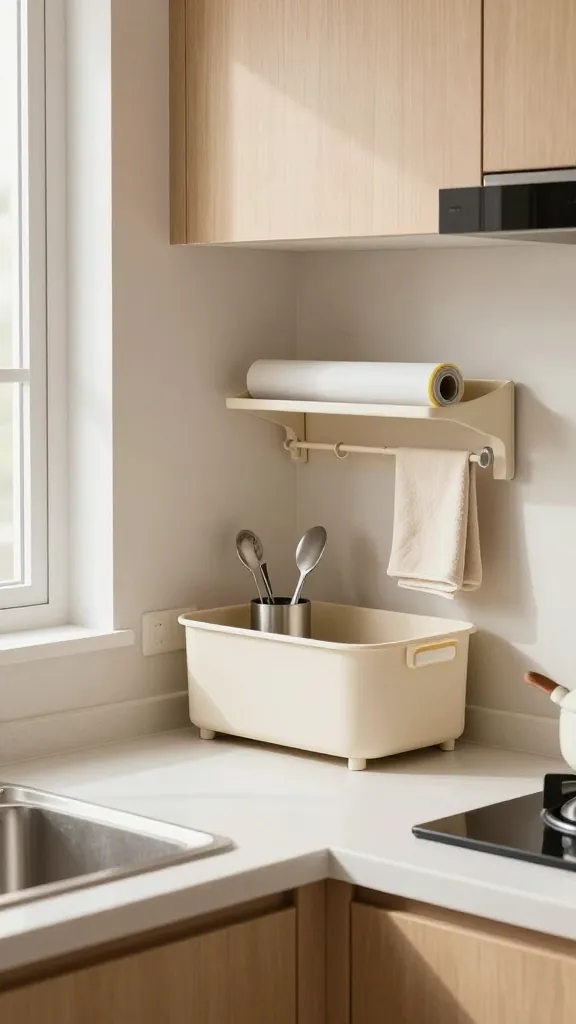
A. The Problem
Kitchens in apartments or small homes often feel cramped, with cluttered counters and limited dedicated storage for everyday items.
B. Why It Happens
Temporary or low-cost storage solutions can feel insufficient in the moment and often don’t address the layout or workflow of the space.
C. The Fix
A compact Kitchen Makeover Basket that includes small, functional upgrades you can drop into your routine—portable shelf liners, a compact utensil holder, a towel bar or suction hooks, and a simple labeling system for frequently used items.
D. How to Do It
- Choose a slim basket that fits on a counter or inside a shallow cabinet.
- Include: 1 roll of adhesive liner for shelves, 1 compact utensil holder, 2 suction hooks, and 1 set of reusable labels for jars and containers.
- Install or place items in a location that aligns with your daily cooking workflow (prep area, near stove, near sink).
- Label the pantry containers that are used most (salt, sugar, flour) to make quick access easier.
E. Real-Life Consideration
– Renters/small kitchens: Use removable liners and adhesive hooks that don’t damage surfaces; avoid heavy hardware or anything that requires drilling.
F. Common Mistake
Overcomplicating the setup with too many “best-in-class” organizers that won’t stay in place or be used consistently.
G. Better Alternative
Start with one upgrade that makes a tangible difference (liner and a labeled jar set) and build step-by-step as needed.
10. The Laundry-Corner Organizer Basket (Clutter-Controlled Laundry Routine)
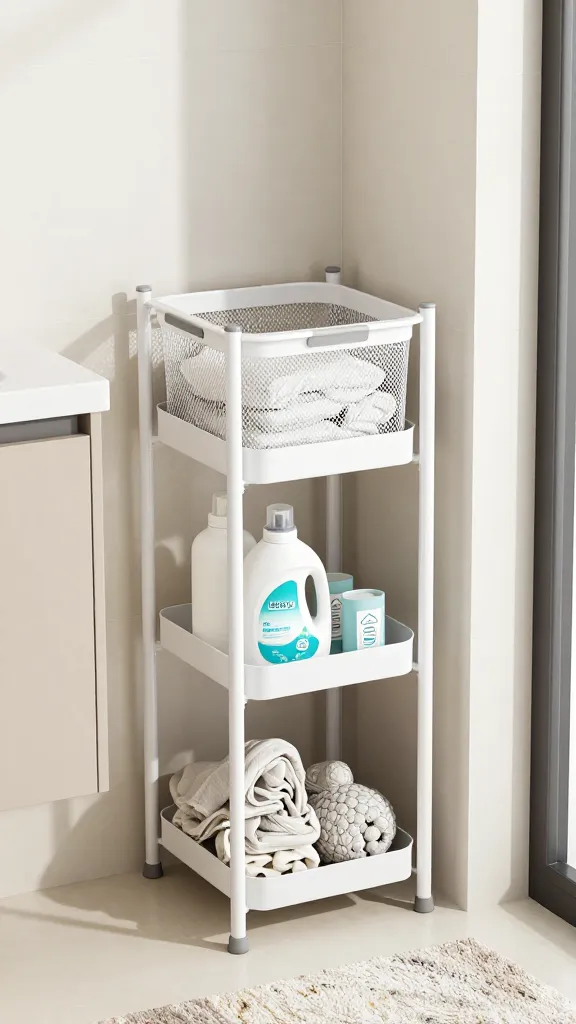
A. The Problem
Laundry clutter appears near bedrooms and bathrooms, consuming valuable floor space and creating a messy cue for clutter-prone households.
B. Why It Happens
No clear “home” for dirty clothes, caps, and detergents—especially in shared or small bathrooms where space is tight.
C. The Fix
A compact laundry corner basket system that keeps essentials accessible yet contained, with clearly labeled zones for dirty clothes, detergent, and small laundry accessories.
D. How to Do It
- Pick a slim, vertical or low-profile basket (or a small, wheeled cart if floor space allows).
- Define three zones: “Dirty Clothes,” “Detergent & Softener,” and “Accessories” (odor reducer, stain remover sticks, dryer sheets).
- Place near the laundry area or bathroom where it’s easy to access but not in the way of daily traffic.
- Rotate contents seasonally; remove unused items to a donation box or storage closet if they have not been used in a full season.
E. Real-Life Consideration
– Apartments: Use a slim cart that can be rolled away or tucked under a sink when not in use.
F. Common Mistake
Letting the basket overflow with extra bottles or bulky items that aren’t used regularly, increasing clutter instead of reducing it.
G. Better Alternative
Renters can repurpose under-sink space with a small, adjustable shelf to keep detergents grouped and easy to reach, avoiding a separate bulky basket.
11. The Gift-Drawer: Hide-and-Deliver Basket (Low-Impact, High-Impact)
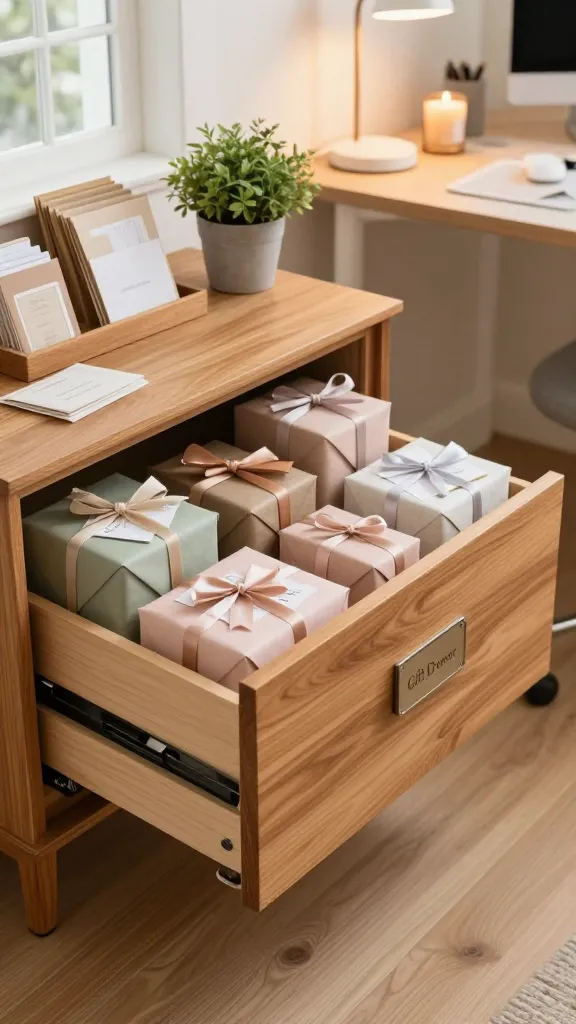
A. The Problem
Gifts often require immediate storage in a closet while waiting for the right moment to give, adding to prodigious seasonal clutter in a busy home.
B. Why It Happens
People fear giving something that’s out of date or that may lose its charm if stored for too long, so they end up moving the item around without a clear home for it.
C. The Fix
Use a Gift-Drawer basket that securely stores a few well-chosen gifts, ready to be delivered with a personal note within minutes.
D. How to Do It
- Choose a shallow, flat basket or a small, lidded bin that fits on a high shelf or inside a closet.
- Fill with 2–3 simple, practical gifts that are universally useful (a multi-tool, a high-quality scarf, a reusable tote, or a small plant).
- Attach a stack of pre-written, personal notes and a few generic gift tags with space to write a name and a short message.
- Place the Gift-Drawer in a storage location that is easy to access when you need to give it away, but unseen by guests in everyday use.
E. Real-Life Consideration
– Small spaces: Choose items that are compact, lightweight, and storable in a small closet or under a bed.
F. Common Mistake
Filling with items that won’t be used by most recipients, creating future returns and waste.
G. Better Alternative
Keep a rotating, small selection of highly versatile gifts (a mug, a plant, a notebook, a sturdy tote) that you’ll actually gift soon.
12. The Practical Program Basket (Consistency Over Glamour)
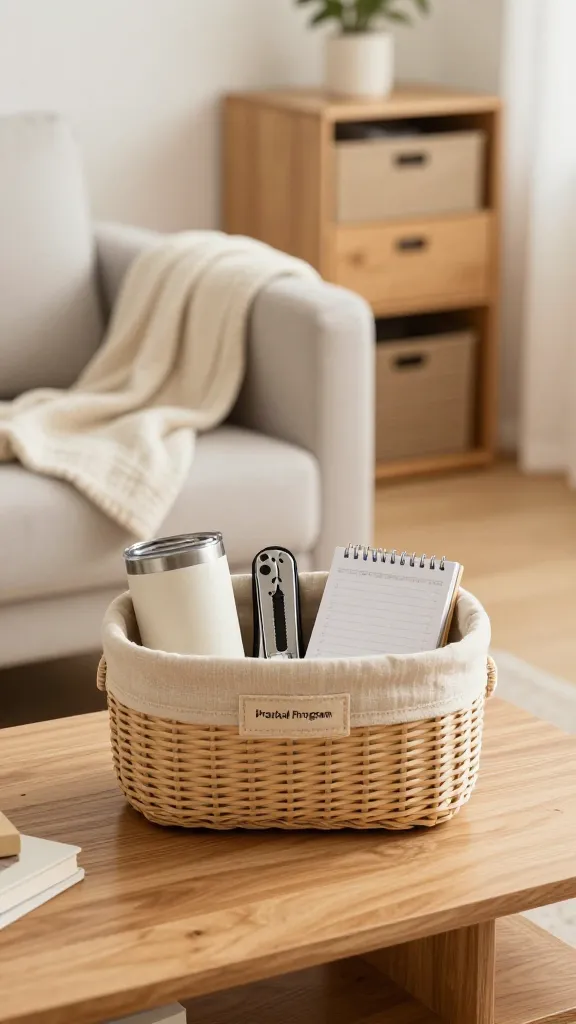
A. The Problem
Gracious gifts often lack a practical framework, so people end up gifting once and forgetting the relationship after a single exchange.
B. Why It Happens
A good intention does not automatically translate into ongoing behavior; the storage system needs to be easy to maintain and repeatable.
C. The Fix
A Practical Program Basket built around a simple, repeatable cadence—monthly or quarterly—with 2–3 practical gifts that encourage ongoing connection.
D. How to Do It
- Pick a compact basket that fits on a shelf or in a cabinet where you keep gifts or cards.
- Choose: 1 practical gift, 1 personal note, and 1 item that supports sharing (a friend’s favorite snack to pass along).
- Set a reminder to refresh the basket every 6–8 weeks to ensure the gifts feel timely and relevant.
- Document the cadence in a simple calendar or note so you don’t forget the cycle.
E. Real-Life Consideration
– Budget: Build from a core set of items you’d buy anyway rather than overstocking a seasonal gift stash.
F. Common Mistake
Overthinking the “perfect” gift; instead, prioritize consistency and usefulness over novelty.
G. Better Alternative
Rotate with a few basic items that fit most relationships (a quality mug, a small plant, a pack of notes) and a simple plan to reconnect with the person.
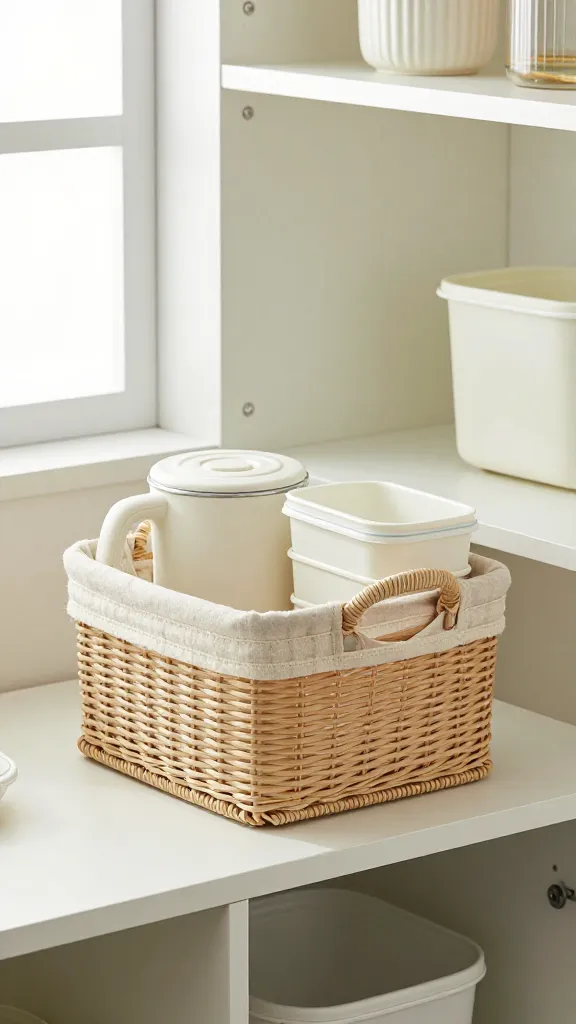
13. The Storage-First Birthday Basket (One Basket, One Year of Thoughtful Use)
A. The Problem
Celebratory gifts can overwhelm a space if they require significant storage or are not regularly used.
B. Why It Happens
People want to celebrate, but clutter shows up in the form of large or fragile items that don’t fit well in smaller homes.
C. The Fix
A Storage-First Birthday Basket that consolidates one practical, space-conscious birthday item into a single, easy-to-store container for future use.
D. How to Do It
- Choose a narrow basket or tote that can be tucked onto a shelf or inside a closet.
- Fill with a single, universally useful birthday item (a compact calendar, a set of LED tea lights, a small plant, or a stylish notebook).
- Include a short birthday message card and a note about when you’ll pass the basket along or give it as a gift.
- Store in a predictable location so you can easily pull it out for future birthdays—no last-minute camping out at the store required.
E. Real-Life Consideration
– Renters/small spaces: Choose lightweight items that can be carried easily and stored in a closet or under a bed.
F. Common Mistake
Choosing fragile or heavy items that can’t be easily moved or stored in a rental setting.
G. Better Alternative
If you want to keep a birthday option simple, select one practical item that travels well and can be used year-round, with a flexible note to customize later.
Before You Buy: How to Decide What Works for Your Space
All the ideas above are designed to solve real problems in real homes. Before you buy baskets or organizers, use this quick framework to ensure you’re choosing wisely—and not creating more clutter:
- Measure first. Know the available space—shelves, countertops, cabinets, and any awkward gaps you could fill. Measure the width, depth, and height to avoid buying something that can’t fit.
- Identify the actual home for the item. Decide where the basket will live and ensure it has a defined role so it doesn’t bounce around your home as a decorative object only.
- Remove before you add. Clear out items you know you won’t use, duplicates, and things you’ve been keeping “for a rainy day.”
- Check usage frequency. If you don’t touch it weekly, consider a less accessible storage plan that’s easier to maintain and less likely to accumulate clutter.
- Test with a 2-week sprint. Implement one basket for two weeks and gauge how much it actually helps with organization or gifting. If it doesn’t improve daily use, refine or discard.
Wrap-Up: How to Build Your 13-Basket System Without Breaking the Bank
The 13 basket ideas in this guide are designed to be practical, space-conscious, and budget-friendly. The secret is to treat each basket as a targeted tool for a specific problem—rather than a decorative novelty. You don’t need to invest in a full set of matching organizers. Start with one or two that address the most pressing pain points in your home, then expand thoughtfully only when you’re confident your space can sustain the change.
Next steps you can take today:
- Pick two baskets that address your biggest pain points (for example, a “Use First” basket and a “Calm Corner” clutter reducer).
- Measure the chosen spaces and confirm the exact dimensions before purchasing.
- Clear out a small amount of clutter to create a clean slate for the new system.
- Implement your first rotation or home zone and set a reminder to review in 2–3 weeks.
With a practical, problem-solving approach, you’ll create a home decor system that’s as usable as it is thoughtful—so your gifts genuinely feel personal and your space stays calm, organized, and easy to enjoy.
Frequently Asked Questions
What if I don’t have room for more baskets?
Opt for multi-use baskets that can double as storage in a closet or under a bed. Choose items that live in the same drawer or shelf to minimize the number of containers you need. You can also convert small baskets into wall-mounted organizers to reclaim floor space.
How do I maintain these baskets without turning them into a full-time project?
Set a simple rhythm: once every two weeks, do a 5-minute quick check to rotate items, remove unused pieces, and wipe down surfaces. Keep a single donation box near the baskets to prevent buildup.
Can I use baskets that aren’t matching?
Yes. Function first. Use color or material to create a cohesive look, but don’t force perfect matching if it hurts practicality. The goal is clarity of purpose, not uniformity.
How do I ensure this works for rental homes?
Prioritize removable solutions: no drilling, no heavy fixtures. Use adhesive hooks, removable shelf liners, and portable travel-friendly baskets that can be moved without leaving marks.
Conclusion
Small homes, busy households, and budget-conscious families benefit most from baskets that address concrete problems rather than simply looking nice. Each of these 13 ideas is designed to be actionable, adaptable, and durable under real-life conditions. Start with two that address your most pressing need, measure your space, and keep the setup lightweight and repeatable. Before you know it, you’ll have a streamlined system for appreciation and organization that doesn’t require constant maintenance or a full-scale remodel. Pick a starting point today, and treat your home like a practical ally rather than a decorative showpiece.