
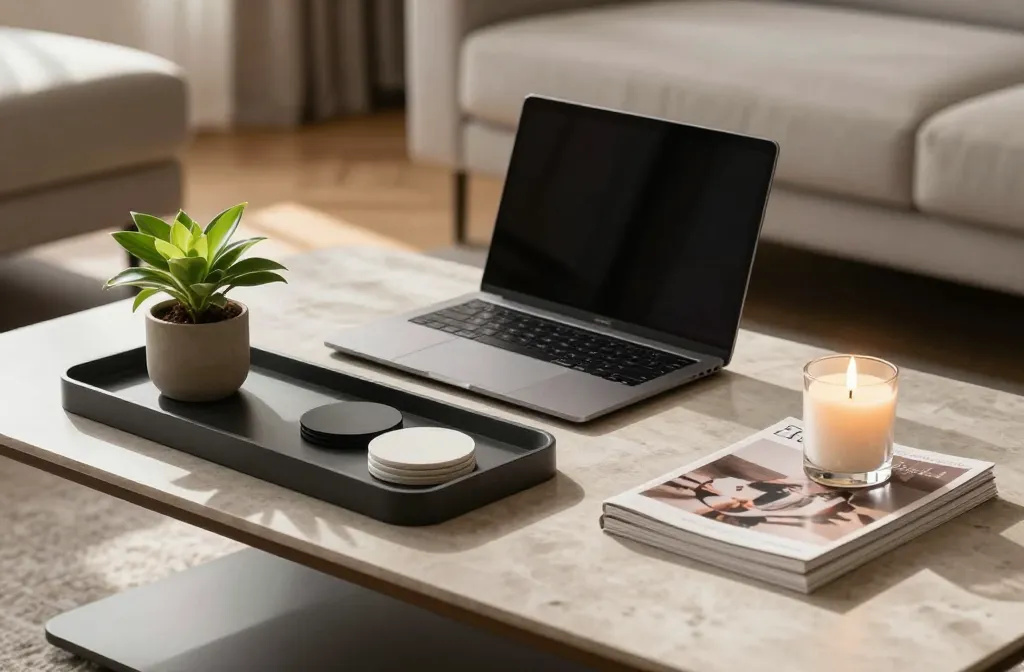
There’s a moment when a coffee table becomes a stage for daily life: remote controls, candles, coasters, a stack of magazines, a laptop, a plant that keeps inching toward the edge. The result can feel busy, crowded, and, frankly, unusable. If you’ve ever placed a decorative tray only to have it quickly become a catchall for odds and ends, you’re not alone. The problem isn’t the table itself—it’s how we approach it in real homes with real constraints: limited storage, rental restrictions, busy households, and budgets that don’t stretch to a redesign. This guide is built around practical, proven steps that solve a real problem: how to style a coffee table so it looks intentional, stays usable, and adapts to your daily routine.
What you’ll get from this article is not a Pinterest-perfect aesthetic that fails in practice. You’ll get a framework you can apply today, tailored to small spaces, apartments, and households juggling clutter. Each section identifies a specific problem, explains why it happens, provides a practical fix, walks you through implementation, notes real-life considerations, flags common mistakes, and offers a better alternative. Think of it as a compact, field-tested playbook for coffee-table confidence.
1) Create a Purposeful “Use Zone” on the Coffee Table
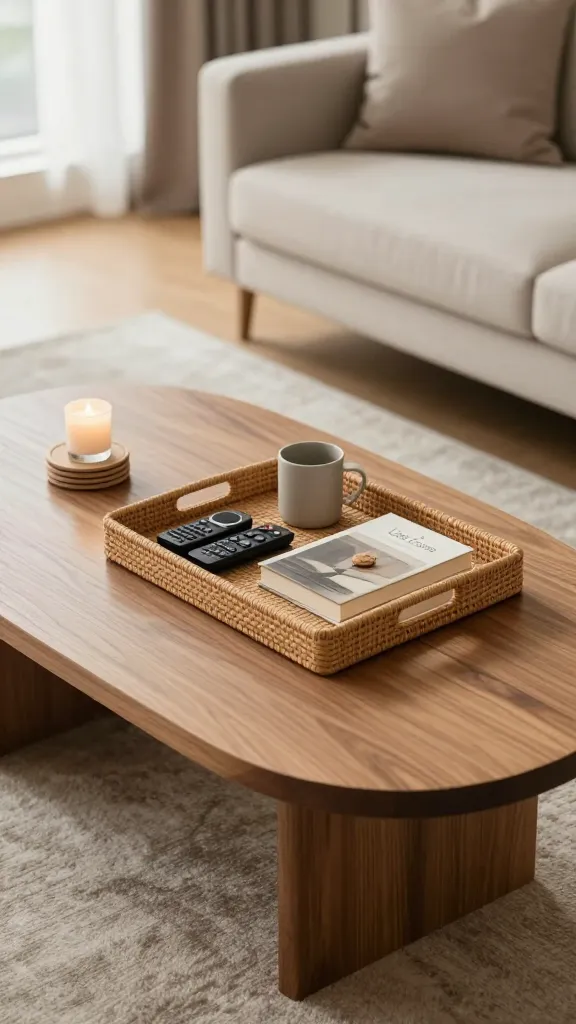
A common problem is the coffee table becoming a flat surface for everything: remotes, chargers, coffee cups, books, that one decorative object that’s never seen the light of day. The result is a chaotic mix that attracts more items and makes the surface feel smaller than it is. The root cause is absence of a defined, easy-to-reach niche for the things you actually use every day.
A. The Problem
<p: The table looks cluttered because you’re not separating daily-use items from decor and seasonal stuff. When everything sits on the tabletop, there’s no visual relief, no scale, and no sense of order. The human brain reads a surface with many different things as “too much.”
B. Why It Happens
<p: In busy living spaces, the coffee table serves multiple functions (snack tray, laptop stand, work surface, display). Without a clear, intentional zone for items you truly need often, you end up with a grab-bag surface that reconstitutes itself into clutter.
C. The Fix
<p: Establish a daily-use zone right on the table—one small tray or a shallow dish to corral what you reach for every day, plus a nearby secondary spot for items that can be tucked away until use.
D. How to Do It
- Choose a compact tray (about the size of a large placemat, 14–16 inches). Place it toward one edge or in a corner where traffic naturally flows.
- In the tray, keep:
- 2–3 remotes (for TV, streaming, smart home).
- One coaster set (one per person, plus a spare).
- One small notebook or tablet for quick lists or notes (optional).
- Use a separate, low-profile charging cable or wireless charger that sits just off the main surface (behind the tray or on a nearby side table) to avoid plugging and unplugging directly on the table.
- Reserve the rest of the surface for 1–2 decorative items that stay in place (a small vase, a candle, or a compact sculpture).
E. Real-Life Consideration
Small spaces: Choose a tray that fits on the corner so you don’t steal surface area from the middle. Apartments and renters: pick non-permanently placed trays; you can still lift and remove them if needed. Budgets: a simple metal or willow tray at a thrift store can work beautifully. If you’ve got kids, pick a tray with a lip to catch stray remotes or snacks and keep the rest in a nearby drawer or basket.
F. Common Mistake
Overloading the tray with too many items, or leaving a hidden “catch-all” basket on the table that becomes a black hole for clutter.
G. Better Alternative
Use two clearly defined zones: a Use Zone tray on one side for daily items, and a slim, open shelf or nearby side table for items that are not used daily but still need a home. This preserves surface calm on the coffee table while keeping functionality intact.
Related Posts:





2) Master Scale and Proportion with 1 Hero Piece and 2 Supporting Elements
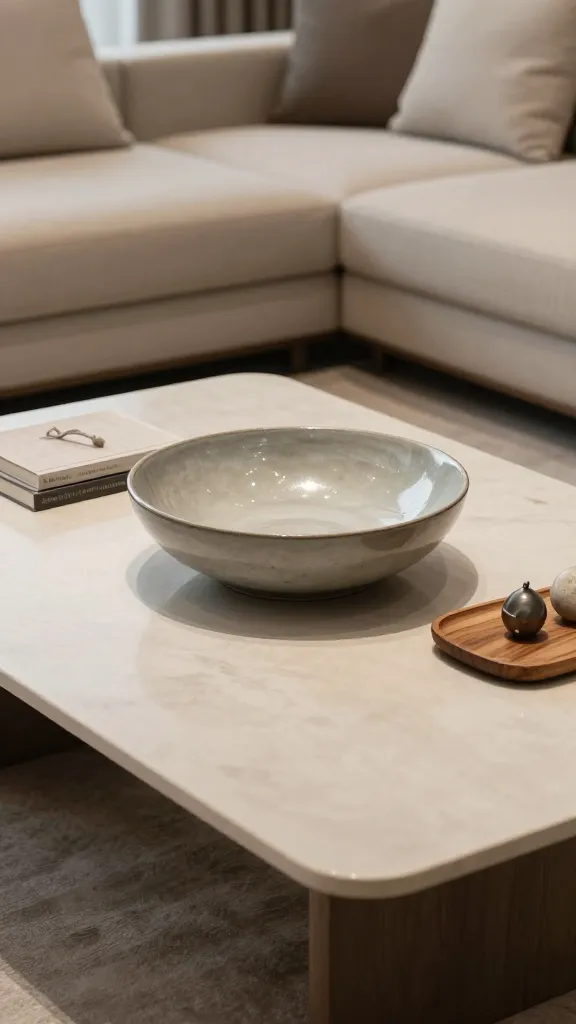
When a coffee table hosts too many objects, it fights for attention. The human eye needs a focal point (hero) and a couple of supporting items to feel balanced. Without this balance, the surface reads as busy, not intentional.
A. The Problem
<p: The table is filled with objects of similar weight and size, making the surface look flat and chaotic rather than curated.
B. Why It Happens
<p: People often grab the nearest decorative object and place it on the table, then repeat with another, ending up with a spread of items of equal visual weight. This lacks hierarchy and rhythm.
C. The Fix
Choose one dominant piece (the hero) to anchor the surface, then add two smaller supporting items that complement the hero in color, texture, or material.
D. How to Do It
- Pick one hero piece: a low, wide bowl, a sculptural object, or a tray with a single, meaningful element (like a small plant or candle).
- Choose two supporting items that share a color family or material with the hero to create cohesion (e.g., all brass tones, or all ceramic textures).
- Place the hero toward the center or slightly off-center; position the two supporting items at diagonally opposite corners or on either side to create visual balance.
E. Real-Life Consideration
Small spaces: choose low-profile items. Apartments: favor items that can be moved to clear the surface quickly for entertaining. Renters: avoid anything that requires anchors or nails; use weighty items that sit flat rather than fragile decorative pieces. Budget: you can find a hero piece at a thrift store; two supporting items can be inexpensive, like a candle and a small vase.
F. Common Mistake
Using multiple similarly sized objects that compete for attention rather than reinforcing a clear focal point.
G. Better Alternative
Set a clear hierarchy: 1 hero, 2 supporting pieces, and keep the rest off the table. If you need to seasonally update, swap the supporting pieces rather than changing the hero every few weeks.
3) Use Negative Space Intentionally to Improve Readability
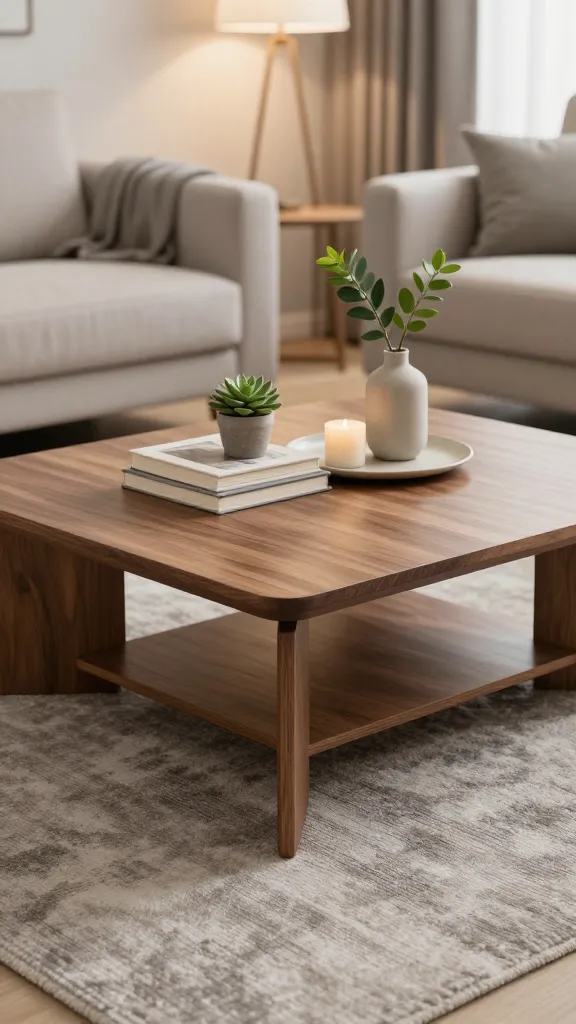
Clutter often looks worse when a surface has no breathing room. Negative space—the empty area between objects—helps the eye rest and makes the decor feel intentional rather than chaotic.
A. The Problem
<p: The coffee table is covered with items from edge to edge, leaving no gaps. Even small changes feel like a disruption because the eye has nowhere to rest.
B. Why It Happens
<p: It’s easy to equate “more items equal nicer decor,” especially when you’re feeling the pressure to fill space in a small room. But more items can obscure function, especially when the table also needs to be used for coffee and conversation.
C. The Fix
Leave deliberate negative space around the edges: a clear perimeter of about 2 inches if your table is small, slightly more on a larger table. Use this space to visually separate items and keep the surface usable.
D. How to Do It
- Remove items to create a clean edge around the table.
- Reposition the hero piece so it isn’t flush with the edge; keep it slightly inward to anchor the space.
- Place one small item per side, leaving gaps between objects so the eye can travel smoothly.
E. Real-Life Consideration
Small spaces: negative space is your friend; it prevents the table from feeling smaller than it is. Apartments/renters: emphasize non-adhesive, easily movable pieces to preserve flexibility. Budgets: negative space helps you achieve a high-end feel without buying more items.
F. Common Mistake
Cramming objects closer together to “maximize” surface use, which reduces readability and usability.
G. Better Alternative
Keep 1–2 unobtrusive empty panels on the surface so a quick laptop moment or a plate during coffee doesn’t feel like a blockage. If needed, use a low, flat tray to hold the essentials in a contained zone.
4) Prioritize Function Over Fads: When and What to Rotate Seasonally
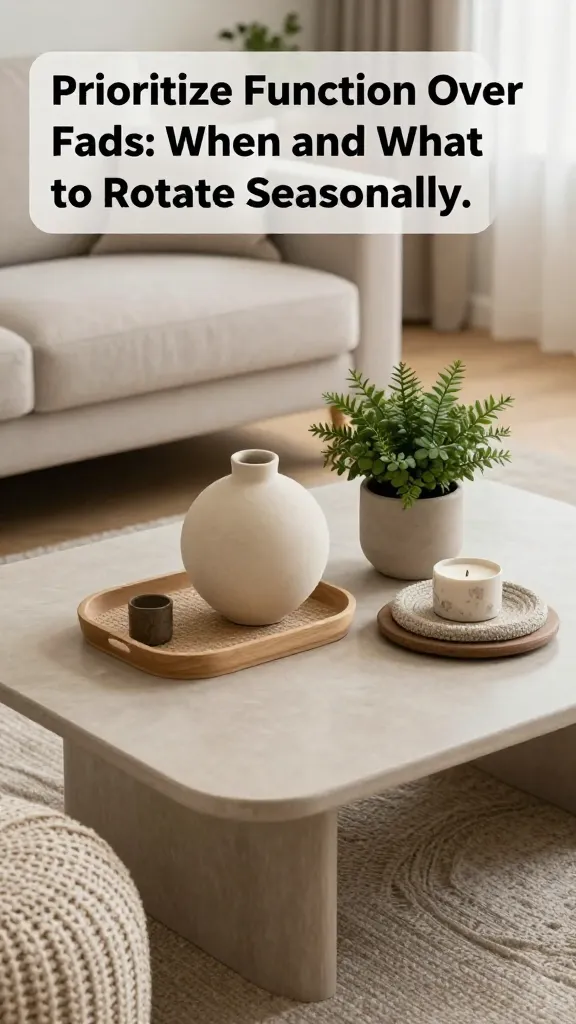
Seasonal styling can refresh a space without a full redesign, but frequent changes can become a trap—the “one more thing” syndrome that invites clutter if not bounded by a plan.
A. The Problem
<p: Seasonal pieces accumulate on the coffee table, making it feel like a showroom rather than a usable surface.
B. Why It Happens
<p: It’s natural to want the latest seasonal item in the spotlight, but small spaces amplify the impact of even small seasonal accents. Without a system, you end up rotating everything on and off the table, not keeping a core routine.
C. The Fix
Adopt a single-seasonal refresh protocol: swap only 1–2 items at a time, and keep a fixed “core” set that never moves.
D. How to Do It
- Establish a core set: a hero piece, a non-distracting plant or decorative object, and a small tray for daily items.
- Select 1 seasonal element (e.g., a small seasonal candle or a minimal decorative object) and replace it every season or every 6–8 weeks as needed.n
- Store non-seasonal items in a nearby cabinet, ottoman storage, or under-table drawer when not in use.
E. Real-Life Consideration
Small spaces: maintain a concise rotation so surfaces stay calm. Rentals: stick to non-permanent seasonal items like candles, small textiles, or compact figurines. Budget: choose one reusable piece (e.g., a seasonal candle) that you rotate rather than buying multiple items year after year.
F. Common Mistake
Over-rotating or buying too many seasonal pieces, which creates a moving target for clutter.
G. Better Alternative
Keep a single, neutral seasonal accent and swap only the color or texture (e.g., change a ceramic bowl’s glaze or a textile) rather than introducing multiple new items at once.
5) Build Quick-Access Storage That Doesn’t Look Like Storage
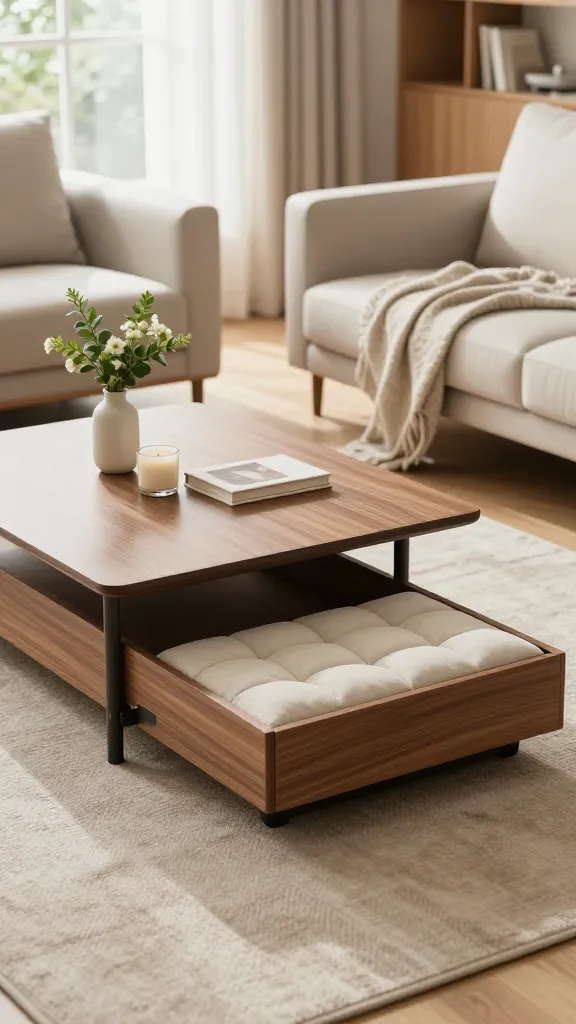
One key to keeping a coffee table from feeling cluttered is keeping items out of sight yet accessible. The trick is to design storage that blends with the table’s surface and doesn’t read as “storage furniture” to the eye.
A. The Problem
<p: You’ve got items that simply don’t have a home on or near the table, so they end up stacked on the surface or shoved into nearby shelves where you forget they exist until you move the room around.
B. Why It Happens
<p: People lean toward obvious storage solutions (a basket on the table) but don’t consider how people reach for items mid-activity or how a basket full of cords hides what’s inside.
C. The Fix
Use compact, integrated storage close to the surface but not on it—like a shallow tray tucked on a nearby side table or a slim storage ottoman with a lid that slides under the coffee table when not needed.
D. How to Do It
- Choose a slim storage option that fits under the coffee table edge or on a nearby side table (dimensions around 12–16 inches long, 4–6 inches tall).
- Inside, store remote chargers, extra coasters, napkins, and a small notepad or mini notebook for quick lists.
- Label or section the interior to keep items easy to find (see caveat below about labels: only label items that you actually reference often or share with others).
E. Real-Life Consideration
Small spaces: go for under-table storage in a slim, flat bin that slides in and out easily. Apartments: avoid bulky crates; pick a low-profile bin or a shallow basket. Renters: look for modular, moveable organizers that won’t require permanent mounting. Budget: repurpose a shallow decorative tray as an opening to a slim storage bin beneath.
F. Common Mistake
Using a deep basket or overtly decorative storage that becomes a visual weight instead of a practical solution, making the area feel heavier and more cluttered.
G. Better Alternative
Opt for a low-profile, open storage tray that visually aligns with the table’s surface and keeps items visible but contained. When possible, keep the majority of “not-on-table” items in a separate storage zone that’s near enough to be convenient but far enough to prevent surface clutter.
Practical “Before You Buy” Checklist for Coffee-Table Styling
Before you purchase any decorative item or storage solution for the coffee table, run through this quick check to ensure you’re solving a real constraint rather than chasing a trend.
- Measure the table and available adjacent surface area to ensure any item you’re considering won’t crowd the table.
- Identify which items actually get used weekly and which are occasional or seasonal.
- Determine storage options you already own that can be repurposed (a shallow tray, a small basket, a lidless box, a magazine holder).
- Ensure you have a simple rotation plan: if you’re replacing an item, know where it goes when not in use.
- Avoid items that require constant rearrangement to use; choose pieces that stay put most days.
Remember: the goal is a calmer surface that supports daily life, not a decorative platform that doubles as storage chaos.
Real-World Scenarios: How This Works in Different Homes
Below are concrete, situation-specific insights that map to common U.S. living arrangements — from studios and small apartments to family rooms with kids and rental homes where permanent changes aren’t possible.
Studio or Small Apartment: Make every inch count
- Problem: Limited surface area and a need for a flexible workspace.
- Fix: A hero piece that’s visually lightweight (e.g., a ceramic bowl in one corner) and two supporting items that sit slightly inward. Add a slim, movable charging tray that can be removed during meals or guests.
- Implementation: Use a corner position for the hero piece; keep the rest of the surface free except for a single coaster set and a small plant. Store remotes in a near-by drawer or vertical organizer to avoid piling items on the table.
- Common mistake: Overfilling with multiple decorative pieces because there isn’t a room elsewhere for extras.
Rental Living Room: Respect the rental and budget
- Problem: No nail holes and limited ability to alter furniture layout; frequent moves require portable solutions.
- Fix: Use non-permanent, moveable storage and decor. Avoid heavy, bulky items that can rest directly on the table.
- Implementation: Choose a hero piece that’s lightweight and easily replaced (a sculptural ceramic object) with two supporting items in the same color family. Use a cloth or silicone coaster set that can be stored flat when not in use. Place items on the table only when in use; otherwise, store them in a nearby basket or shelf.
- Common mistake: Rigidly keeping every season’s items on the table; it creates a sense that you’re constantly staging for guests rather than living in the space.
Family Room with Kids: Durable materials win
- Problem: Small parts, breakable decor, and coffee-table-level risk of mess during play.
- Fix: Choose materials that can handle a bump or spill and use closed storage when possible.
- Implementation: Hero piece can be a sturdy, wide ceramic bowl; two supporting items can be a lower-profile plant and a simple, wipe-clean tray. Store small toys or remote controls in a nearby, shallow bin that slides under a nearby console or sofa table.
- Common mistake: Using delicate items that get knocked over easily and create a cleanup job after every play session.
Everyday Busy Households: Quick resets are essential
- Problem: The table becomes a catchall during the day, especially in mornings and evenings.
- Fix: Create a daily reset routine with an easily removable tray and a small “one-spot” for everyday items.
- Implementation: A small tray for the daily items leaves the rest of the surface clear. When guests come, remove nonessential items from the tray and place a simple, uniform decorative piece to maintain a calm vibe.
- Common mistake: Neglecting to reset the surface after use; you end up repeating the clutter cycle every day.
Maintenance: Keeping It Looking Honest and Easy
Style that sticks is style that’s easy to maintain. Here’s a simple, repeatable routine you can actually keep up with.
- Weekly: Do a 2-minute surface check. If you wouldn’t place it on the table for a short coffee with a guest, remove it or tuck it away.
- Monthly: Reassess the hero and supporting pieces. If you’re not enjoying a item, replace it with something that maintains balance and function.
- Seasonally: Rotate one element (never more than two) to refresh the space without overwhelming the table.
Be mindful of lighting and texture
Ambient lighting can impact how clutter feels. If your coffee table is in a dim corner, a small, unobtrusive light (like a tiny LED candle or a low-profile lamp on an adjacent table) can help your space feel more open. Texture adds depth without visual heaviness—think matte ceramics, soft textiles, and glass with a soft sheen rather than mirror-like surfaces that reflect clutter.
Minimalism Without Sterile: How to Keep Character While Reducing Clutter
Minimalism isn’t about empty surfaces alone; it’s about ensuring every item earns its place. You can keep personality and avoid clutter by focusing on quality over quantity, and by choosing materials and finishes that look polished together.
A. The Problem
Overly sparse decor can feel cold or impersonal; people worry about losing personality.
B. Why It Happens
Belief that fewer pieces means less character, which leads to choosing plain, generic objects that blend into the table rather than add interest.
C. The Fix
Curate a small set of objects with strong lines, meaningful texture, and a shared color palette. For example, one matte ceramic piece, one glass item with a soft sheen, and one plant in a neutral pot can add warmth without visual noise.
D. How to Do It
- Limit yourself to 3 items: a hero piece, a supporting piece, and a small plant or candle.
- Choose color-family cohesion: all items in soft neutrals (creams, beiges, taupes) or a restrained accent like sage green or deep blue.
- Ensure each item has a function or a story (e.g., a vase with a single stem, a candle that doubles as a scent cue, a wooden sculpture with a simple silhouette).
E. Real-Life Consideration
Small spaces: 3 items feel less crowded because their shapes are thoughtful rather than busy. Renters: choose non-permanent textures and finishes that won’t scratch or mark surfaces. Budget: invest in one quality piece and two complementary items rather than multiple trend items.
F. Common Mistake
Choosing “minimal” by default without considering warmth and function; ends up looking unfinished.
G. Better Alternative
Balance minimalism with a touch of warmth: a natural material (wood, stone) in one piece, a soft fabric texture in another, and a simple plant to bring life.
FAQ: Quick Answers to Common Coffee-Table Styling Questions
Should I hide electronics on the coffee table?
Try to keep electronics in a nearby, designated spot (like a shallow tray or side table) and use low-profile charging solutions. If you must have a device on the table, use a small, closed tray to keep cables contained and out of sight when not in use.
What if I have a very shallow table?
Prioritize a single, flat hero piece and one small supporting item. Use a slim tray mounted above the table’s surface (if allowed by furniture style) or store additional items in a nearby surface that’s still accessible.
How do I keep this from looking like a “showpiece” rather than a usable table?
Reserve at least half of the table for actual use—two inches of clear edge around the perimeter and a clear center area when you’re actively using the surface. Remove nonessential items during meals or gatherings.
What if I share the space with others who have different tastes?
Use a neutral hero piece and two supporting items in a shared color family. Keep a simple rotation plan and store personal items out of sight in a nearby basket so the space remains cohesive for everyone.
How do I maintain this without feeling boxed in?
Establish a 2-minute weekly check-in and a monthly refresh. If you find you’re moving things around daily, you likely have too many items or the layout needs adjustment. Reassess hero/supporting ratios and adjust.
Conclusion: Clear Surface, Confident Living
A coffee table should support conversation, coffee, and casual reading—not become a battlefield against clutter. By creating a purposeful use zone, establishing a visual hierarchy, embracing intentional negative space, managing seasonal updates with restraint, and building near-table storage that remains functional yet discrete, you can achieve a look that feels both calm and lived-in. The practical steps above aren’t about perfection; they’re about making a space that works with your life, not against it. Start with one section today: designate a Use Zone with a predictable home for remotes and coasters, then you can build from there. A calmer table translates to a calmer room—and a calmer day.
Next step: pick a single hero piece that speaks to your space’s vibe, pair it with two supporting items in a cohesive color family, and create a clear edge of negative space around the arrangement. Measure, keep the surface accessible, and start the habit of a weekly 2-minute reset. Your coffee table will feel intentional, not crowded, in no time.