Imagine a Thanksgiving afternoon where the kids are happily occupied without the chaos of loud games, screens, or a flood of new crafts that take over every surface. In small homes, apartments, or rental spaces, the challenge isn’t finding ideas—it’s finding ideas that fit your layout, budget, and daily routine. These 20 activities are designed to be quiet, nurturing, and practical, with a focus on home organization and minimal clutter. Each section identifies a real problem, explains why it happens, and offers a concrete fix you can implement this week.
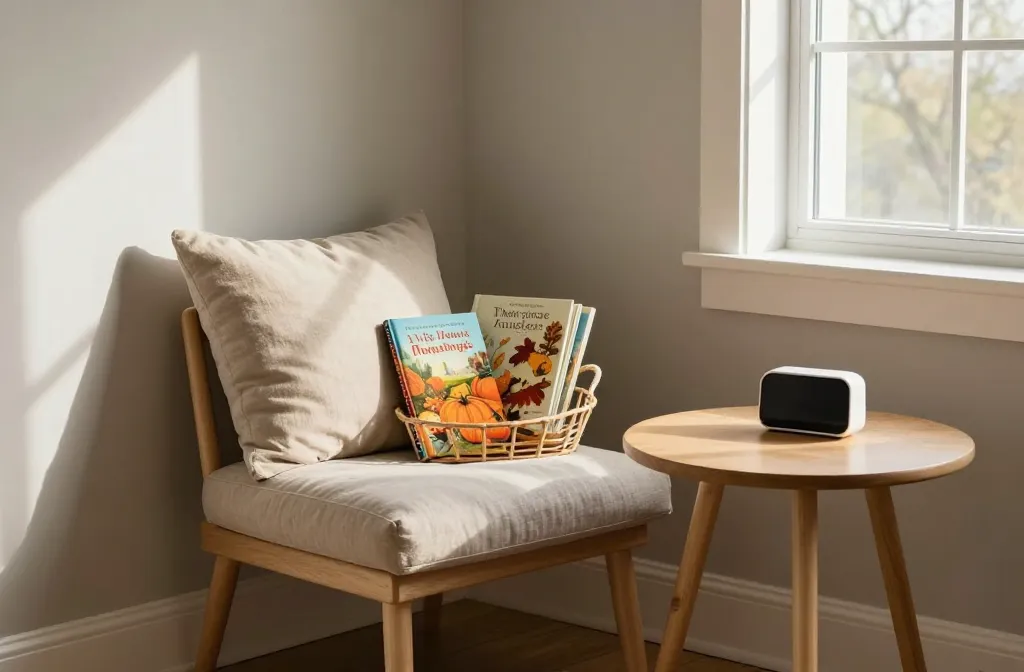
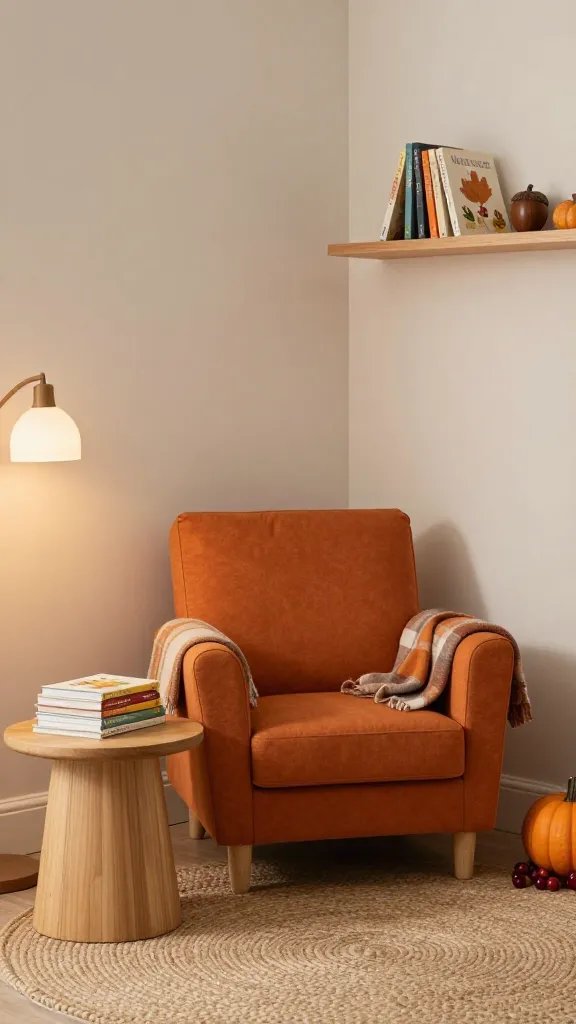
1. Create a “Use First” Reading Corner for Thanksgiving-Themed Short Stories
The problem: Kids wander, repeatedly pulling out toys and clutter, while you’re trying to host or finish Thanksgiving prep.
Why it happens: A busy home means many items compete for attention, and short attention spans lead to scattered play.
The fix: Designate a small, calm reading nook with a limited, rotating stash of short, seasonal stories (15–20 minutes each). Keep it simple to avoid noise and mess.
How to do it:
- Pick one compact chair or cushion and a small side table near a wall (safe, out of main traffic).
- Choose 5–8 Thanksgiving-themed picture or early-reader books. Place them in a shallow bin or basket you already own.
- Set a 20-minute timer; when it goes off, kids rotate to the next quiet activity.
Real-life consideration:
– Small spaces: Place the reading corner in a corner of the living room or hallway to avoid blocking main traffic.
Common mistake: Overstuffing the bin with too many titles—kids won’t know where to start.
Better alternative: Keep a short, curated stack and swap titles weekly from your local library or digital options.
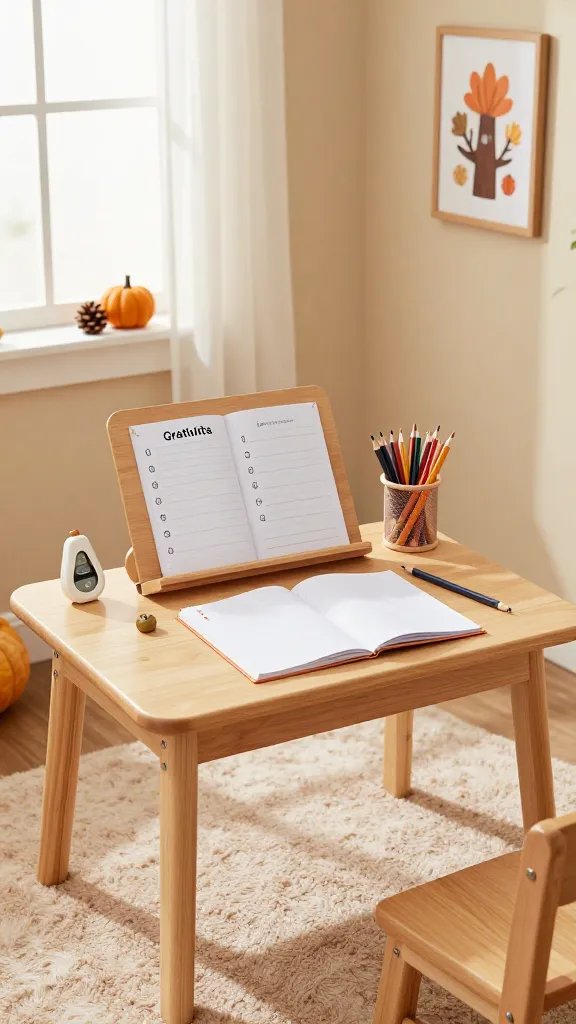
2. Thanksgiving Journaling Station: Quick Gratitude Pages
Related Posts:



The problem: Kids’ feelings and experiences get buried under plates and prep, and you miss opportunities to connect.
Why it happens: The holiday rush pushes expression to the back burner; journaling feels abstract and fragile for younger kids.
The fix: A compact gratitude journaling station with reusable prompts and a dedicated notebook. Encourage one page per child per day, with a simple format.
How to do it:
- Use a single, small notebook or a clipboard with 10 pre-printed prompts (e.g., “Today I am thankful for…”).
- Provide a pencil, a few stickers, and a clean surface on a kitchen counter or coffee table.
- Offer a 5-minute window after lunch or before nap to write.
Real-life consideration:
– Renters: No wall-mounted corkboard? Use a simple binder ring or clip to keep pages together on a shelf.
Common mistake: Overcomplicating prompts, which makes kids resistant to start.
Better alternative: Use a single prompt per day to simplify entry and reduce friction.
3. Quiet Cooking Journal: “What I Learned While Helping in the Kitchen”
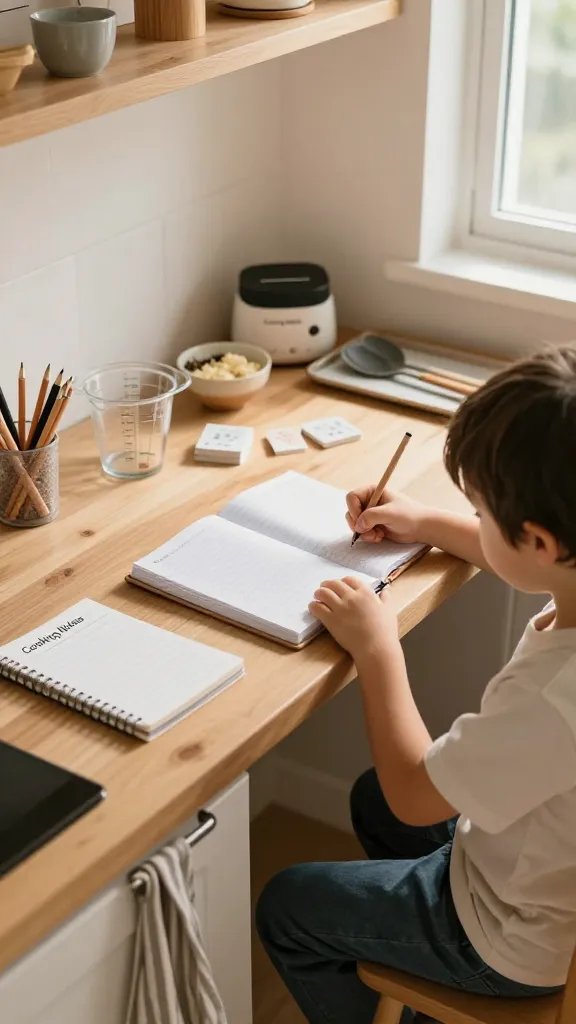
The problem: Helpers interrupt concentration during cooking; you lose track of little tips or mistakes.
Why it happens: The kitchen becomes a hub of activity, and kids’ curiosity often leads to questions that derail the flow.
The fix: A small, portable cooking journal where kids can jot what they did, what surprised them, or a math observation (counting, measuring).
How to do it:
- Keep a slim notebook or index cards in a drawer near the stove; label a small pencil cup “Cooking Notes.”
- Assign 2–3 prompts: “What did I measure?”, “What surprised me?”
- Use a timer to reclaim focus after 15 minutes of help time.
Real-life consideration:
– Limited storage: One notebook shared among siblings keeps clutter minimal.
Common mistake: Writing pages for each dish; a few lines per entry work best.
Better alternative: Use sticky notes to capture quick observations; file them in a binder.
4. Quiet Card Craft: Thankful Cards with Minimal Supplies
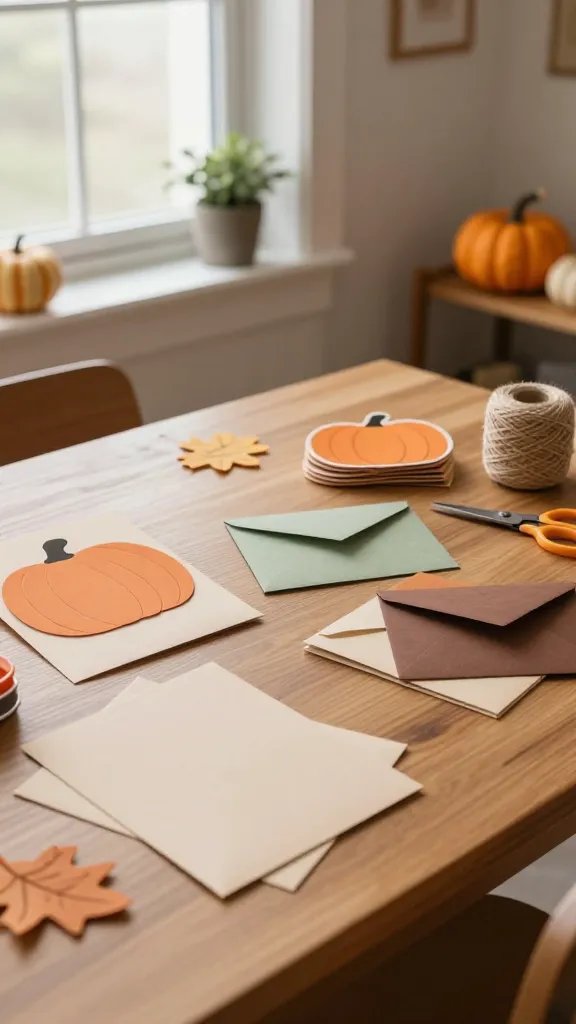
The problem: Thanksgiving crafts explode mess and storage needs, plus many kids struggle with complex instructions.
Why it happens: Parents want something meaningful but end up with glitter everywhere and small leftovers afterward.
The fix: Simple, silent card-making with pre-cut shapes and a limited color palette; cards can be used after the meal to thank hosts or guests.
How to do it:
- Prepare a kit: pre-cut card bases (plain cardstock), a few shapes (pumpkins, leaves) cut from colored paper, and a small glue stick.
- Provide 2–3 markers or pencils per child and a single sheet of peel-and-stick embellishments.
- Set a 15-minute crafting window at a side table away from the main kitchen hub.
Real-life consideration:
– Rental restrictions: No hot glue or wet glue; use glue sticks or double-sided tape.
Common mistake: Cutting too many shapes; kids get overwhelmed.
Better alternative: Pre-select shapes and colors; let kids choose from a small, organized palette.
5. Thanksgiving-Themed Domino Painting: Calm, Measured Creativity
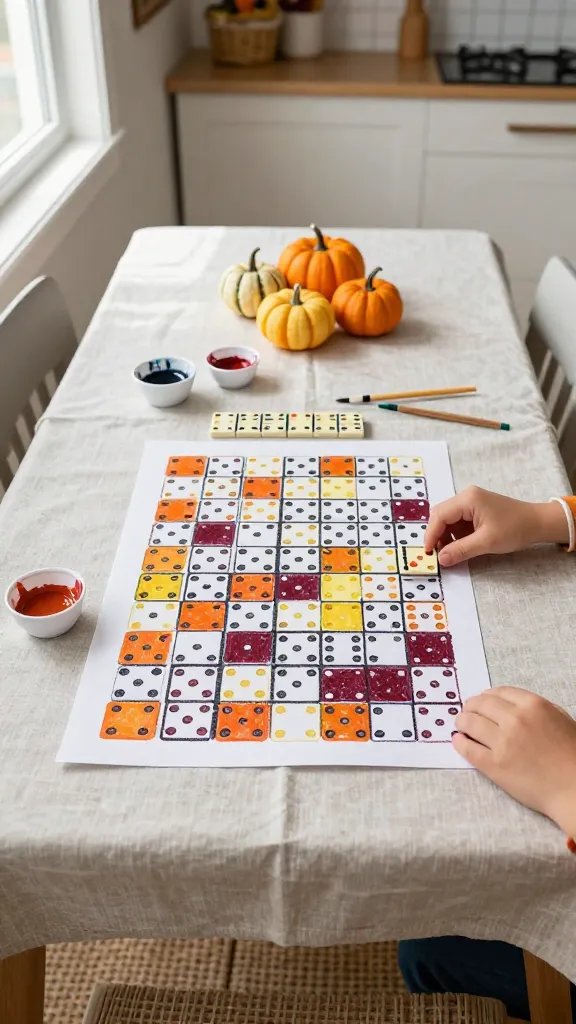
The problem: Kids crave creativity but messy paints and loud tools cause anxiety for parents about cleanup and carpets.
Why it happens: The art process becomes a free-for-all—not ideal for small spaces or rented homes.
The fix: Domino painting uses a sheet of paper and a few paints; kids paint in a controlled, repeatable pattern to minimize smudges and drips.
How to do it:
- Lay a large sheet of craft paper on a table or on the floor with a washable mat beneath.
- Provide 3 colors and a small token (e.g., a leaf stamp) to press for each completed “domino” block.
- Assign a rhythm: paint one domino, pass the brush to the next child, and rotate until the sheet is filled with calm, geometric patterns.
Real-life consideration:
– Small spaces: Use a single, small used dryer sheet between strokes to minimize marks on the table; wipeable surface helps.
Common mistake: Letting the kids go wild with color, causing a big mess.
Better alternative: Maintain a rule of one color per block and a wipe-clean mat to keep cleanup quick.
6. Seasonal Sound Tracker: Quiet Movement with Visual Cues
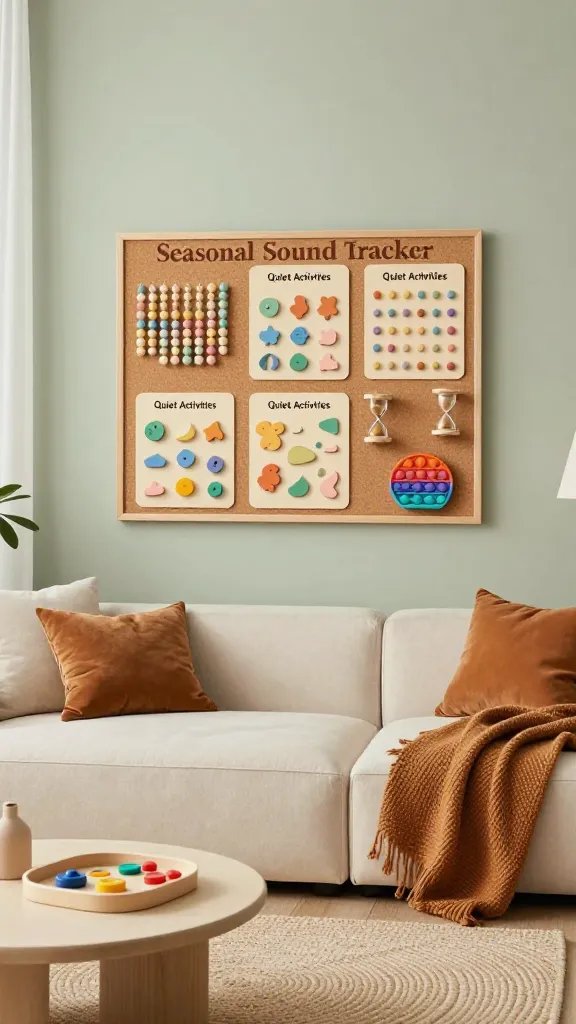
The problem: Noise spikes when kids try to find something to do; you want to maintain a calm home environment.
Why it happens: In a busy house, activity often translates to sound, especially when items are scattered and edible temptations are around.
The fix: A visual sound-tracking board with quiet activities (counting beads, shape sort, puzzle) to guide behavior without talking over each other.
How to do it:
- Mount a small corkboard or magnetic board on a wall near a seating area.
- Attach 6–8 activity cards with magnets or clips: bead counting, color matching, small puzzle, leaf tracing, etc.
- Explain the daily “quiet channel” rule: when the timer starts, kids pick one card to begin quietly.
Real-life consideration:
– Renters: Use removable adhesive or command strips to mount the board without damaging walls.
Common mistake: Cards with too many steps; keep tasks short and self-contained.
Better alternative: Pick a mix of independent and cooperative tasks to accommodate different age groups.
7. One-Ploor Treasure Hunt: Indoor Scavenger Hunt with a Purpose
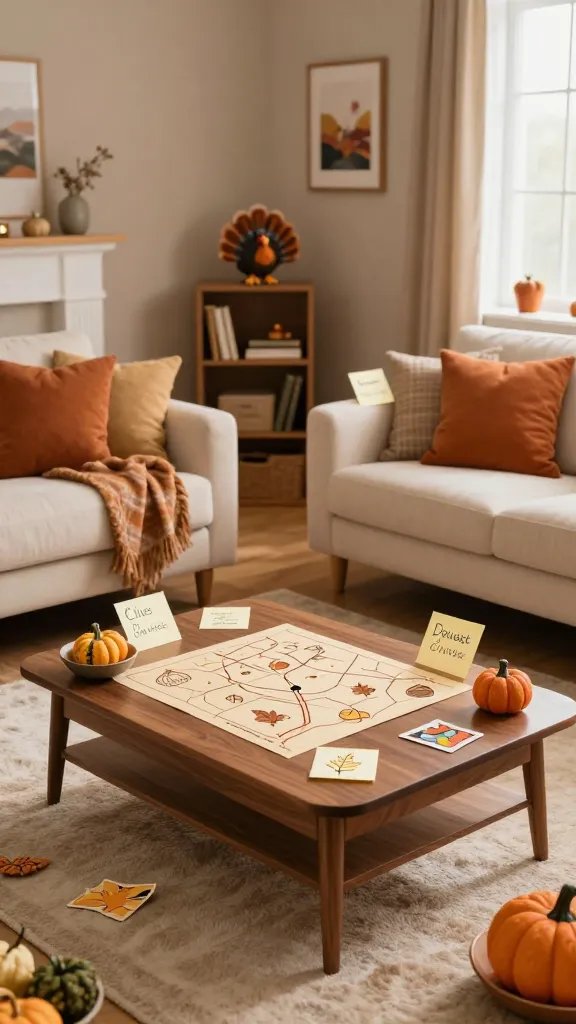
The problem: Kids want to explore, but a classic hunt can disrupt food prep or create clutter in every room.
Why it happens: A full-house scavenger hunt needs extensive planning and space, which isn’t always available.
The fix: A single-room treasure hunt focused on Thanksgiving-themed items or colors, with a simple map or picture clues.
How to do it:
- Choose a single space (living room or kitchen nook) and place 6–8 clues around it on sticky notes.
- Each clue leads to a small, quiet reward (stickers, a sticker badge, a temporary tattoo).
- End with a small “found it” moment, then reset the clues for the next activity.
Real-life consideration:
– Small spaces: Limit clues to visible surfaces; avoid climbing or moving furniture.
Common mistake: Making clues too hard for younger kids.
Better alternative: Use picture clues for younger children and keep the hunt within one room for safety and ease.
8. Quiet Color Sorting with Seasonal Tokens
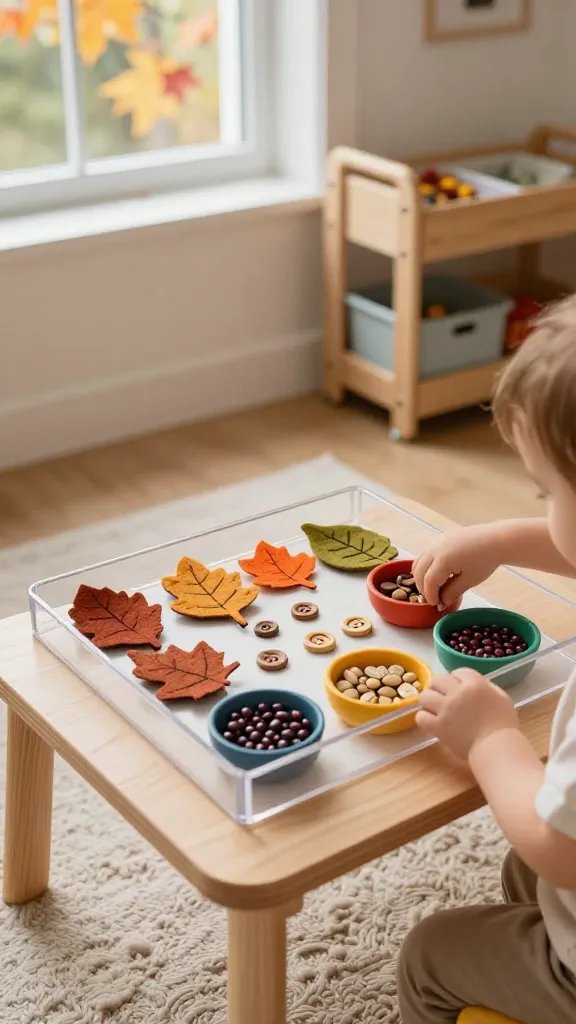
The problem: Kids crave color exploration but paint and glitter create a big cleanup job after meals.
Why it happens: Color sorting is tactile and engaging; however, color chaos in a small space cascades quickly.
The fix: A color-sorting station using seasonal tokens (nuts, seeds, felt shapes) to group by color—no mess, high engagement.
How to do it:
- Gather a shallow tray, a few bowls, and a handful of tokens—leaf shapes, fall-colored buttons, dried beans (if safe for your space).
- Assign color groups and provide a “sorting by color” card to guide the activity.
- Set a 10-minute timer for focused sorting, then swap tokens after each round.
Real-life consideration:
– Limited storage: Use the same tray and bowls for multiple activities to avoid clutter.
Common mistake: Overloading with too many tokens; keep to a few shapes and colors.
Better alternative: Use dry beans or pasta as color tokens (food-safe) if you’re comfortable with cabinet access and cleanup gear ready.
9. Quiet Puzzles: Seasonal Pairs or 4-Piece Puzzles
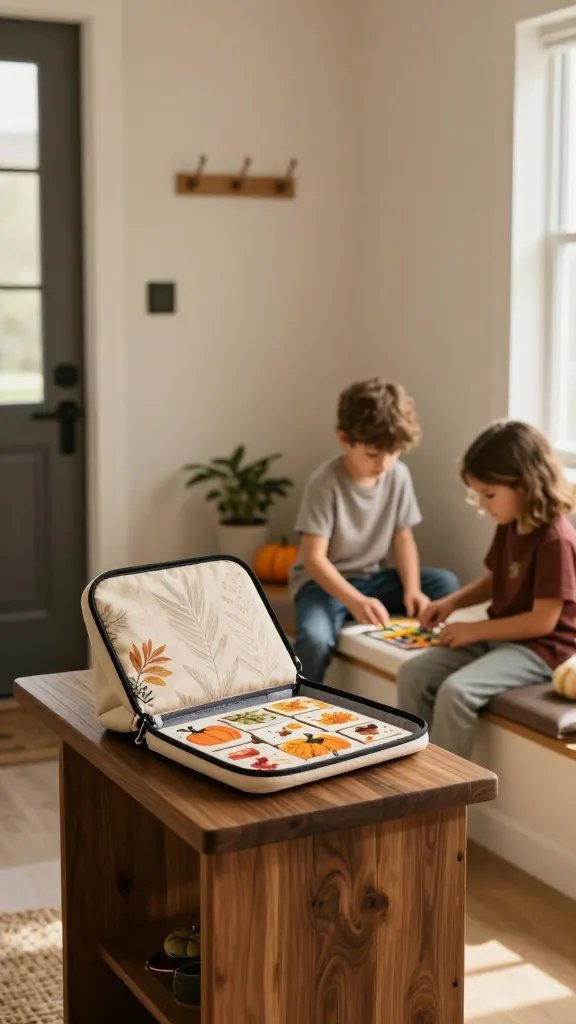
The problem: Puzzles are great but large, colorful sets can overwhelm small living spaces and create distraction during hosting.
Why it happens: Puzzles require space and time; in a busy home, you need compact, quick versions.
The fix: 4-piece or 6-piece seasonal puzzles stored in a small bag that fits in a palm-sized space.
How to do it:
- Keep a small 4–6 piece puzzle in a pouch near the kitchen door or entry table.
- Invite kids to complete a mini-puzzle during a specific quiet window (before guests arrive or after dessert).
- When done, slide the pieces back into the pouch for future use.
Real-life consideration:
– Renters: No problem with nap space or entryways; puzzles stay on a shelf.
Common mistake: Choosing overly complex puzzles; pick age-appropriate ones.
Better alternative: Swap to matching card games for even less space consumption.
10. Autumn Scent-and-Texture Drawer: Tactile Calm for Restless Moments
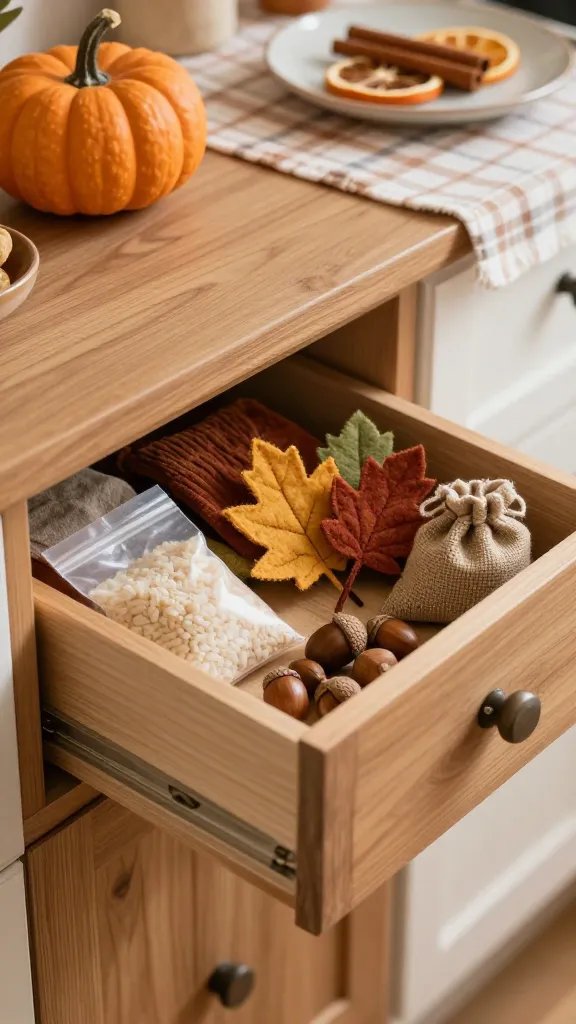
The problem: Kids want to touch everything, which can cause mess and spills near eating areas.
Why it happens: Sensory play is appealing; with Thanksgiving scents, textures, and colors, it’s easy to pull things out of cabinets.
The fix: A small drawer or tray filled with safe-textured items that provide tactile exploration without making a mess.
How to do it:
- Fill a shallow tray with items like fabric swatches, felt leaves, a small bag of rice (in a sealed bag if you’re concerned about spills), and smooth stones.
- Label the tray simply and place it on a low table away from food prep areas.
- Limit to 5–7 items to keep clutter minimal.
Real-life consideration:
– Limited storage: Use a tray that doubles as a lid for a clear bin when not in use.
Common mistake: Using tiny items that drop through cracks or are hard to clean.
Better alternative: Use cloth or silicone items that wipe clean easily.
11. Quiet Thankful Chairs: A Cozy, Low-Noise Seating Area
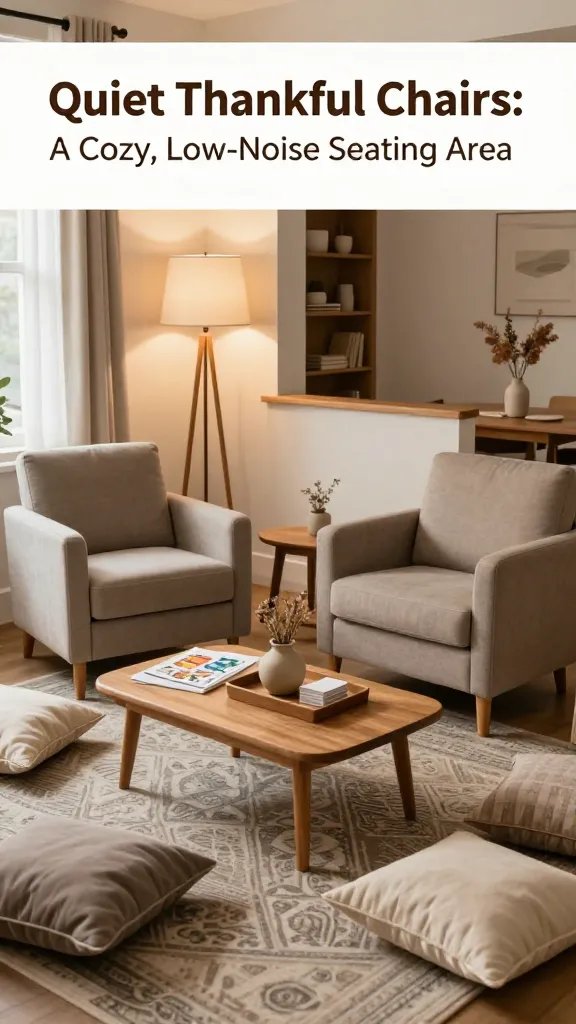
The problem: The family wants to gather, but conversations stand in the way of a calm environment, especially with kids moving around the table.
Why it happens: The main seating area becomes a hub; kids perch, squirm, and create noise while waiting for dessert or a movie.
The fix: A small, low-traffic seating cluster with a single low table for quiet activities. It creates a calm “waiting zone.”
How to do it:
- Place two or three identical chairs or floor cushions around a small coffee table, away from the main dining area.
- Keep a few quiet activities nearby (from sections above) to occupy kids during transitions.
- Encourage adults to rotate through seating areas, keeping noise levels down in the central space.
Real-life consideration:
– Apartment living: Choose compact, stackable chairs or foldable cushions to minimize footprint when not in use.
Common mistake: Using a “waiting area” that becomes a dumping ground; designate a limited space and keep it tidy.
Better alternative: Make the space washable and easy to wipe down so it remains inviting and neat.
12. Mini Gratitude Gallery: Clip-It Display for Daily Wins
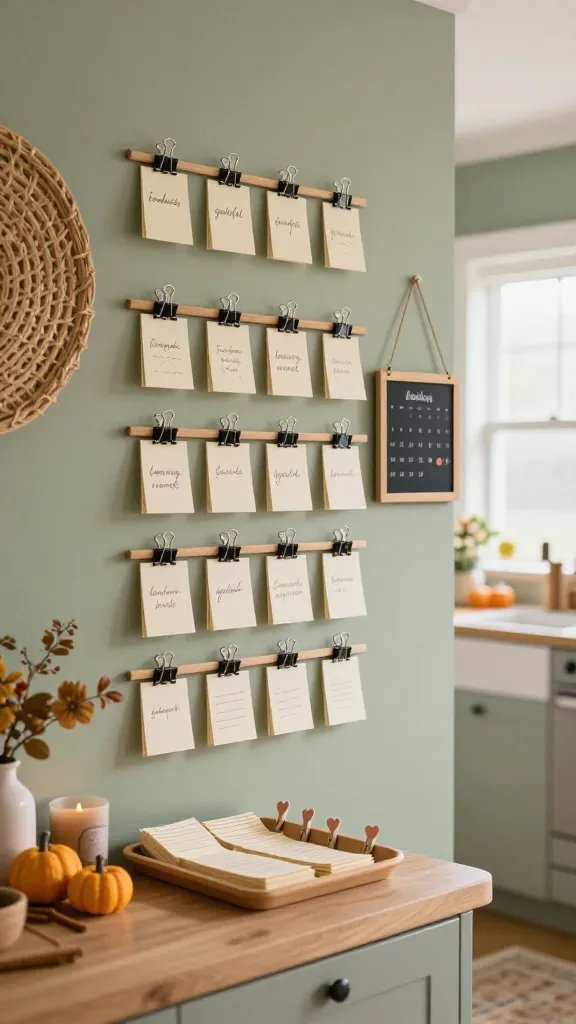
The problem: It’s hard to remember small acts of kindness or learning moments during a busy holiday season.
Why it happens: Our brains rush to next task; a physical reminder helps reinforce calm energy and appreciation.
The fix: A small clip-in gallery on a wall or door to display one “grateful moment” per day or per activity.
How to do it:
- Install a small corkboard or a row of binder clips on a wall near the kitchen; keep a stack of printable slips nearby.
- Encourage kids to write a one-line gratitude moment each day and clip it to the board.
- Rotate the display weekly to reset attention but retain meaningful moments.
Real-life consideration:
– Rental properties: Use removable hooks and avoid wall damage; reuse the same space after each season.
Common mistake: Overloading with too many notes; keep it tidy and legible.
Better alternative: Use a digital frame or whiteboard to minimize paper waste for longer-term use.
13. Quiet Tree Bark Rubbing Activity: Sensory Paper Art
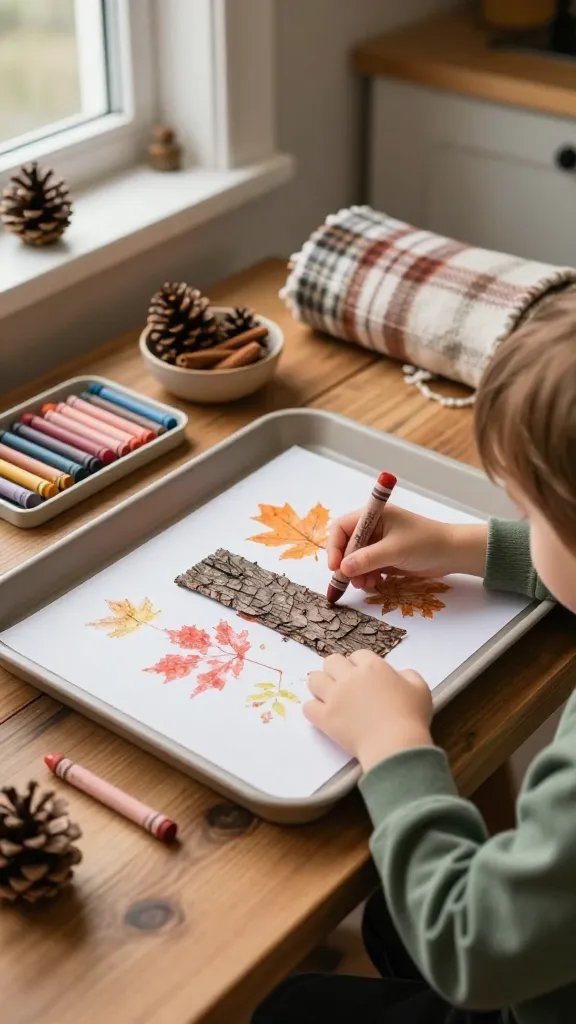
The problem: Kids want a tactile art project but traditional paints are a mess and carpets are at risk.
Why it happens: Not all homes have a dedicated art space; you need a contained activity with minimal cleanup.
The fix: Tree bark rubbing with crayons on a sheet of paper taped to a tray—great for a quick, contained activity that gives a fall texture print.
How to do it:
- Prepare a sheet of paper and a set of crayons in fall hues.
- Tape the paper to a shallow tray; kids rub the crayon over a bark print or a textured surface to create patterns.
- Display their prints along a hallway or kitchen wall for a simple gallery effect.
Real-life consideration:
– Small spaces: Use a tray with a lid to store when done to avoid pet or toddler interference.
Common mistake: Using too many colors; stick to 2–3 consistent hues to reduce chaos.
Better alternative: Replace bark with textured leaves for a fall theme and easier cleanup.
14. “Simple Settings” Personalize the Table with a One-Word Theme
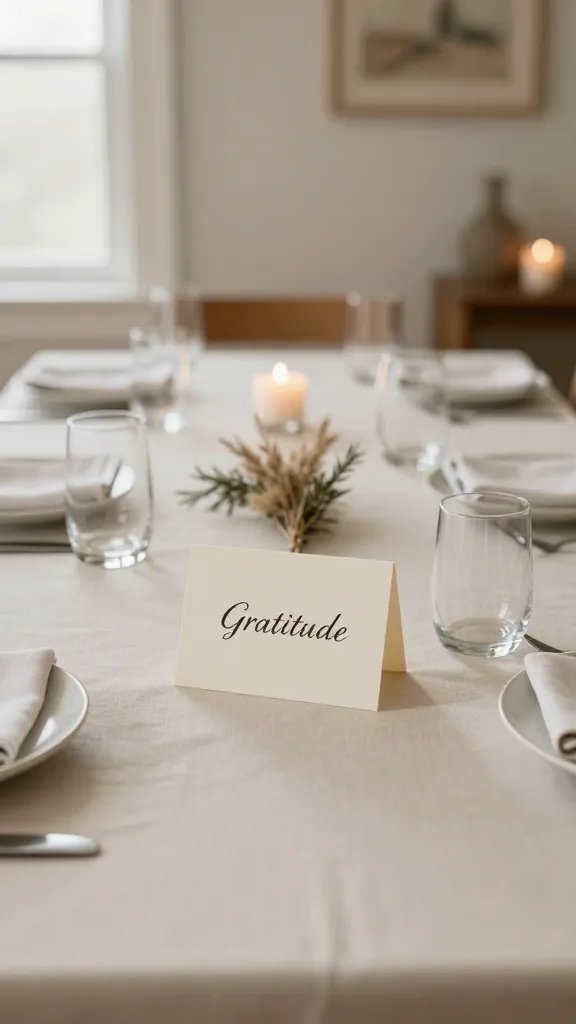
The problem: Family tables look crowded with place cards and décor, creating visual noise before a meal.
Why it happens: A desire to personalize the meal competes with tidy surfaces and easy maintenance.
The fix: A single-word theme (Gratitude, Together, Harvest) written on a small card at the center of the table, paired with simple place settings.
How to do it:
- Choose 1–2 colors and a single word per year; print or write it on a small card.
- Set the card at the center; use matching linen napkins to keep a calm, cohesive look.
- Pair a small, reusable centerpiece (a few dried leaves in a shallow bowl).
Real-life consideration:
– Budget: Use items you already own; avoid buying new centerpieces for one day.
Common mistake: Overcomplicating with multiple words or busy signage.
Better alternative: Keep it consistent; change the word annually to avoid clutter).
15. Cozy Lighting Window: Soft Glow Without Overheating Space
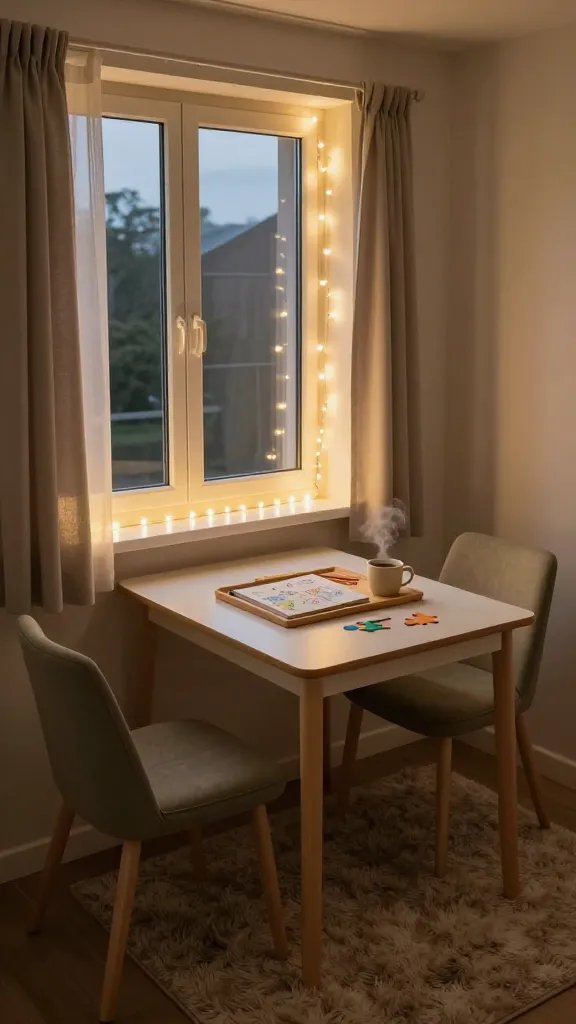
The problem: Bright overhead lights and candles create heat, glare, and noise in a compact apartment with dinner prep mid-flow.
Why it happens: The brightness competes with natural light and creates a harsh environment for kids to focus on quiet activities.
The fix: A small string of warm LED lights in a window or along a tray creates cozy ambiance without adding clutter or heat.
How to do it:
- Choose battery-operated, low-heat LEDs and place them in a window or along a shelf.
- String suggests a quiet mood; keep the cord hidden behind a curtain or under a shelf to avoid tripping hazards.
- Dim the overhead light to balance the glow.
Real-life consideration:
– Renters: No electrical changes needed; use removable, battery-powered options.
Common mistake: Using bright, cool-white LEDs that feel clinical.
Better alternative: Use warm white LEDs with soft diffusion for a cozier look.
16. Mini Meal Prep “Quiet Kitchen Helpers” Checklist
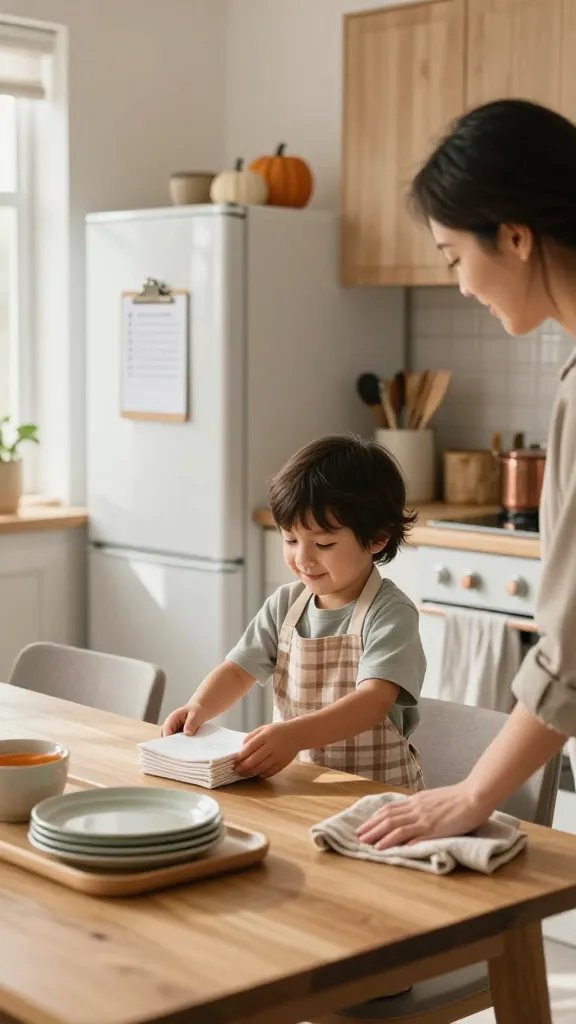
The problem: Kids want to help in the kitchen but cooking noise and multiple tasks break up focus during the rush.
Why it happens: The kitchen workflow requires attention; kids’ contributions can derail that if not well-scoped.
The fix: A compact, single-task checklist for kids to complete quietly before guests arrive or after the meal.
How to do it:
- Draft a simple 3-item list: place napkins, wipe the table, collect utensils.
- Print or handwrite on a small card; attach to a clipboard or binder ring that sits within reach.
- Assign a 10-minute window for completion and praise the effort afterward.
Real-life consideration:
– Storage: Use a clip-bound card and keep a wipe-and-go cloth nearby for quick tasks.
Common mistake: Choosing tasks that require many steps or tools.
Better alternative: Pick tasks with a single action and minimal tools to reduce friction.
17. Quiet Gratitude Card Exchange: Thank-You Notes for Guests
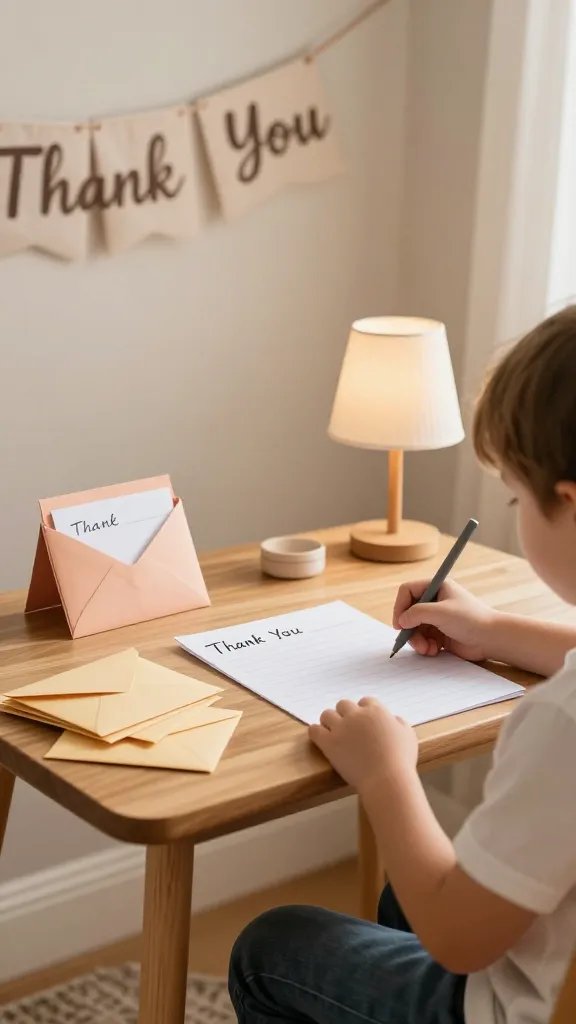
The problem: Guests bring gifts or kind gestures; kids want to respond but need a simple, quiet way to participate.
Why it happens: After hosting, it’s easy to forget to acknowledge kindness, and kids want to contribute meaningfully without a mess.
The fix: A small, low-disruption card exchange—kids write a short message to guests and slip it into a small envelope.
How to do it:
- Prepare a stack of mini envelopes and a pre-printed “Thank You” card on a single sheet.
- Kids fill in a short message (1–2 lines) and seal the envelope with a sticker to avoid glue spills.
- Place finished notes in a designated “Thank-Yous” box by the door for easy drop-off when guests depart.
Real-life consideration:
– Budget: Print on standard printer paper; cut into small cards to save costs.
Common mistake: Waiting to address gifts until after quiet time ends; handle promptly to avoid clutter.
Better alternative: Use a digital template for quick copies that you can reuse annually.
18. Quiet Thanksgiving Photo Corner: Static Keepsake Quick Shots
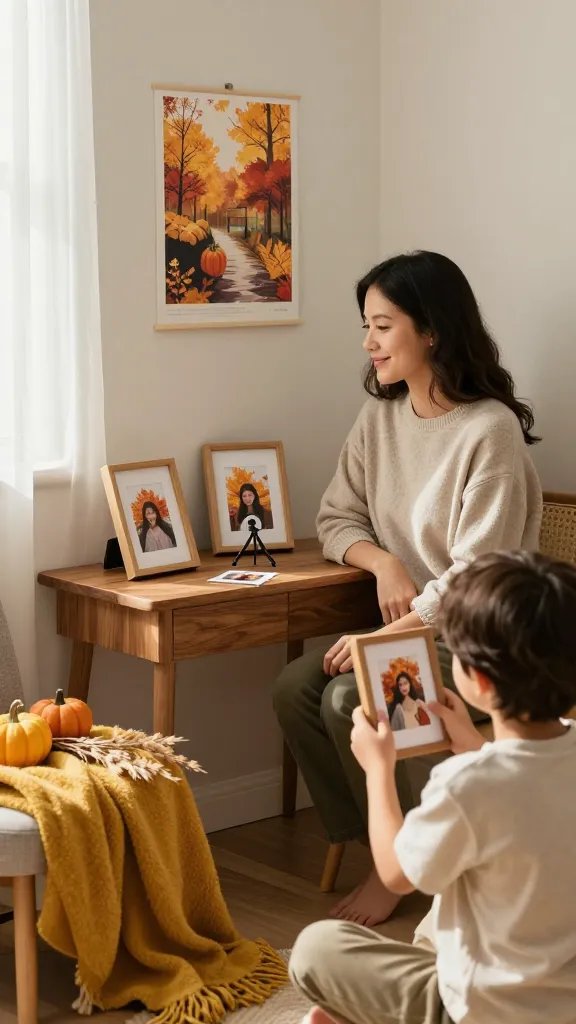
The problem: Photos on phones and social media often feel chaotic and quick, missing the warm, calm moment.
Why it happens: In busy households, photos become an afterthought and end up as digital clutter rather than tangible memory.
The fix: A small photo corner with a few frames pre-set for fall-themed portraits; kids can pose calmly and contribute a few printed cards.
How to do it:
- Choose two frames and a small tripod or stand; print 2–3 photos or a single day memory slot.
- Encourage kids to adjust lighting and pose (simple prompts like “smile at the camera” or “look at the leaves”).
- Rotate photos weekly; keep a small box of extra prints nearby for easy replacement.
Real-life consideration:
– Storage: Switch to a single collage frame to prevent mounting wall clutter; replace digitally after each season.
Common mistake: Too many frames; pick one focal piece and a rotating set of smaller photos.
Better alternative: Use a small digital frame if you want to minimize physical space and keep rotation automatic.
19. Quiet Time Capsule: Save the Day’s Moments
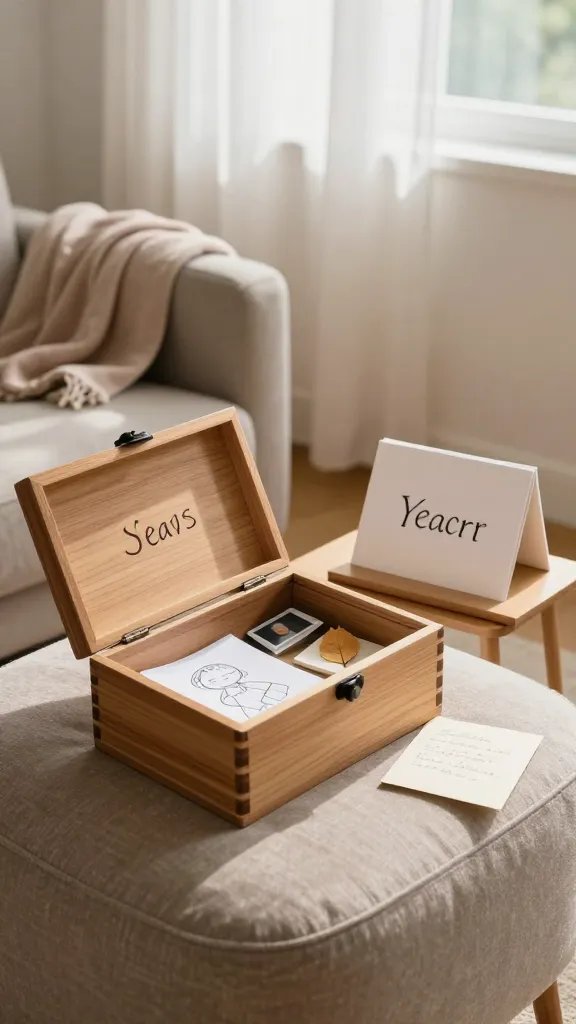
The problem: You want to capture family moments without creating a pile of memorabilia that becomes overwhelming.
Why it happens: Kids produce little keepsakes that accumulate and end up being shuffled from room to room.
The fix: A small “time capsule” box that captures a few items from the day into one compact keepsake.
How to do it:
- Use a shallow box or sturdy folder labeled with the year and occasion.
- Place 2–3 small items (a drawing, a photo, a leaf, a note) and a short card describing the day.
- Seal and store in a designated shelf or under the bed for easy access next fall.
Real-life consideration:
– Small storage: One capsule per year; label with year and event to simplify later sorting.
Common mistake: Filling the capsule with too many items; keep it tight and meaningful.
Better alternative: Create a digital time capsule with photos and a short video or voice recording to minimize physical clutter.
20. “If You Need It, You Can Find It” Quick-Access Zone: One Spot for Essential Supplies
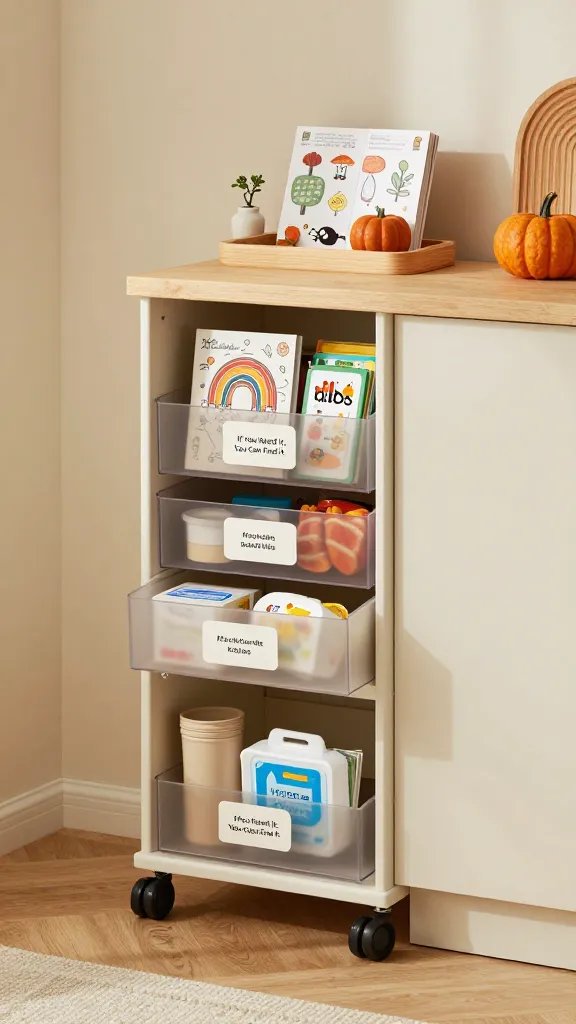
The problem: During Thanksgiving, supplies multiply and their location becomes a moving target, creating an ongoing clutter problem.
Why it happens: A lack of a dedicated, clearly labeled storage zone means items drift to random spots, causing stress when you need them most.
The fix: A dedicated, compact mini station with essential quiet activities, a first-aid kit for kids (bandages, wipes), and a few surface-friendly storage containers.
How to do it:
- Choose a small cabinet drawer or a cart that can be tucked away when not needed.
- Label two to three compartments: “Quiet Activities,” “Snacks & Spills,” and “Other Essentials.”
- Keep a small supply of tissues, wipes, a roll of paper towels, and two to three reusable containers for quick cleanup.
Real-life consideration:
– Rental restrictions: Use removable labels and storage solutions that don’t require permanent modifications.
Common mistake: Overstuffing the zone; you want quick access, not a minefield of items.
Better alternative: Only include items used most often; swap out items as needs shift each year.
Before You Buy: Smart, Minimal, and Realistic Choices
These guidance notes help you avoid buying storage or decor that won’t actually help your specific space and family dynamic.
- Measure the space first. If you don’t know the exact width, use painter’s tape on the floor to map out a potential layout and see how it feels in real life.
- Identify what actually needs storing for quiet activities. List the items and measure their footprint so you don’t buy oversized organizers you won’t use.
- Remove unnecessary items before shopping. The fewer things you’re organizing, the more effective your system will be.
- Determine how often items are used. If an item is used once in a season, consider a temporary solution (stackable bins that collapse for storage after use).
- Check whether existing containers can be reused. A simple re-label and re-positioning can often solve the problem without buying new products.
Small-Space and Real-Home Solutions Summary
Across these 20 sections, the goal isn’t just to provide quiet activities. It’s to integrate these activities into a real home’s layout and budget, so you finish Thanksgiving with less stress and less clutter. The core principle is simple: structure the activity, the space, and the material in a way that minimizes disruption to your everyday life and is easy to maintain beyond the holiday.
Implementation Checklist: Quick Start for This Weekend
- Pick 3–4 activities that match your space best (e.g., Reading Corner, Journaling Station, Treasure Hunt).
- Create a single, small zone for them with a single surface or corner (no more than 2 square meters of space).
- Stock minimal supplies (compact bin, binder, a few paper slips, a small tray).
- Schedule a 10–15 minute window to start each activity and set a timer to keep transitions calm.
- Document one highlight from the day and store it in a time capsule or digital folder.
Conclusion
The core problem isn’t a lack of ideas—it’s a mismatch between what your home can realistically support and what often appears in a Pinterest-perfect guide. The 20 activities above are designed to be calm, practical, and easy to implement in real U.S. homes: small apartments, rental spaces, busy households, and limited storage. Each section addresses a concrete problem, explains why it happens, and offers a clear, actionable fix tailored to your layout and budget. Start with one or two strategies this weekend, keep your setup simple, and you’ll find Thanksgiving with kids becomes calmer, more meaningful, and far less stressful.
Frequently Asked Questions
Q: How do I start if my kitchen is tiny and the dining area doubles as a living space?
A: Choose 1–2 quiet activities that require minimal surface area, like the reading corner or the gratitude journaling station. Use vertical wall space for a small corkboard or clips to keep everything accessible without consuming table space.
Q: How can I keep this from becoming clutter after Thanksgiving?
A: Establish a 15-minute post-meal tidying window focused on returning items to their designated zones. Use a single “storage box” or tray to consolidate materials, then put it away in a closet or under a bed until next year.
Q: What if my kids want louder or messier activities?
A: Offer a controlled, timed option that stays quiet by design (e.g., color sorting with tokens, domino painting on a wipe-clean mat). If kids push back, switch to a single, familiar activity that’s already proven engaging and low-mound cleanup.
Q: How can I make this budget-friendly?
A: Prioritize items you already own and repurpose them for the activities. Use printable templates and re-label existing containers. Swap in thrifted or second-hand items like a small corkboard or magazine rack for organization rather than buying new.
Q: Do I need a formal “system” or can I just try a few ideas?
A: Start with a single, repeatable system (a small corner with 2–3 activities and a simple storage zone). If it works, expand thoughtfully; if not, adjust quickly with minimal cost.