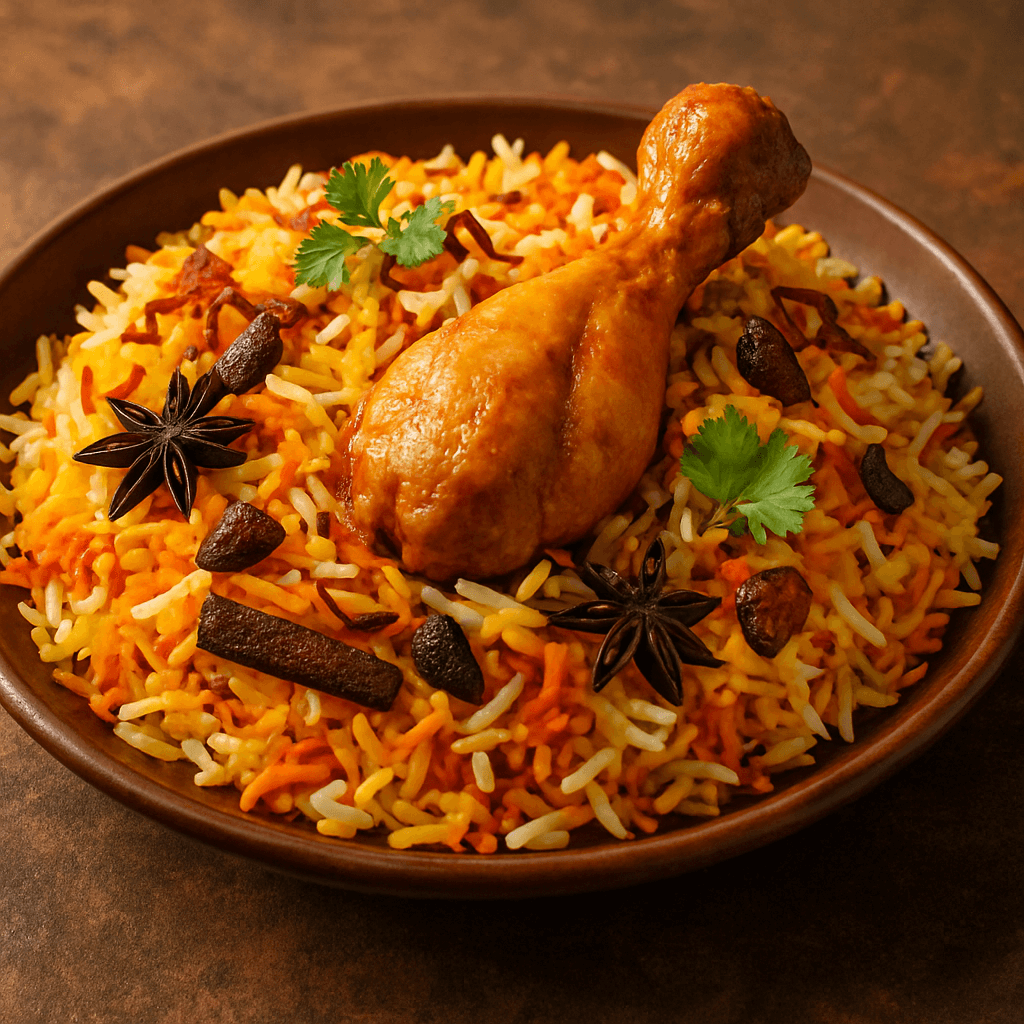
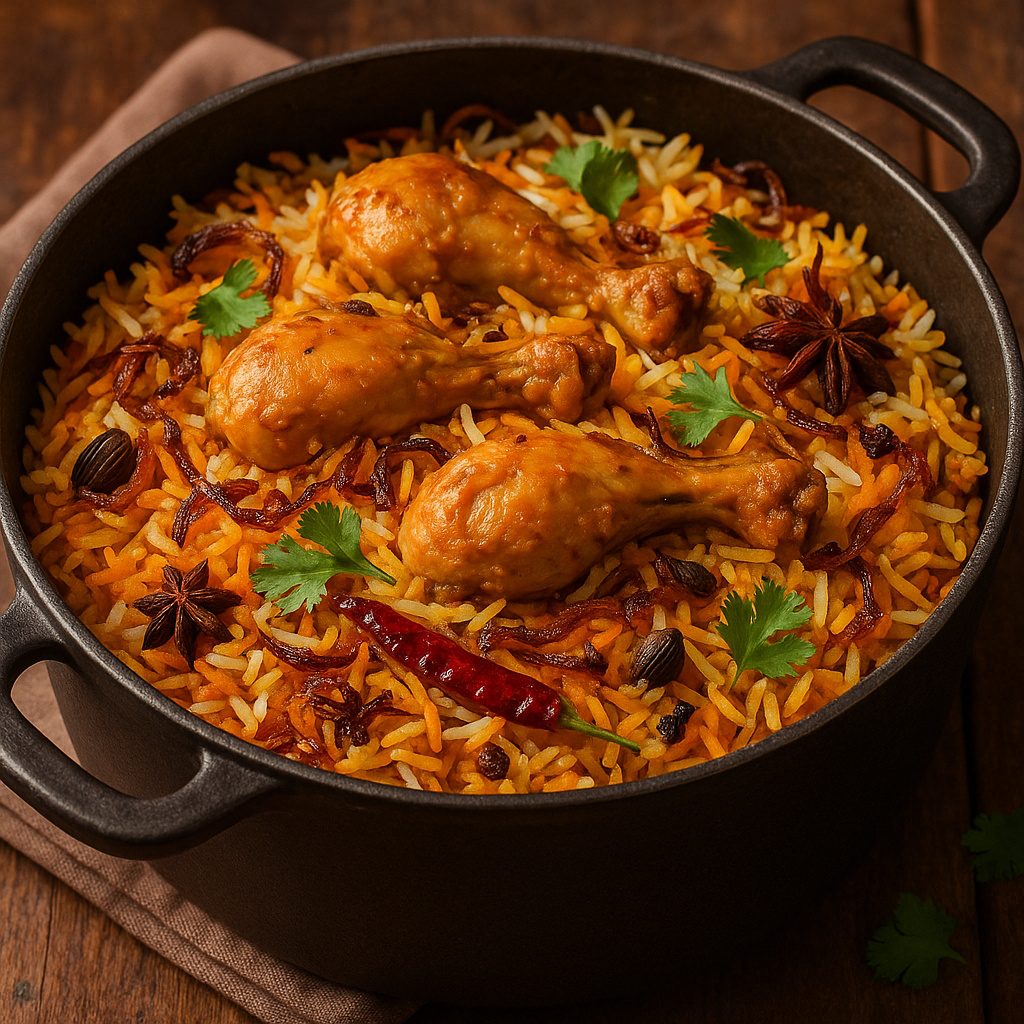
“Biryani is more than just a meal—it’s a celebration in every spoon. This fragrant, layered rice dish combines perfectly cooked basmati, marinated meat or vegetables, and aromatic spices like saffron, cardamom, and cloves. From royal kitchens to home dining tables, biryani brings rich flavors, comforting textures, and a sense of festivity that makes everyone reach for seconds.”
Biryani is a layered rice dish with perfectly cooked long-grain rice, marinated meat or vegetables, fragrant spices, and rich finishing touches like saffron, ghee, and fried onions. It’s party food—one of those recipes that makes a normal meal feel special. Each bite should have a mix of textures (soft meat and vegetables, fluffy rice, and crisp fried onions) and flavors (warm spices, floral saffron, and bright herbs).
The Story of Biryani
Biryani has a long history that goes back hundreds of years and spans many continents. There is some disagreement about where it came from, but most food historians agree that it came from Persian pilafs and was improved in the Indian subcontinent, especially in Mughal and regional royal kitchens, where local ingredients and methods made many different versions. Biryani traveled with traders, soldiers, and migrants over time. It became a beloved dish in cities and regions all over South Asia, each adding its own twist.
Different kinds of Biryani
Biryani from Hyderabad
The “dum” (slow-steam) method and strong smell of Hyderabadi biryani are well-known. It usually has marinated meat (usually chicken or mutton) layered with partially cooked basmati rice, fried onions, saffron milk, and herbs. Then it is sealed and cooked slowly so the flavors blend. It has a strong, restaurant-style depth and is often tangy and spicy.
Biryani from Lucknowi (Awadhi)
Lucknowi biryani (Awadhi style) is more delicate and refined. The meat is usually cooked slowly with mild spices, and the rice is layered with saffron and rose or kewra water. It is lighter and more fragrant than Hyderabadi, and it shows how elegant Awadhi food is.
Biryani from Kolkata
Kolkata biryani is a lighter version of the Nawabs of Awadh’s dish. It is famous for having potatoes and meat in it. It’s light and sweet, and it’s often finished with rose or kewra water that smells good.
Biryani from Sindh
The tomatoes or yogurt give Sindhi biryani a sour taste, and the fried onions and green chilies add a lot of flavor. This one is heartier and has a stronger flavor that celebrates strong, layered spice profiles.
This biryani comes from Kerala’s Malabar coast and uses short- or medium-grain rice in many home recipes. It is different because of the local spice blends, coconut flavors, and regional aromatics, which are lighter but still very fragrant.
What Goes Into Biryani
Rice
For the best smell and long, separate grains, use aged basmati. A common method is to parboil rice until it’s about 70% done, which means it will finish cooking in the dum.
Meat or Veggies
Chicken, mutton (goat or lamb), beef (in places where it is used), and seafood are all common non-veg options. Vegetarian versions use paneer, potatoes, cauliflower, carrots, peas, and hearty mushrooms instead of meat. You can also use jackfruit or soya chunks to give the dish a meat-like texture.
Seasonings
Cinnamon, cloves, green and black cardamom, bay leaves, star anise (optional), cumin, coriander, turmeric, and red chili powder are some of the main spices. Garam masala or biryani masala makes it more complex. Fresh herbs and spices like ginger, garlic, green chilies, mint, and coriander make the dish better.
Rose Water and Saffron
Soaking saffron in warm milk gives the rice pockets of gold color and a floral smell. Adding rose or kewra water gives it the classic, celebratory smell.
2large onionsthinly sliced & fried to golden-brown (birista)
2medium tomatoeschopped
2–3 tbsp ginger-garlic paste
4green chiliesslit
Small bunch of fresh mintchopped
Small bunch of fresh corianderchopped
1tspturmeric
1–2 tsp red chili powder
2tspbiryani masala or garam masala
2bay leaves
4cloves
3–4 green cardamom
1black cardamom
2small cinnamon sticks
Salt to taste3 tbsp ghee + 2 tbsp oil
Pinchof saffron soaked in 2 tbsp warm milk
1tsprose or kewra wateroptional
Juice of half a lemon
Method
Marinade
Mix yogurt, half the fried onions, ginger-garlic paste, turmeric, red chili powder, biryani masala, salt, half the mint and coriander, lemon juice, and 1 tbsp ghee. Coat chicken well and refrigerate for 1–4 hours (overnight is best).
1. Preparing the Rice
Bring a large pot of water to a boil with salt and a tablespoon of oil, and a few whole spices. Add soaked rice and cook until grains are about 70% done (they should still have a thin white core). Drain and spread on a tray to stop cooking.
2. Preparing the Meat or Vegetables
In a heavy-bottomed pot, heat oil + 1 tbsp ghee. Add whole spices, sauté briefly, then add chopped tomatoes and cook till pulpy. Add marinated chicken and cook on medium-high until chicken is sealed and starts releasing fat — you want it partially cooked, not falling apart. Adjust salt.
Vegetarian version: replace chicken with thickly sliced potatoes and mixed vegetables; sauté until vegetables are almost tender, or pan-roast paneer first to keep texture.
3. Layering and Cooking the Biryani (Dum Method)
Spread half the semi-cooked rice over the chicken. Sprinkle half the remaining fried onions, some mint & coriander, saffron milk, and a drizzle of ghee.
Add the remaining rice and repeat the toppings. Finish with a final drizzle of ghee, rose/kewra water and a squeeze of lemon.
Seal the pot tightly (cover with a tight-fitting lid; for an old-school seal, use dough made of flour + water around the lid).
Place on a very low flame on a heat diffuser or skillet and cook for 25–35 minutes (longer for mutton).
This gentle steam finish — dum — is where the rice finishes cooking and the aromas infuse.
Finishing
Let the pot rest, sealed, for 10 minutes off heat.
Open gently, and with a fork or spatula, lift and mix layers carefully (don’t over-stir; you want visible layers). Garnish with extra fried onions, fresh herbs, and a drizzle of ghee.
Video
How to Cook Biryani?
Here is a tried-and-true Chicken Biryani recipe that serves four people, along with tips for making it vegetarian. Before you start, read the whole method once. Timing and layering are very important.
Biryani’s Health Benefits
A good source of protein
Biryani is a good source of protein when it is made with chicken, mutton, fish, or paneer.
Full of Important Nutrients
Whole spices add antioxidants, herbs add vitamins, and meat and dairy add iron and B vitamins. Eating vegetables adds more fiber and different types of micronutrients.
Has spices that fight inflammation
In addition to adding flavor, many biryani spices, such as turmeric, cumin, cardamom, and cloves, have anti-inflammatory and digestive benefits.
Biryani may have some side effects.
Lots of calories
Biryani is high in carbs and often has ghee or oil and fried onions in it. If you’re trying to lose weight, you should watch how much you eat.
Could Have a Lot of Sodium
Biryani from restaurants can be salty. If you’re watching your sodium, cut back on added salt and packaged masalas.
The chance of getting sick from food
Bacteria can grow on rice and cooked meat that are left out at room temperature. Quickly cool leftovers and put them in the fridge within two hours. Before eating, make sure to heat them all the way through.
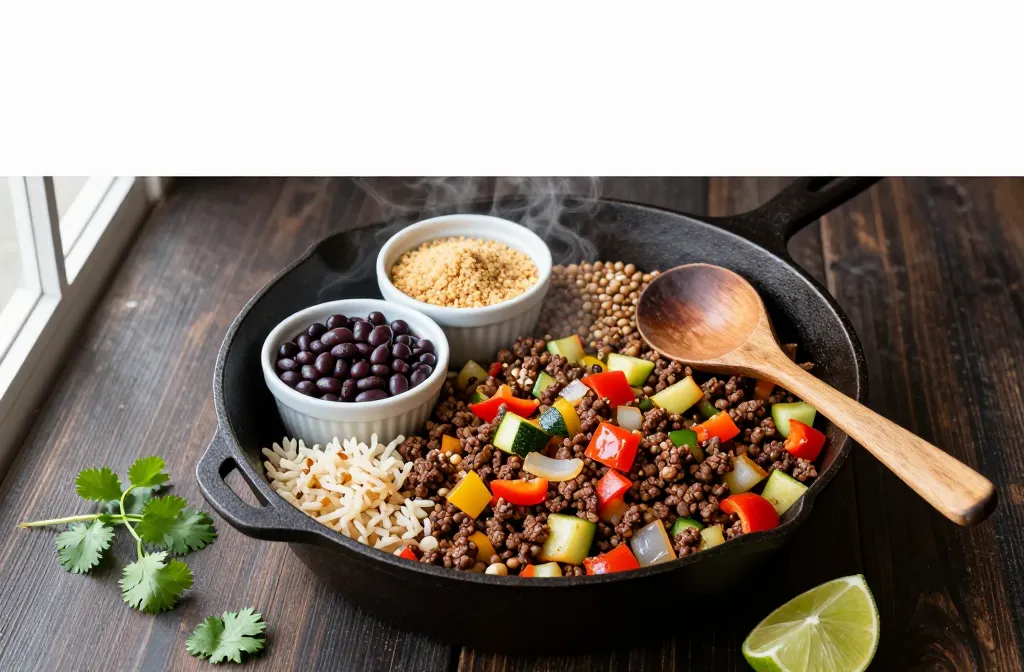
To make it lighter, use less ghee, replace some of the rice with cauliflower rice or millet, add more vegetables, and choose lean meats (like chicken breast) or plant proteins.
Last-minute tips to make your biryani stand out
Make a lot of fried onions (birista) because they add color, sweetness, and crunch.
Saffron and ghee: A little bit goes a long way. Ghee with saffron scent adds to the smell.
Fresh herbs: Mint and coriander between rice and meat add freshness to every bite.
Dum technique: Don’t rush the end of the steam. The key to getting the right texture is to use low, slow heat.
For restaurant-style smokiness, heat a piece of charcoal until it turns red, put it in a small bowl, add a teaspoon of ghee on top, and put the bowl inside the biryani pot (cover right away) for 3–4 minutes. Then take the bowl out and seal it again for 5–10 minutes. Be careful and only do this in a place with good air flow.
Serve with raita and salad: A cooling cucumber raita or a simple kachumber salad balances the richness and lifts the plate.
Biryani is both a technical dish and a feast of memories. The smell that lets you know something is going on and the slow-cooked flavors that come out when you wait. You can make a simple Kolkata-style potato biryani or a fancy Hyderabadi one.
Want just the essential recipe details without scrolling through the article? Get our printable recipe card with just the ingredients and instructions.
Disclosure: This post may contain affiliate links.
If you make a purchase through these links, I may earn
a small commission at no extra cost to you.
prab chahal
Hi, I’m Prabjot Chahal – the heart (and taste buds) behind this blog!
Food has always been my love language – from experimenting with family recipes to discovering unique flavors from around the world. I believe that cooking isn’t just about following a recipe, it’s about creating moments, sharing stories, and connecting with others over something delicious. Through this blog, I want to build a vibrant food community where we share more than just recipes – we share inspiration, tips, and the joy of making and enjoying good food together. Whether you’re here for quick weekday dinners, festive treats, or creative seasonal ideas, you’re part of this table. So grab a fork (or a whisk!) and let’s cook, bake, and share our love for food – one recipe at a time.