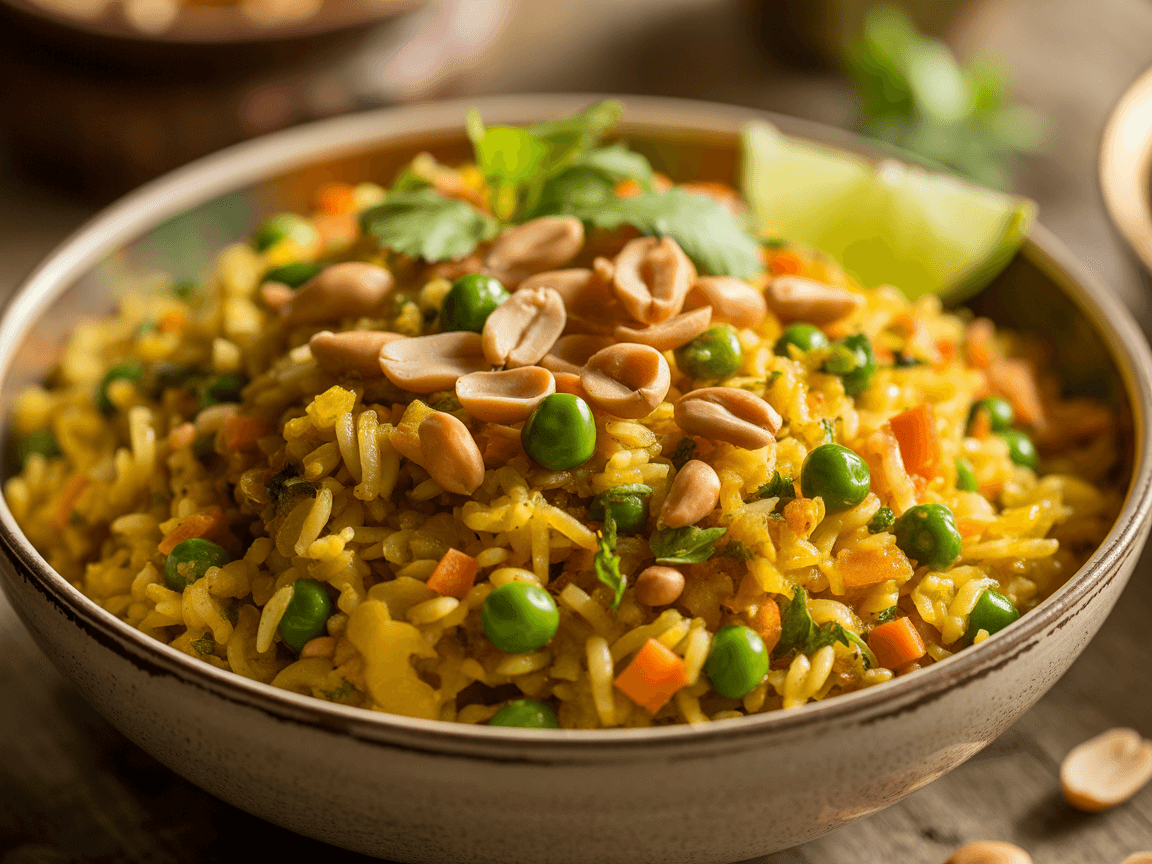
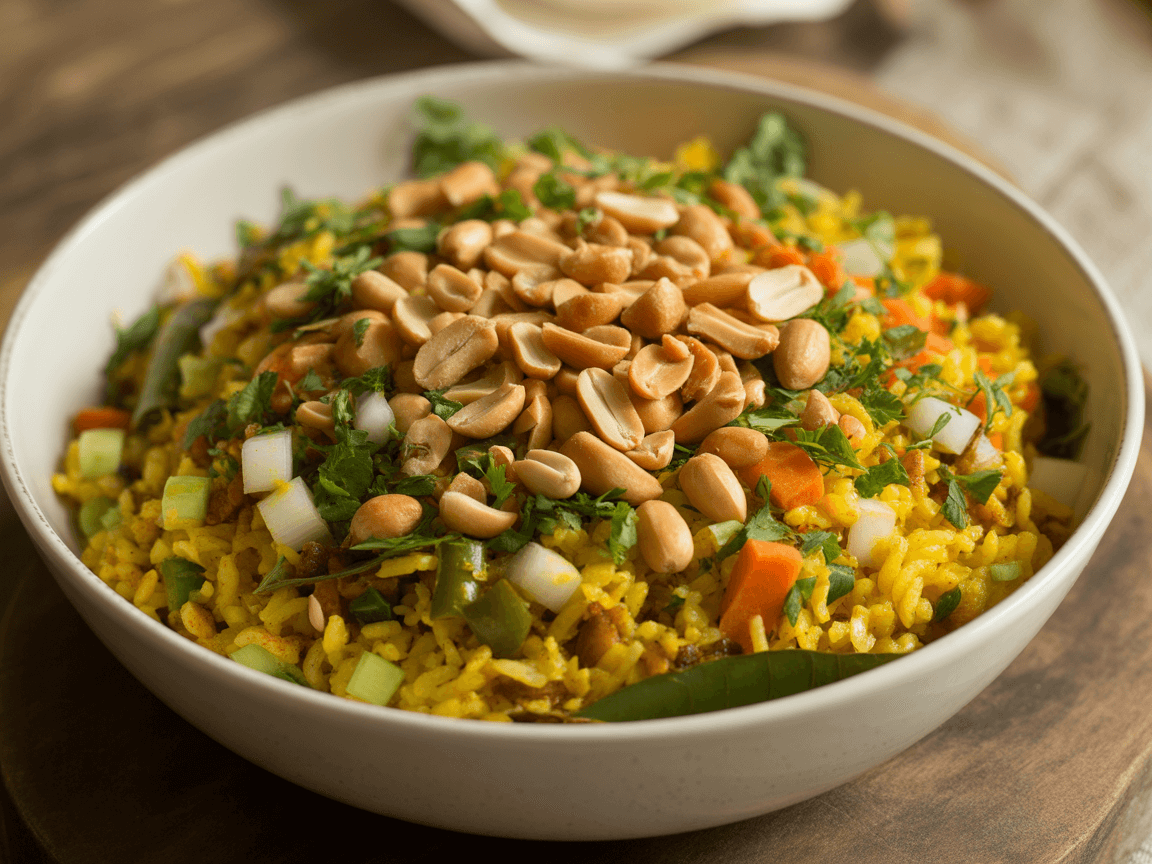
Poha is the kind of breakfast that makes busy mornings feel easy. Light, fluffy flattened rice meets crisp vegetables, fragrant spices, and crunchy peanuts for a meal that’s both satisfying and gentle on the stomach. It cooks fast, tastes great, and uses pantry staples you likely already have.
Make it once, and it’ll quickly become part of your weekday routine—reliable, flavorful, and flexible enough to suit your mood. Whether you’re cooking for one or feeding a family, this Vegetable Poha with Peanuts delivers on comfort and convenience.
Add aromatics and potato: Add chopped onion and grated ginger. Cook 2–3 minutes until the onions soften.
Stir in the diced potato with a pinch of salt, cover, and cook 4–5 minutes, stirring occasionally, until just tender.
Add vegetables: Add carrot, peas, and bell pepper. Cook 3–4 minutes until crisp-tender. You want the veggies bright and slightly crunchy, not mushy.
Season: Add turmeric (if you didn’t add it to the poha), red chili powder if using, and a little more salt.
Stir to coat the vegetables evenly in the spices.
Fold in poha: Add the softened poha to the pan. Gently toss with a spatula to combine. If the mixture looks dry, sprinkle 1–2 tablespoons of water.
Cook on low heat for 2–3 minutes, just until heated through.
Add crunch and brightness: Stir in the roasted peanuts. Turn off the heat and squeeze in lemon juice. Taste and adjust salt and lemon as needed.
Finish and serve: Garnish with chopped cilantro.
Add optional grated coconut or sev on top for extra texture. Serve warm.
How to keep Vegetable Poha Fresh
Short-term storage: Store leftovers in an airtight container in the fridge for up to 2 days. Reheat gently on the stovetop with a teaspoon of water to revive softness.
Prep ahead: Chop vegetables and roast peanuts in advance.
Rinse and drain the poha only right before cooking to avoid sogginess.
Lunchbox tip: Pack lemon wedges separately and squeeze just before eating to keep flavors bright.
Freezing: Not ideal. Poha can turn dry and crumbly after thawing. It’s best made fresh.
Health Benefits Of Vegetable Poha
Light on the stomach: Poha is easy to digest and great for a gentle breakfast or snack.
Steady energy: Flattened rice provides carbohydrates for sustained energy without feeling heavy.
Vegetable boost: Carrots, peas, bell peppers, and potatoes add fiber, vitamins A and C, and antioxidants.
Healthy fats and protein: Peanuts add protein, crunch, and heart-friendly fats, making the dish more filling.
Low on oil: A small amount of oil is enough for tempering and flavor, keeping the dish light.
Mistakes to Avoid in Vegetable Poha
Don’t soak poha in water: Rinse, don’t soak.
Soaking makes it mushy and clumpy.
Don’t overcook the vegetables: They should stay bright and slightly crisp, not soft and dull.
Don’t skip the lemon: The acidity ties all the flavors together and keeps the dish lively.
Don’t use high heat after adding poha: Gentle heat prevents drying or breaking the grains.
Don’t overload the pan: Too many ingredients at once can steam the vegetables instead of sautéing them.
Variations You Can Try In Vegetable Poha
South Indian style: Add a tablespoon of grated coconut and a pinch of asafoetida (hing) along with the tempering.
Maharashtrian kanda-batata twist: Skip the mixed vegetables and go heavy on onions and potatoes. A little sugar balances the flavors nicely.
Protein boost: Stir in pan-seared paneer cubes or cooked chickpeas toward the end.
Greens upgrade: Add a handful of spinach or finely chopped kale in the last 2 minutes of cooking.
Spice lovers: Add crushed black pepper or a chopped green chili on top before serving.
Tangy tamarind: Mix 1 teaspoon tamarind paste with 2 tablespoons water and stir into the pan before adding poha for a sweet-sour note.
Garnish game: Top with sev, pomegranate seeds, or extra roasted peanuts for crunch and color.
FAQ About Vegetable Poha
Which type of poha should I use?
Thick poha works best because it holds its shape after rinsing and tossing. Thin poha tends to turn soggy quickly and is better for no-cook chivda-style snacks.
How do I prevent the poha from turning mushy?
Rinse briefly in a sieve and let it drain completely.
Avoid soaking. Use low heat after adding the poha and toss gently instead of stirring aggressively.
Can I make this without peanuts?
Yes. Skip the peanuts or swap in cashews, pumpkin seeds, or toasted sunflower seeds.
You’ll still get nice texture and a bit of protein.
What can I use instead of potatoes?
Try diced sweet potato (cook slightly longer), extra peas, or cauliflower florets. You can also omit potatoes completely for a lighter version.
Is this recipe vegan and gluten-free?
Yes, it’s naturally vegan and gluten-free as written. Just ensure your asafoetida (if using) is pure or labeled gluten-free.
How spicy is this?
Medium at most.
Adjust by adding or reducing green chilies and skipping red chili powder. A squeeze of extra lemon also balances spice nicely.
Can I add more protein?
Absolutely. Add paneer, tofu, boiled eggs on the side, or a handful of cooked chickpeas.
Stir them in toward the end to keep textures intact.
What should I serve with poha?
It’s great on its own with lemon wedges. You can add a side of yogurt, chai, or fresh fruit for a complete breakfast.
Final Thoughts On Vegetable Poha
Vegetable Poha with Peanuts is the kind of recipe you’ll rely on again and again. It’s quick, flexible, and full of comforting flavors that never feel heavy.
Keep a bag of poha in your pantry, a lemon in your crisper, and some peanuts on standby—breakfast or a snack is always minutes away. Once you make it your way with your favorite add-ins, it’s hard to go back to anything else.
Want just the essential recipe details without scrolling through the article? Get our printable recipe card with just the ingredients and instructions.
Disclosure: This post may contain affiliate links.
If you make a purchase through these links, I may earn
a small commission at no extra cost to you.
prab chahal
Hi, I’m Prabjot Chahal – the heart (and taste buds) behind this blog!
Food has always been my love language – from experimenting with family recipes to discovering unique flavors from around the world. I believe that cooking isn’t just about following a recipe, it’s about creating moments, sharing stories, and connecting with others over something delicious. Through this blog, I want to build a vibrant food community where we share more than just recipes – we share inspiration, tips, and the joy of making and enjoying good food together. Whether you’re here for quick weekday dinners, festive treats, or creative seasonal ideas, you’re part of this table. So grab a fork (or a whisk!) and let’s cook, bake, and share our love for food – one recipe at a time.