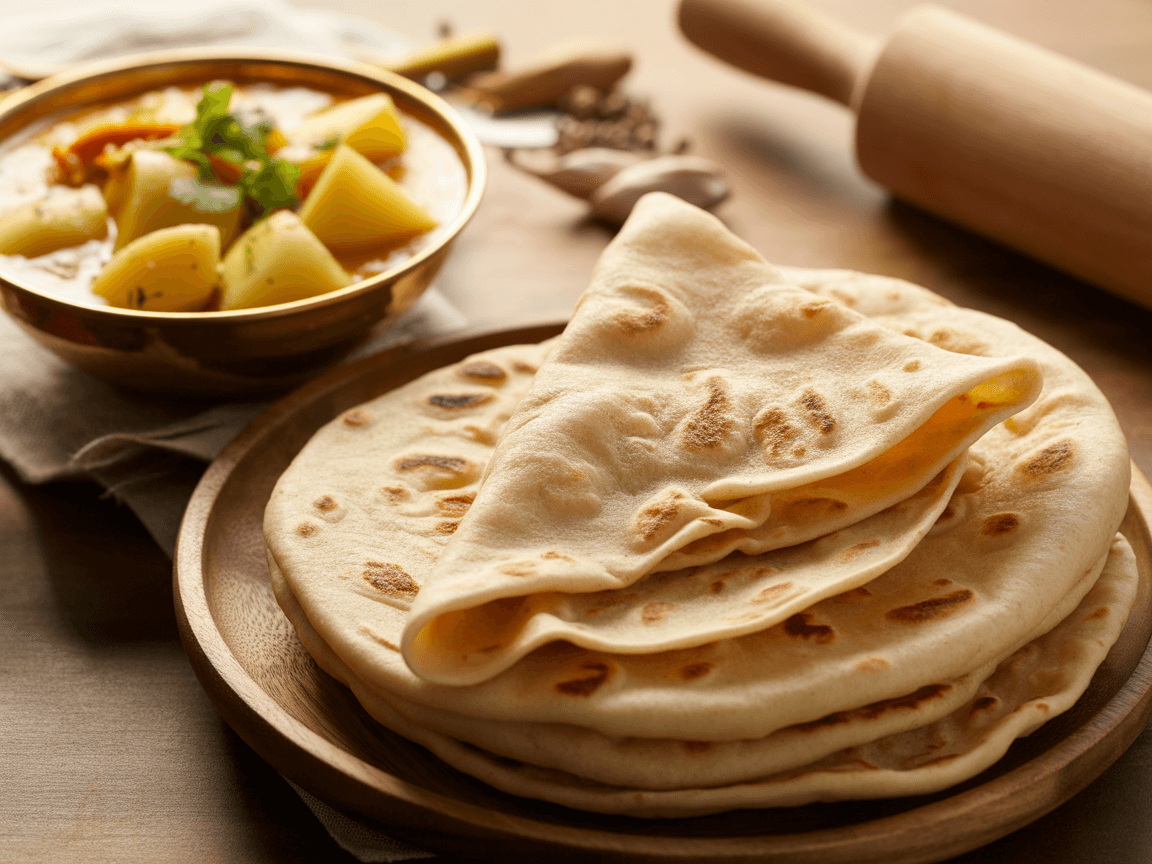
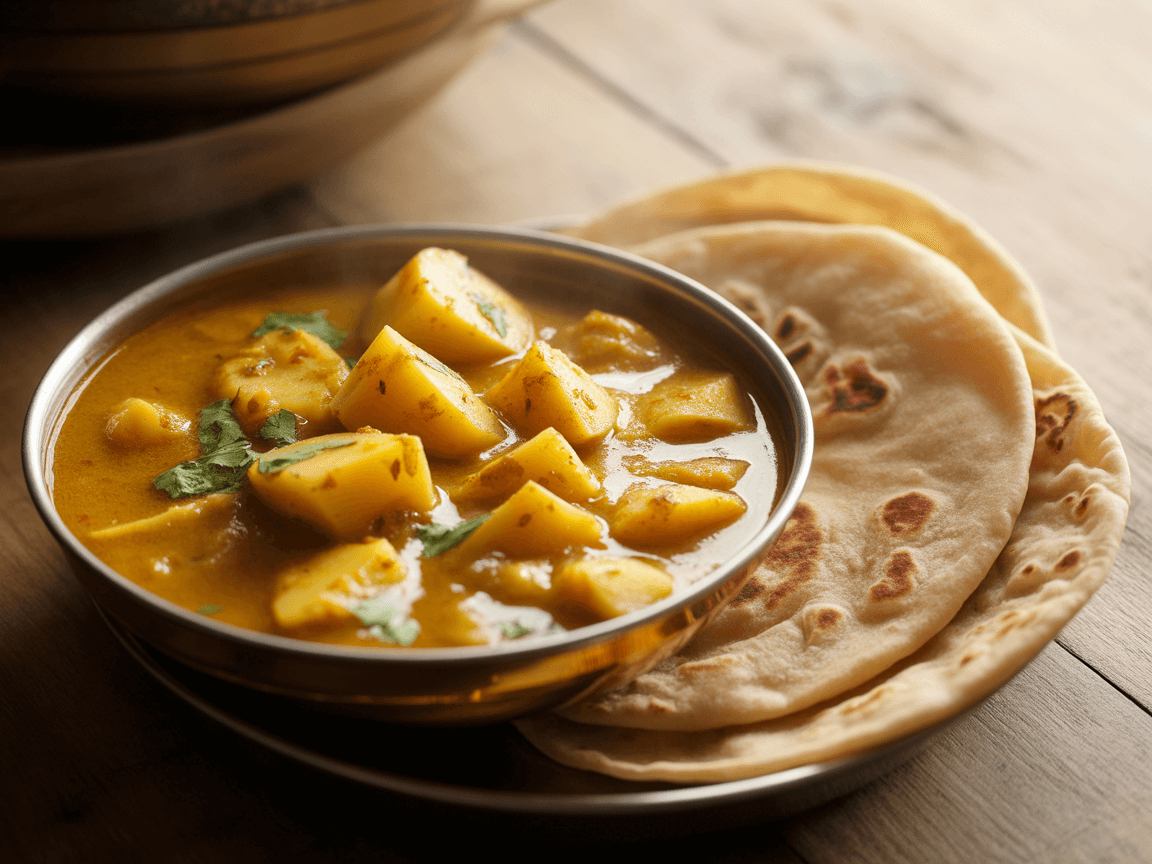
There are days when all you want is a simple, satisfying plate of food that doesn’t weigh you down. Soft roti with a light aloo sabzi is exactly that kind of meal. The roti is tender and flexible, perfect for scooping up the gently spiced potatoes.
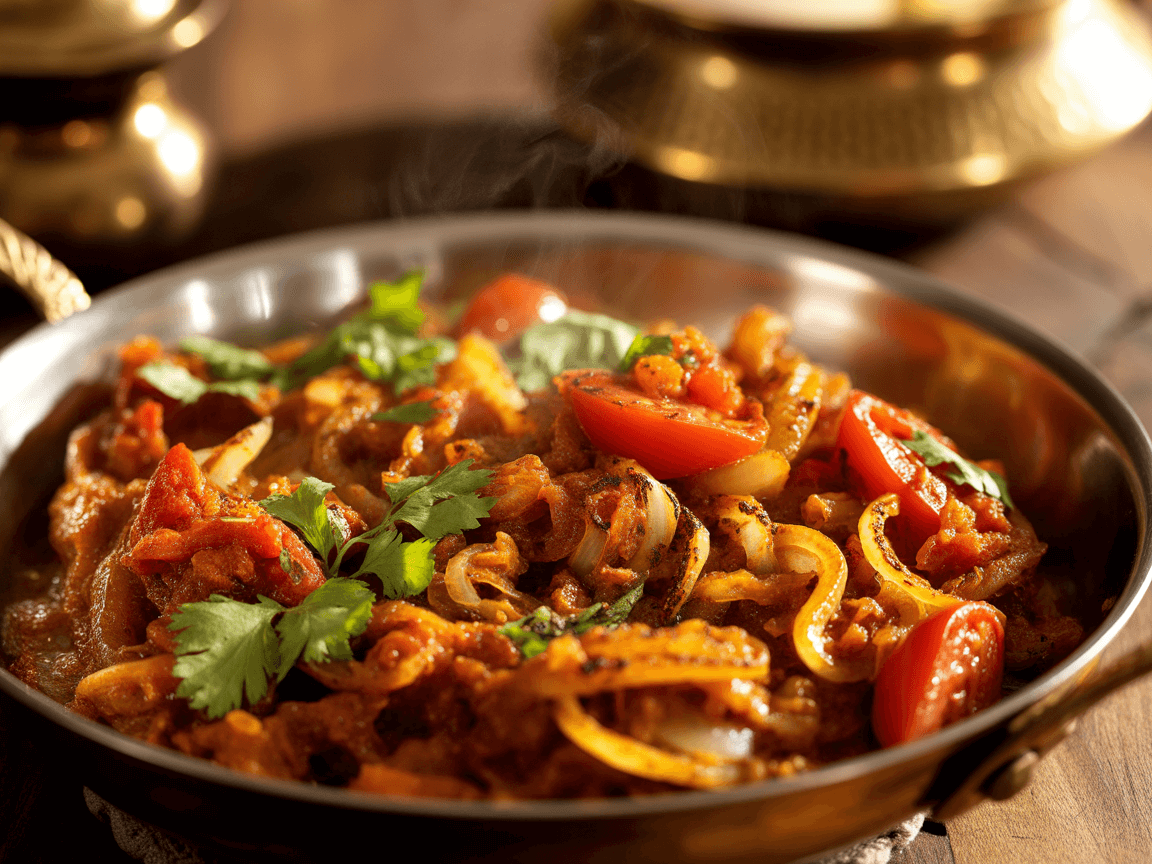
The sabzi is bright, not heavy, with a clean tomato-onion base and warm spices. It’s easy enough for a weekday dinner but comforting enough to share with guests.
This recipe leans on a few small techniques that make a big difference. Using warm water and resting the dough creates rotis that are soft and pliable.
A light hand with oil keeps both the roti and sabzi from feeling greasy while still delivering flavor. The aloo sabzi uses whole spices and a quick bloom in hot oil, so you get a fragrant base without long cooking. Finally, simmering the potatoes gently helps them soak up the spices without turning mushy.
What You’ll Need For Roti With Aloo Sabzi
For the roti:
2 cups whole wheat flour (atta)
1/2 teaspoon salt
1 tablespoon neutral oil or ghee (optional, for softness)
About 3/4 cup warm water, plus a little extra as needed
Extra flour for dusting
For the light aloo sabzi:
3 medium potatoes, peeled and cut into small cubes
1 medium onion, finely chopped
1 medium tomato, chopped (or 1/2 cup crushed tomatoes)
1 green chili, slit (optional)
1-inch piece fresh ginger, grated
2 tablespoons oil
1 teaspoon cumin seeds
1/4 teaspoon mustard seeds (optional)
1/4 teaspoon turmeric powder
1 teaspoon coriander powder
1/2 teaspoon cumin powder
1/2 teaspoon mild red chili powder (adjust to taste)
1/2 to 3/4 teaspoon salt (to taste)
1 to 1 1/4 cups water (for a light gravy)
Fresh cilantro, chopped, for garnish
Fresh lemon, to finish (optional)
Step-by-Step Instructions For Roti With Aloo Sabzi
Make the roti dough: In a bowl, combine whole wheat flour and salt.
Add oil if using. Pour in warm water gradually, mixing with your fingers until it comes together.
Knead until smooth: Knead the dough for 6–8 minutes until soft and elastic. If it feels sticky, dust with a bit of flour; if it’s dry, wet your hands and continue kneading.
Rest the dough: Cover the dough with a damp cloth and let it rest for 20–30 minutes.
This relaxes the gluten and makes softer rotis.
Prep the potatoes: Peel and cube potatoes into small, even pieces for quick, even cooking. Rinse and set aside.
Start the sabzi: Heat oil in a pan over medium heat. Add cumin seeds and mustard seeds (if using).
Let them crackle for a few seconds for aroma.
Sauté aromatics: Add the chopped onion and green chili. Cook until translucent, about 3–4 minutes. Stir in grated ginger and cook for 30 seconds.
Add tomatoes and spices: Add tomato, turmeric, coriander powder, cumin powder, and chili powder.
Cook 3–4 minutes until the tomatoes soften and the oil looks a little shiny at the edges.
Cook the potatoes: Add the potato cubes and salt. Stir to coat with the spice base. Pour in 1 cup water, bring to a gentle simmer, then cover and cook for 10–12 minutes, stirring occasionally.
Adjust texture: Check a potato cube; it should be tender but not falling apart.
If the sabzi is too thick, add a splash of water. If it’s too thin, simmer uncovered for a couple of minutes.
Finish the sabzi: Turn off the heat. Squeeze a little lemon over the top (optional) and sprinkle with chopped cilantro.
Taste and adjust salt or chili.
Shape the rotis: Divide the rested dough into golf-ball-sized portions. Roll each into a smooth ball and flatten slightly.
Roll out: Dust with flour and roll into a thin circle, about 6–7 inches wide. Keep the thickness even so the roti puffs properly.
Cook the rotis: Heat a tawa or skillet over medium-high.
Place a roti on the hot surface; cook until bubbles appear, about 30–45 seconds. Flip; when light brown spots form, press gently with a cloth or spatula to encourage puffing.
Optional puffing step: For extra puff, you can briefly place the semi-cooked roti directly over a low open flame using tongs, letting it balloon. Move it constantly to avoid burning.
Brush and stack: Lightly brush with ghee or oil if you like, and stack in a covered container or wrap in a clean towel to keep them soft.
Serve: Spoon the light aloo sabzi into a bowl, garnish with more cilantro, and serve hot with the soft rotis.
How to keep Roti With Aloo Sabzi Fresh
For rotis, wrap them in a clean cloth and place in an insulated container to keep them soft for a few hours.
To store, cool completely, then stack with parchment between each roti and refrigerate for up to 2 days or freeze for a month. Reheat on a hot tawa for 20–30 seconds per side.
For the sabzi, cool and store in an airtight container for up to 3 days in the fridge. It reheats well on the stovetop with a splash of water to loosen the gravy.
Avoid overcooking on reheating, as potatoes can break down.
Health Benefits Of Roti With Aloo Sabzi
Whole grains: Atta roti offers fiber, B vitamins, and steady energy compared to refined flours.
Light on oil: The recipe uses modest oil, keeping calories in check while preserving flavor.
Potatoes done right: When not deep-fried, potatoes provide potassium, vitamin C, and satisfying complex carbs.
Balanced plate: Pairing rotis with a vegetable sabzi gives a good mix of carbs, fiber, and micronutrients. Add yogurt or a side salad for extra protein and freshness.
Gentle spices: Turmeric, cumin, and coriander are aromatic and may support digestion.
Pitfalls to Watch Out For Roti With Aloo Sabzi
Tough rotis: Skipping the dough rest or using cold water can lead to stiff, dry rotis.
Too much flour while rolling: Excess dusting flour can make rotis dry. Use just enough to prevent sticking.
Underbloomed spices: Adding powdered spices without a brief cook can taste raw.
Give them time to sizzle in oil with tomatoes.
Mushy potatoes: Cutting potatoes too small or overcooking can make the sabzi pasty. Aim for even, small cubes and gentle simmering.
Greasy finish: More oil doesn’t equal better flavor. Stick to measured amounts for a clean, light sabzi.
Recipe Variations In Roti With Aloo Sabzi
Add peas: Stir in 1/2 cup green peas in the last 5 minutes for color and sweetness.
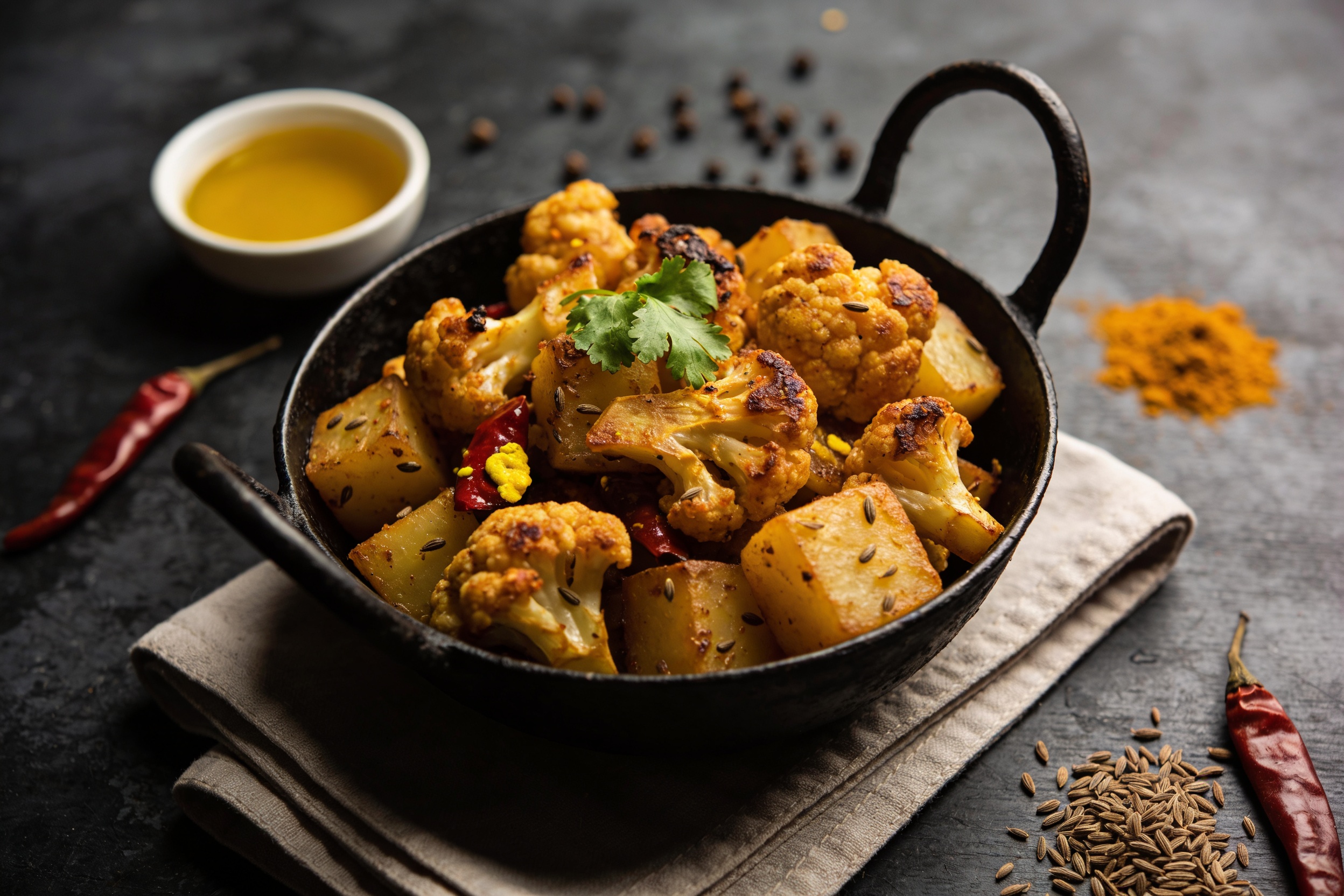
Jeera aloo style: Skip tomatoes, use extra cumin, and finish with lemon and cilantro for a drier sabzi.
Palak boost: Add a handful of chopped spinach in the final 2–3 minutes for greens and freshness.
Spicy tadka: Temper a pinch of asafoetida and a few curry leaves with the cumin for a South Indian touch.
Softest rotis: Swap 2–3 tablespoons of water with warm milk or add a spoon of yogurt to the dough for extra tenderness.
FAQ About Roti With Aloo Sabzi
Can I use all-purpose flour for the rotis?
You can, but it changes the texture and nutrition.
Whole wheat flour gives the classic flavor and pliability. If you want a softer roti and don’t mind a blend, use 75% whole wheat and 25% all-purpose.
How do I keep rotis soft for longer?
Rest the dough, roll evenly, cook on a hot tawa, and stack rotis in a covered container or cloth right after cooking. A light brush of ghee also helps lock in moisture.
What potatoes work best?
Waxy or all-purpose potatoes hold their shape better than very starchy ones.
Yukon Gold or similar varieties are a good choice for a light sabzi that doesn’t fall apart.
Can I make the sabzi without tomatoes?
Yes. Use a squeeze of lemon and a spoon of yogurt at the end for brightness, or add a bit more onion and a splash of water for a lighter, drier version.
Is this recipe gluten-free?
Traditional roti made with wheat flour contains gluten. For a gluten-free option, try rotis made from jowar, bajra, or a gluten-free flour blend, adjusting hydration as needed.
How spicy is the sabzi?
It’s mildly spiced.
Reduce or omit the green chili and red chili powder for a gentle flavor, or increase slightly if you prefer heat.
Can I scale the recipe?
Absolutely. Double the sabzi ingredients and keep the same method. For rotis, you can scale the dough easily and cook in batches, keeping finished rotis covered so they stay soft.
Conclusion on Roti With Aloo Sabzi
Soft roti with light aloo sabzi is the kind of meal that fits any day of the week.
It’s simple, bright, and comforting without being heavy. With a few small techniques—rested dough, gentle spice blooming, and careful simmering—you’ll have a plate that tastes homey and fresh. Serve it hot, add a spoon of yogurt or a quick salad, and enjoy a balanced meal that never goes out of style.
Want just the essential recipe details without scrolling through the article? Get our printable recipe card with just the ingredients and instructions.
Disclosure: This post may contain affiliate links.
If you make a purchase through these links, I may earn
a small commission at no extra cost to you.
prab chahal
Hi, I’m Prabjot Chahal – the heart (and taste buds) behind this blog!
Food has always been my love language – from experimenting with family recipes to discovering unique flavors from around the world. I believe that cooking isn’t just about following a recipe, it’s about creating moments, sharing stories, and connecting with others over something delicious. Through this blog, I want to build a vibrant food community where we share more than just recipes – we share inspiration, tips, and the joy of making and enjoying good food together. Whether you’re here for quick weekday dinners, festive treats, or creative seasonal ideas, you’re part of this table. So grab a fork (or a whisk!) and let’s cook, bake, and share our love for food – one recipe at a time.