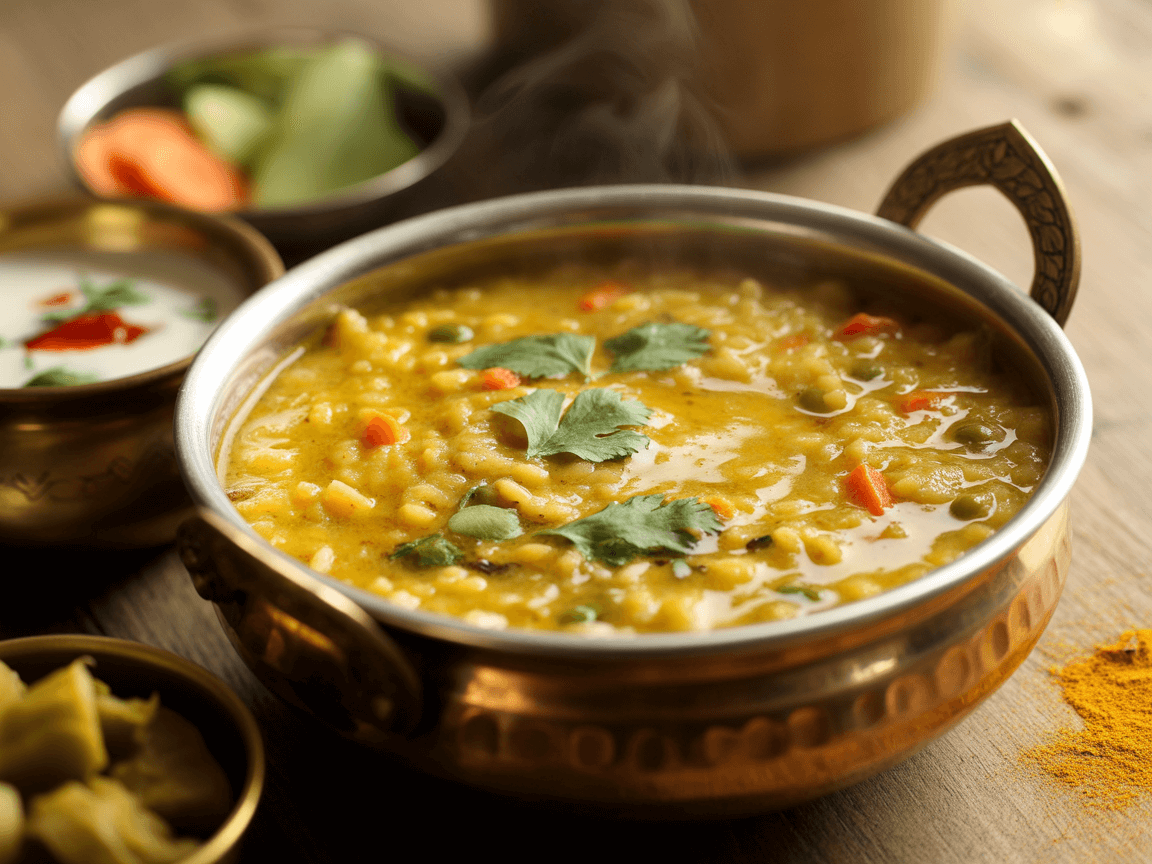
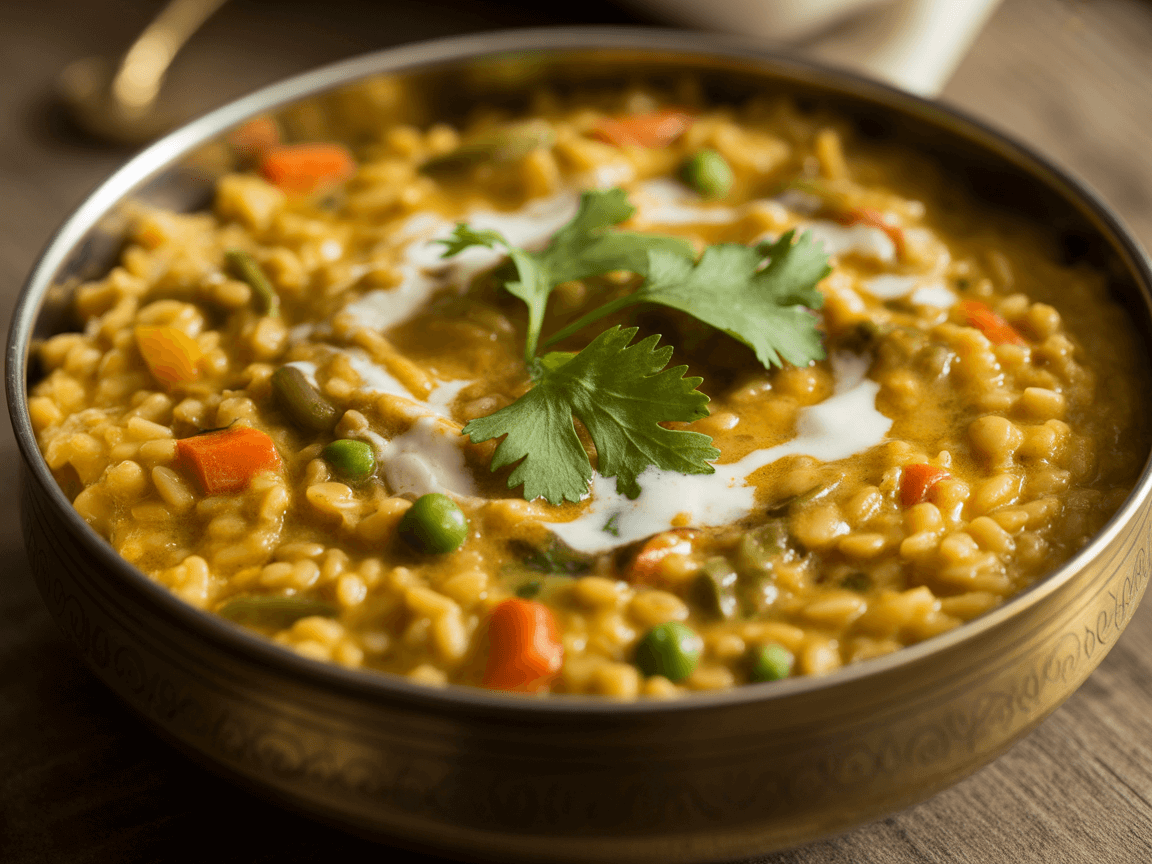
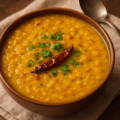
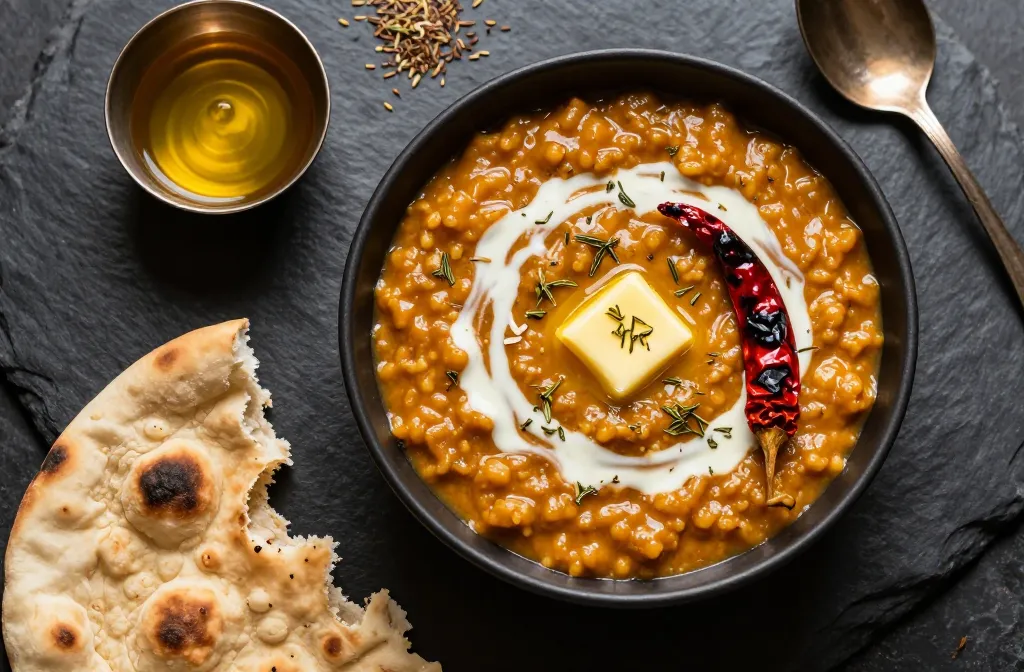
Khichdi is the kind of meal that feels like a warm hug. It’s simple, nutritious, and deeply satisfying—comfort food the Indian way. This one-pot vegetable khichdi is authentic, wholesome, and ideal for busy weeknights or when you want something light and cozy.
It comes together with pantry staples, cooks in one pot, and is easy to digest. Whether you’re new to Indian cooking or grew up with khichdi on the table, this version hits that perfect balance of flavor and comfort.
True to tradition: Made with split lentils and rice, gentle spices, and seasonal vegetables for a classic taste.
One-pot convenience: Everything cooks together—less cleanup, more flavor.
Customizable: Use whatever vegetables you have and adjust the texture from soupy to fluffy.
Light yet nourishing: Ideal for kids, recovery days, or when your stomach needs something easy.
Comfort factor: Finished with ghee for a rich, soothing aroma and taste.
Ingredients Needed For Indian Vegetable Khichdi
Rice: 1/2 cup short- or medium-grain rice (basmati works too)
Moong dal (yellow split mung lentils): 1/2 cup, rinsed well
Water or low-sodium vegetable broth: 3.5 to 4 cups (more for a soupier khichdi)
Ghee or neutral oil: 2 tablespoons (ghee recommended for authentic flavor)
Cumin seeds: 1 teaspoon
Asafoetida (hing): A pinch (optional but traditional)
Turmeric powder: 1/2 teaspoon
Ginger: 1 teaspoon, finely grated
Green chili: 1, slit or finely chopped (optional; adjust to taste)
Onion: 1 small, finely chopped (optional)
Tomato: 1 small, diced
Vegetables: 1.5 to 2 cups total—such as carrots, peas, green beans, potatoes, cauliflower, spinach
Salt: 1 to 1.25 teaspoons, or to taste
Black pepper: 1/4 teaspoon (optional)
Garam masala: 1/4 teaspoon (optional, for a warmer finish)
Fresh cilantro: 2 tablespoons, chopped
Lemon: 1/2, for squeezing at the end
How to Make This Indian Vegetable Khichdi
Rinse and soak: Rinse rice and moong dal separately until the water runs clear. Soak them together in fresh water for 15–20 minutes while you prep the vegetables.
This helps the grains cook evenly and faster.
Prep the vegetables: Dice carrots and potatoes into small pieces, cut beans into small pieces, and chop cauliflower into small florets. Keep peas and spinach handy to add later so they don’t overcook.
Heat the pot: In a heavy pot or pressure cooker, warm the ghee over medium heat. Add cumin seeds and let them crackle.
Add a pinch of asafoetida if using.
Build the base: Add grated ginger and green chili. Sauté 30–40 seconds until fragrant. If using onion, sauté until soft and translucent.
Add tomato: Add diced tomato and cook 2–3 minutes until slightly softened. This adds mild acidity and body to the khichdi.
Add vegetables: Stir in carrots, beans, potatoes, and cauliflower. Sauté for 2–3 minutes so they absorb the flavors.
Add rice and dal: Drain the soaked rice and dal.
Add them to the pot and stir gently for a minute to coat everything in the spiced ghee.
Pour liquid and season: Add 3.5 to 4 cups water or broth, salt, and black pepper if using. For a softer, soupier khichdi, use up to 5 cups. Stir well and bring to a boil.
Simmer to perfection: Reduce heat to low, cover, and cook for 20–25 minutes, stirring once or twice to prevent sticking.
Add more hot water as needed for your preferred consistency.
Finish with greens: Stir in peas and spinach during the last 5 minutes so they stay bright and tender. Cook until everything is soft and porridge-like.
Final touch: Taste and adjust salt. Stir in garam masala if you like a warmer note.
Turn off the heat and let it sit covered for 5 minutes.
Garnish and serve: Top with a small dollop of ghee, cilantro, and a squeeze of lemon. Serve hot with yogurt, pickle, or papad on the side.
Storage Instructions For Indian Vegetable Khichdi
Fridge: Store in an airtight container for up to 3 days. Khichdi thickens as it cools; add hot water or broth while reheating to loosen.
Reheating: Warm on the stove over low heat with a splash of water.
Stir frequently to avoid sticking. A tiny knob of ghee restores the fresh taste.
Freezer: Freeze in portions for up to 1 month. Thaw in the fridge overnight, then reheat with water to reach your preferred texture.
Health Benefits Of Indian Vegetable Khichdi
Complete comfort: The rice and moong dal combo provides a balance of carbs and protein that’s gentle on digestion.
High in fiber: Vegetables and lentils add fiber for steady energy and gut health.
Low in spice, high in nourishment: Mild spices like turmeric and cumin support digestion without overpowering.
Gluten-free and easily adaptable: Suitable for many dietary needs.
It can be made vegan by using oil instead of ghee.
Hydrating and light: Soupy khichdi helps when you’re under the weather or need something soothing.
Mistakes to Avoid In Indian Vegetable Khichdi
Don’t skip rinsing and soaking: It removes excess starch and helps the grains cook evenly.
Don’t over-spice: Khichdi is meant to be gentle. Too many spices can overpower the comfort factor.
Don’t rush the simmer: Low and slow gives the best texture and lets flavors meld.
Don’t forget enough liquid: Khichdi should be soft. Add water if it’s getting dry or sticking.
Don’t add delicate greens too early: Spinach and peas go in at the end to stay bright and tender.
Recipe Variations In Indian Vegetable Khichdi
Masala khichdi: Add 1/2 teaspoon each of coriander and cumin powder, plus 1/4 teaspoon red chili powder for a bolder flavor.
Millet khichdi: Swap rice with foxtail millet or quinoa.
Increase water slightly and cook until completely soft.
Mixed dal khichdi: Use equal parts moong and masoor (red lentils) for extra creaminess.
No-onion, no-garlic: Skip onion and use only ginger, cumin, turmeric, and asafoetida for a sattvic-style version.
South Indian twist: Temper with mustard seeds, curry leaves, and a pinch of black pepper. Finish with fresh coconut.
Protein boost: Stir in cooked chickpeas or tofu cubes at the end.
Kids’ version: Make it mushier with extra water and skip the chili. Mash lightly before serving.
FAQ About Indian Vegetable Khichdi
Which dal is best for khichdi?
Moong dal is the classic choice because it cooks quickly and is easy to digest.
You can mix in masoor dal for a creamier texture, but moong keeps it light and traditional.
Can I make khichdi in a pressure cooker or Instant Pot?
Yes. For a pressure cooker, cook for 2–3 whistles on medium heat. For an Instant Pot, cook on High Pressure for 8 minutes and natural release for 10 minutes.
Adjust water to reach your preferred consistency.
How do I make it vegan?
Use a neutral oil or coconut oil instead of ghee. The rest of the recipe is naturally plant-based.
Why is my khichdi too thick?
It thickens as it cools. Add hot water or broth while reheating and stir until it loosens to your liking.
Season again if needed.
What can I serve with khichdi?
Plain yogurt or raita, Indian pickle, roasted papad, or a simple cucumber salad. A side of sautéed greens also pairs well.
Can I skip tomatoes?
Absolutely. Tomatoes add mild acidity, but khichdi tastes great without them.
You can add a squeeze of lemon at the end for brightness.
How spicy is this recipe?
It’s mild. The green chili is optional, and you can leave it out for a very gentle, kid-friendly version.
How do I get a porridge-like texture?
Use extra water (4.5–5 cups total) and cook longer over low heat. Stir often so the rice and dal break down and turn creamy.
Can I add whole spices?
Yes.
A small cinnamon stick, 2–3 cloves, or 2 green cardamom pods can be added with the cumin for a subtle warmth.
Is khichdi good for sick days?
Definitely. It’s soft, mild, hydrating, and easy to digest—perfect when you need something soothing yet nourishing.
Wrapping Up Indian Vegetable Khichdi
This one-pot authentic Indian vegetable khichdi brings together comfort, nutrition, and ease. It’s flexible enough for weeknights and special enough to serve with a spoon of ghee and fresh lemon.
Keep it simple, keep it gentle, and adjust the texture to suit your mood. With a handful of staples and a single pot, you’ll have a cozy bowl that tastes like home.
Want just the essential recipe details without scrolling through the article? Get our printable recipe card with just the ingredients and instructions.
Disclosure: This post may contain affiliate links.
If you make a purchase through these links, I may earn
a small commission at no extra cost to you.
prab chahal
Hi, I’m Prabjot Chahal – the heart (and taste buds) behind this blog!
Food has always been my love language – from experimenting with family recipes to discovering unique flavors from around the world. I believe that cooking isn’t just about following a recipe, it’s about creating moments, sharing stories, and connecting with others over something delicious. Through this blog, I want to build a vibrant food community where we share more than just recipes – we share inspiration, tips, and the joy of making and enjoying good food together. Whether you’re here for quick weekday dinners, festive treats, or creative seasonal ideas, you’re part of this table. So grab a fork (or a whisk!) and let’s cook, bake, and share our love for food – one recipe at a time.