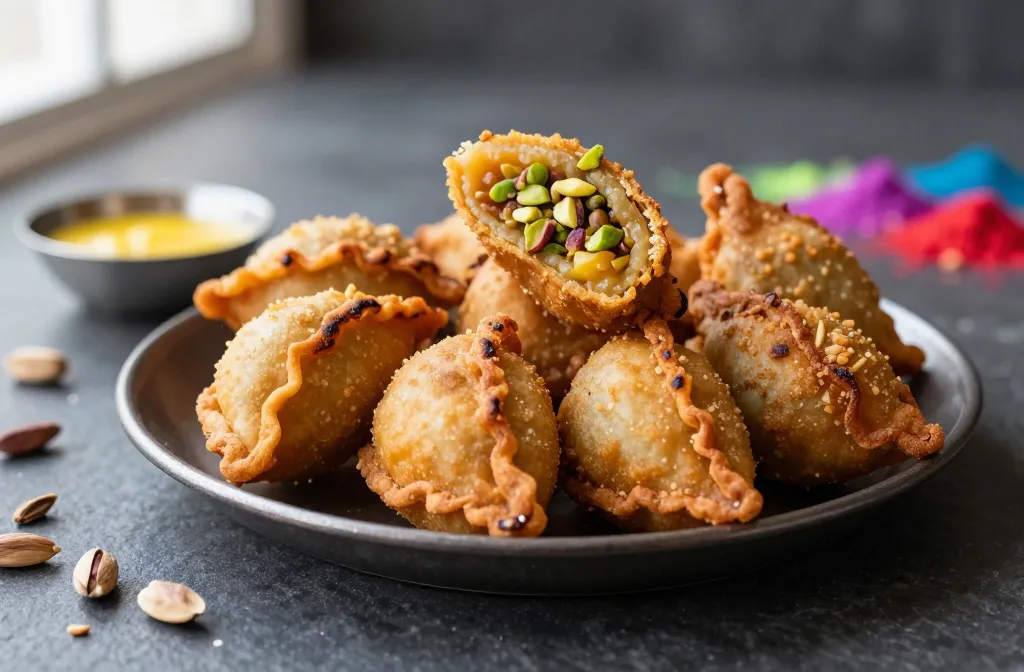
Crisp edges, buttery layers, and a nutty, cardamom-kissed center that makes you close your eyes for a second—yes, we’re talking Gujiya. These sweet dumplings show up for Holi like the life of the party and hang around as leftovers you “accidentally” eat for breakfast. They look fancy, but guess what? You can absolutely nail them at home without summoning a pastry deity. Let’s make the best Gujiya you’ve ever tasted—no drama, just joy.
What Exactly Is Gujiya?
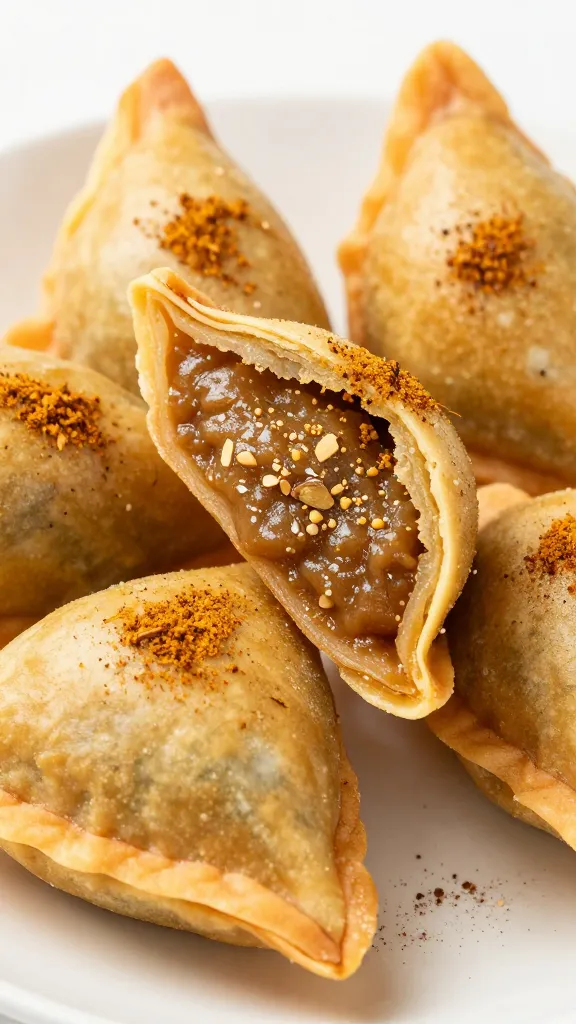
Gujiya is a North Indian sweet dumpling with a flaky, shortcrust-style shell and a rich, sweet filling. It usually stars khoya/mawa (milk solids), semolina (sooji), nuts, and cardamom. Think of it as India’s answer to hand pies, but with ghee swagger. Different regions riff on it. In Maharashtra, you’ll meet the coconutty “karanji.” In Goa, it’s “nevri.” Every version brings something new to the party, and honestly, we love them all.
Ingredients You’ll Need (And Why They Matter)
You don’t need a magic pantry—just a few classics that pull their weight.
For the dough: All-purpose flour (maida), ghee, a pinch of salt, and water. The ghee shortens the gluten, which gives that signature flaky crunch.
For the filling: Khoya (mawa), sugar or jaggery, roasted semolina, chopped nuts (almonds, cashews, pistachios), raisins, cardamom, and optionally desiccated coconut. Rose water or kewra? A few drops for aroma if you’re feeling extra.
For frying: Ghee or neutral oil. Ghee tastes better, IMO, but a 50-50 mix saves coins without sacrificing flavor.
Ingredient Swaps That Still Taste Legit
No khoya? Use milk powder. Mix 1 cup milk powder with 2-3 tablespoons milk and 1 tablespoon ghee, stir on low heat till it clumps like khoya.
Sugar vs. jaggery: Jaggery gives a deeper, caramel vibe. Just let the filling cool before sealing or you’ll get leaks.
Nuts: No pistachios? Use walnuts or peanuts. Roast them lightly to boost flavor.
Vegan option: Use coconut oil or vegan butter in the dough; swap khoya with coconut + semolina + jaggery.
Let’s Make Gujiya: Step-by-Step
Yes, we’re doing this. It’s simpler than it looks—and way more satisfying.
Make the dough: Rub 4 tablespoons warm ghee into 2 cups flour with a pinch of salt until it looks like breadcrumbs. Add cold water, a little at a time, to form a firm dough. Cover and rest 20-30 minutes.
Prep the filling: Lightly roast 1/3 cup semolina in 1 tablespoon ghee till aromatic. Add 1 to 1.25 cups grated khoya; stir 2-3 minutes. Remove from heat. Mix in 1/2 cup powdered sugar (or grated jaggery), 1/3 cup chopped nuts, 2 tablespoons raisins, 1/4 teaspoon cardamom, and a pinch of nutmeg. Cool completely.
Roll and fill: Divide dough into small balls (golf-ball size). Roll each into a 4-5 inch circle. Place 1-2 tablespoons filling in the center. Moisten the edges with water or milk.
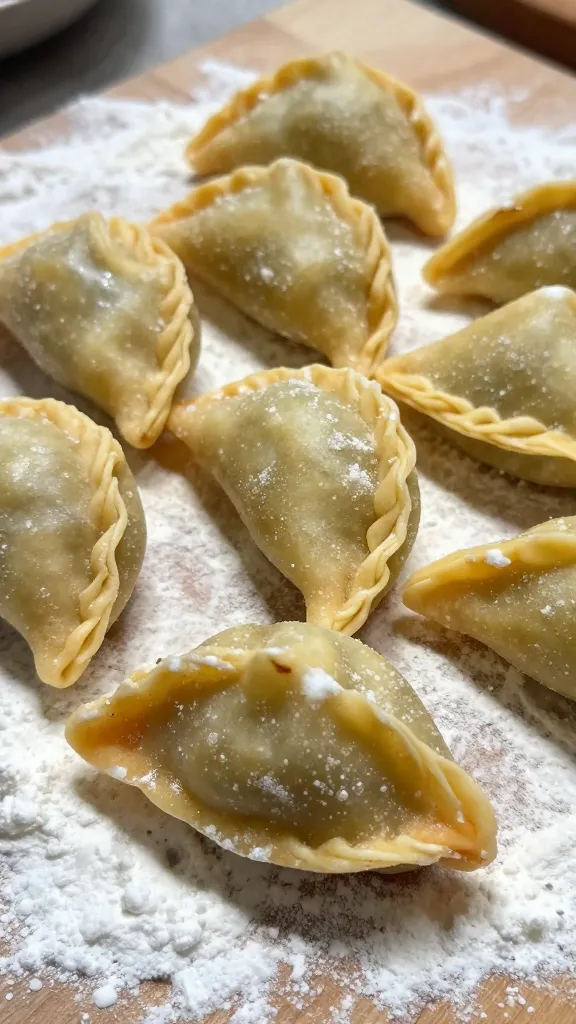
Seal like a pro: Fold into a half-moon, press edges, and crimp with a fork or twist by hand. Or use a gujiya mold if you have one—no shame in gadgets.
Chill time (important): Let the shaped gujiyas rest 10-15 minutes uncovered. This helps them keep shape and reduces bubbles while frying.
Fry low and slow: Heat ghee/oil on medium, then lower to medium-low. Fry till golden, flipping gently. They should take 5-7 minutes per batch. Drain on a rack (not paper towels if you want crispness).
Tips for Best Results
Don’t skip the “moien” (fat) in dough. The breadcrumb stage determines flakiness. If you squeeze some flour and it holds shape, you nailed it.
Seal tightly. Any gaps = sugar leaks = sticky heartbreak. Double-press the edges.
Cool the filling. Warm filling softens the dough and causes cracks.
Control the oil temp. Too hot? They brown outside and stay raw inside. Aim for gentle bubbling, not angry sizzling.
Batch wisely. Overcrowding drops oil temp and turns them greasy. Patience = crispness.
Baked or Air-Fried Gujiya? Yes, You Can
If you want a lighter version, go for it. The texture turns a bit different—more cookie-like—but still delish.
Baked
Brush shaped gujiyas with ghee or milk.
Bake at 180°C/350°F for 18-22 minutes till golden, flipping once if needed.
Optional: Brush with thin sugar syrup as soon as they come out for a shiny, lightly sweet crust.
Air-Fried
Lightly brush with ghee or oil.
Air-fry at 170°C/340°F for 10-14 minutes, shaking or flipping halfway.
Keep an eye on them—air fryers love to surprise-brown.
Flavor Twists That Still Feel Traditional
Gujiya doesn’t mind a glow-up. Just don’t drown it in fusion chaos.
Thandai filling: Add thandai powder to the sugar for festival flair.
Chocolate-khoya: Mix in 1-2 tablespoons cocoa and mini chocolate chips. Kids go wild; adults “pretend” they don’t.
Rose and coconut: Add dried rose petals and desiccated coconut with a drizzle of rose syrup.
Orange zest + pistachio: A tiny zest hit wakes up the whole thing. FYI, a little goes a long way.
Make-Ahead, Storage, and Reheating
You can plan ahead and still look like a kitchen wizard on party day.
Filling: Make 3-4 days ahead and refrigerate in an airtight container.
Dough: Make a day ahead; wrap well and refrigerate. Bring to room temp before rolling.
Shaped, unfried gujiyas: Freeze on a tray, then bag for up to 1 month. Fry from frozen on slightly lower heat.
Fried gujiyas: Store at room temp in an airtight container for 2-3 days, or refrigerate up to a week.
Reheat: Air fryer or oven at 160°C/320°F for 5-8 minutes to crisp. Microwave? Only if you like soft shells.
Serving Ideas That Bring the Festive Vibes
You can serve gujiya as-is and everyone will cheer. But if you want to flex a little, try these:
Sugar syrup glaze: Dip warm gujiyas in a light one-string syrup, sprinkle with pistachios and rose petals. Shiny and extra.
Rabri drizzle: A spoon of cold rabri over a warm gujiya? Party in your mouth.
Masala chai pairing: Cardamom loves cardamom. Enough said, IMO.
FAQ
Why do my gujiyas open while frying?
Usually weak sealing or warm filling. Press the edges twice, use a dab of water or milk to seal, and let the filled gujiyas rest 10 minutes before frying. Also, don’t overstuff—1 to 2 tablespoons per piece is plenty.
Can I skip khoya entirely?
Totally. Boost the semolina to 1/2 cup, add more nuts and 2-3 tablespoons desiccated coconut, and sweeten to taste. The texture changes a bit but still tastes amazing.
Get the fat-to-flour ratio right and rub it in thoroughly. Keep the dough firm but not dry, rest it, and fry on medium-low heat. Over-kneading also toughens the shell—go gentle.
What’s the best oil for frying?
Ghee wins for flavor. If you want a neutral option, use sunflower or peanut oil. A 50-50 ghee-oil blend gives taste and stability without using a ton of ghee—smart, right?
Can I add shredded coconut to the filling?
Yes, and it’s delicious. Toast it lightly so it doesn’t taste raw, then mix with khoya and sugar. It also pairs great with jaggery and a hint of cardamom.
How do I avoid bubbles on the shell?
Rest shaped gujiyas before frying and keep the oil at a steady medium-low heat. If the dough sat too soft or the oil runs too hot, bubbles happen. Not a disaster—just cosmetic.
Final Thoughts
Gujiya may look like a festival diva, but it’s a chill, makeable treat with a big reward-to-effort ratio. Nail the dough, cool the filling, and fry patiently—that’s the whole game. Once you crack your house favorite combo (team jaggery + pistachio here), you’ll make these for every celebration… and some random Tuesdays. FYI, that’s absolutely allowed. Enjoy!
Disclosure: This post may contain affiliate links.
If you make a purchase through these links, I may earn
a small commission at no extra cost to you.
prab chahal
Hi, I’m Prabjot Chahal – the heart (and taste buds) behind this blog!
Food has always been my love language – from experimenting with family recipes to discovering unique flavors from around the world. I believe that cooking isn’t just about following a recipe, it’s about creating moments, sharing stories, and connecting with others over something delicious. Through this blog, I want to build a vibrant food community where we share more than just recipes – we share inspiration, tips, and the joy of making and enjoying good food together. Whether you’re here for quick weekday dinners, festive treats, or creative seasonal ideas, you’re part of this table. So grab a fork (or a whisk!) and let’s cook, bake, and share our love for food – one recipe at a time.