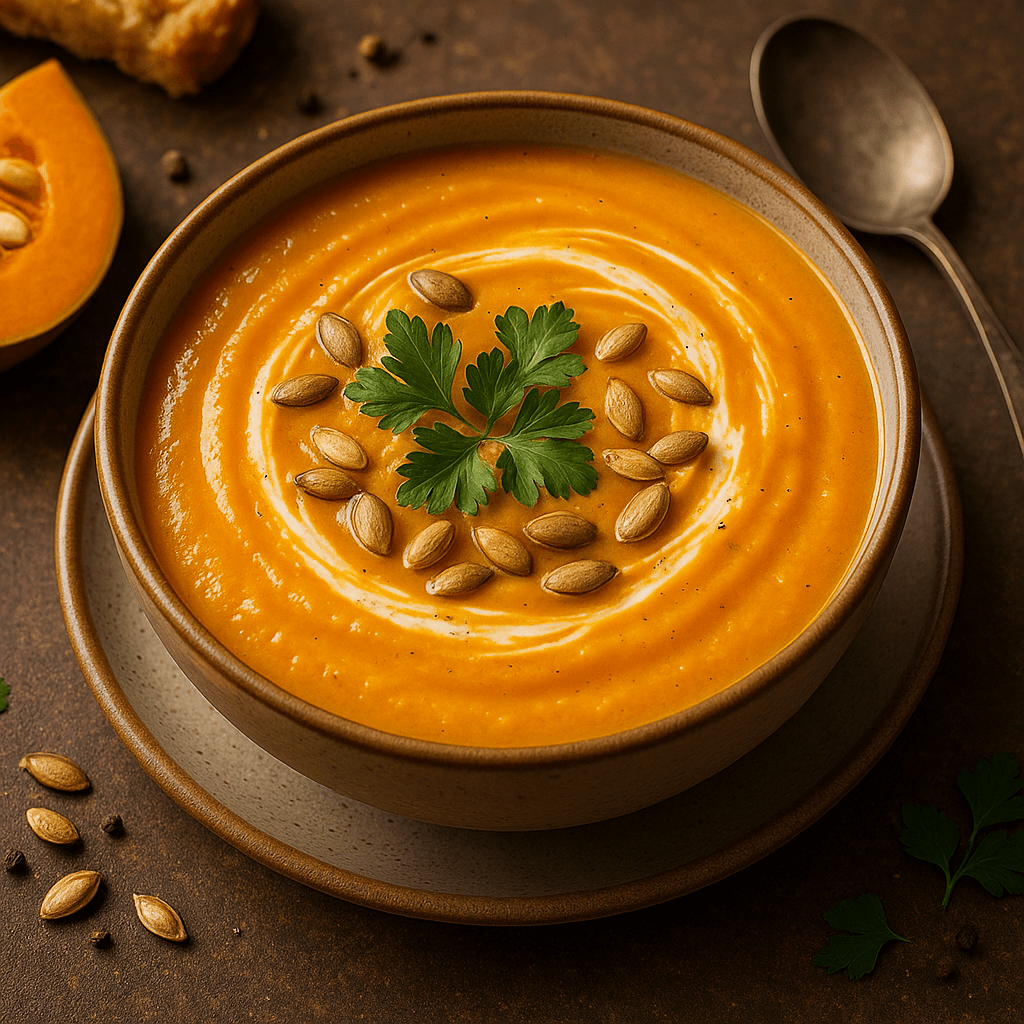
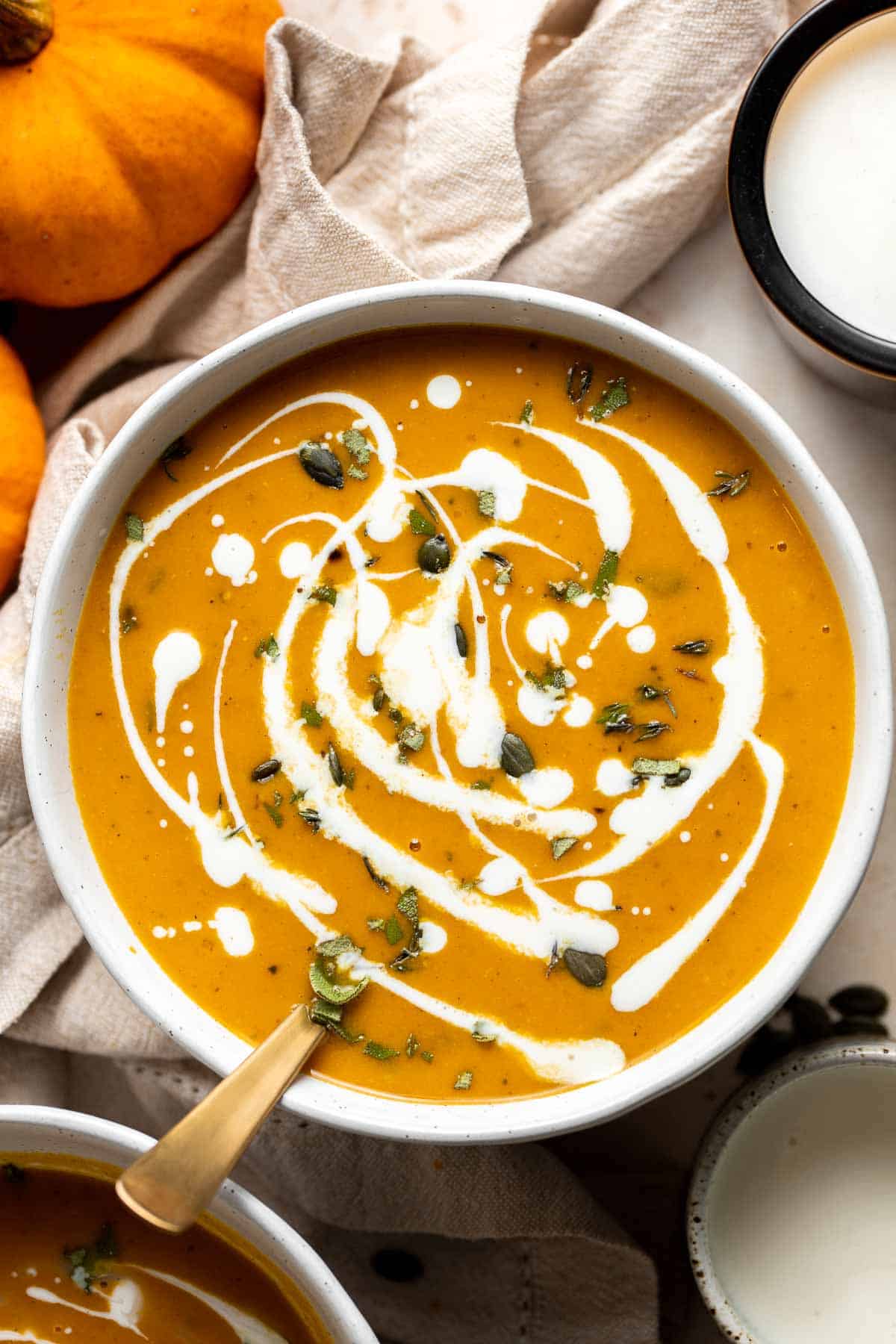
“Warm, creamy, and full of fall flavor – this homemade pumpkin soup is the perfect comfort food for chilly evenings. Easy to make, healthy, and oh-so-satisfying.”
When fall comes, pumpkin soup is more than just a meal; it’s a sign of comfort. When September rolls around, stores start putting out brilliant orange pumpkins, which remind us that warm nights and tasty meals are coming up. This recipe is not the usual way to “mix pumpkin with cream.” It was meticulously made to balance sweetness, smokiness, and umami while still being nutritious and adaptable to diverse diets.
In this post, you’ll learn why pumpkin soup is great for September, how to make it your own, and everything else you need to know to serve, keep, and enjoy it.
Think about how nice it would be to stroll home on a cool September night with the leaves crackling under your feet. You go inside, light a candle, and the smell of roasted pumpkin, garlic, and a hint of smoked paprika permeates the kitchen. This pumpkin soup gives you the kind of warmth that makes you feel like you’re in a cafe in your own house.
Why Pumpkin Soup is Perfect for the September Fall Transition?
September is the month that connects summer salads and winter soups. Pumpkin soup is the perfect middle ground. It’s light enough to eat in the early fall, but it’s also heavy enough to get you ready for the winter months. It honors the harvest season and makes it easier to get used to the weather that calls for comfort food.
Pumpkin soup is one of the few recipes that can make an ordinary night special. When the wind blows outside, holding a warm bowl in your hands helps you feel like you’re in the real world. It’s not simply food; it’s an experience that makes your evenings more fun.
Pumpkin isn’t just about how it tastes. One of the best things about cooking at home is that you can make a recipe your own. I cook a tart apple with pumpkin and garlic in my rendition. The apple makes the dish brighter to balance off the sweetness, and the roasted garlic enhances the taste without making it too strong.
Finally, I add a teaspoon of white miso, which gives the dish a hint of umami. A spray of smoked paprika oil on top gives your food a restaurant-style look right at home. included beta-carotene, which your body turns into vitamin A, which is good for your skin and eyesight. It also has potassium, fiber, and antioxidants in it.
What I like best is You can obtain both comfort and nutrients in one spoonful.
1.5 lbsugar pumpkin or kabocha squash, halved, seeded, cut into chunks
1.5lb700 g sugar pumpkin or kabocha squash, halved, seeded, cut into chunks
1medium onion or large shallotsliced
1tart appleGranny Smith works best, cored and quartered
1head garlichalved crosswise
2tbspolive oil
1tspsmoked paprika
1tspground cumin
1/4tspnutmegfreshly grated
4cupslow-sodium vegetable stock
2tbspwhite miso pasteoptional
1/2cupcoconut milk or 1/3 cup cashew cream
Juice of 1/2 lemon
Salt and freshly cracked black pepper
Garnish Options
Toasted pumpkin seedspepitas
Smoked paprika oil or browned butter
Microgreens or parsley
A sprinkle of flaky sea salt
Method
Preheat oven to 425°F (220°C). Line a baking tray with parchment.
Place pumpkin, onion, apple, and garlic on tray. Toss with olive oil, salt, and pepper. Roast for 35–40 minutes until caramelized and tender.
Scoop roasted pumpkin flesh into a pot. Squeeze roasted garlic cloves into the same pot. Add onion and apple.
Add spices and vegetable stock. Simmer for 10 minutes.
Blend with an immersion blender until smooth. For extra silkiness, strain through a sieve.
Remove from heat. Stir in miso paste and coconut milk or cashew cream. Add lemon juice for brightness.
Taste and adjust salt and pepper.
Serve hot with garnishes.
Video
Notes
Seasonal Ingredients Note
Always choose smaller sugar pumpkins or kabocha squash. They’re sweeter and less watery than large carving pumpkins. Fresh is ideal for flavor, but if you’re short on time, canned pumpkin purée works — just reduce the liquid slightly. Roasting the pumpkin is key because it deepens flavor and avoids the blandness of boiled versions.
Diet-Friendly Notes
Vegan: Use coconut milk or cashew cream instead of dairy. Replace browned butter with browned coconut oil.
Gluten-Free: The soup is naturally gluten-free; just check the broth label.
Dairy-Free: Coconut milk or cashew cream makes it rich without dairy.
Protein Boost: Add a handful of cooked red lentils or top with roasted chickpeas for extra protein.
Texture & Flavor Tips
If you want velvety smooth soup, blend thoroughly and strain. For rustic texture, mash a few roasted pumpkin chunks and stir them back in. To avoid overly sweet soup, always balance with acid — lemon juice, apple cider vinegar, or even a spoonful of yogurt. Roasting creates a deep, caramelized flavor that makes this soup stand out from regular stovetop versions.
Storage & Reheating Tips
Cool the soup quickly and store in airtight containers.
Fridge: Keeps well for 3–4 days.
Freezer: Freeze in portions for up to 3–4 months.
Reheating: Warm gently on the stove, stirring often. Always reheat to at least 165°F (74°C) for safety. If frozen, thaw overnight in the fridge before reheating.
Serving Ideas
Pair with toasted sourdough or garlic bread.
Serve with a fennel and pear salad for a refreshing balance.
Top with roasted chickpeas or cooked quinoa for a filling main course.
Use as a starter for a fall dinner party, garnished with herbs and seeds.
FAQ Section
Q: Can I use canned pumpkin? Yes, but reduce the stock slightly. To mimic roasted flavor, sauté onion and garlic before adding the purée.Q: How do I thicken soup without cream? Add a potato or white beans during simmering, then blend. Both create a naturally thick texture.Q: Can I make it ahead? Definitely. This soup keeps well in the fridge and freezer. It’s even better the next day when flavors develop.
Pro Tips
Toast your spices in the pot before adding stock to release maximum aroma.
If the pumpkin tastes flat, add a tablespoon of maple syrup — then balance with lemon juice.
For a rich finish, stir in a little miso or drizzle with browned butter.
Nutrition Facts
Pumpkin is naturally low in calories yet packed with beta-carotene, fiber, and potassium. With vegetable stock and coconut milk, a serving averages around 180–220 calories, depending on garnishes. It’s a wholesome choice that feels indulgent while staying nutrient-dense.
Frequently Asked Questions — Pumpkin Soup
1) Can I use canned pumpkin purée instead of roasting fresh pumpkin?
Yes — the recipe explicitly states that while fresh pumpkin (or kabocha squash) is preferred for flavor, canned pumpkin purée is an acceptable shortcut.
If you go this route, reduce the amount of liquid (stock) slightly, because canned purée is already moist. Also, to mimic the depth from roasting, sauté your onions, garlic, and optionally some of the pumpkin purée briefly before adding stock for added flavor.
2) Which kind of pumpkin or squash works best, and how do I choose a good one?
The recipe recommends sugar pumpkins or kabocha squash because they tend to be sweeter and less watery compared to large carving pumpkins.
When picking: opt for squash that are heavy for their size, with firm, unblemished skins, and no soft spots. These characteristics suggest a mature, dense interior that will roast well and yield richer flavor.
3) Why do they add an apple (like Granny Smith) and what role does it play?
The recipe includes a tart apple (Granny Smith) among the ingredients.
The apple adds brightness and acidity to balance the natural sweetness of the pumpkin. It also contributes subtle texture contrast and depth of flavor when roasted together with the pumpkin, onion, and garlic.
4) What’s the purpose of using white miso paste — can I skip or substitute it?
White miso is used to inject a hint of umami richness into the soup, giving it savory complexity beyond just sweet and spicy notes.
You can omit it if you don’t have it, but your soup may taste a bit flatter. If substituting, consider a mild miso variety, or a small amount of nutritional yeast or soy sauce to replicate a gentle umami boost — but adjust salt accordingly.
5) Should I blend the soup perfectly smooth or leave it slightly textured?
Both options are valid, depending on preference. The recipe advises:
For a velvety, silky texture, blend thoroughly and optionally strain through a fine sieve.
For a more rustic character, leave small pieces or mash a few roasted chunks back into the soup after blending.
This lets you decide how smooth or chunky you want the final consistency.
6) My soup tastes too sweet / too mild — how can I balance it?
Several levers:
Use acid (lemon juice, apple cider vinegar) to cut sweetness — the recipe includes juice of ½ lemon for that brightness.
Adjust salt and pepper to enhance other flavors.
Roast the pumpkin and apple well to achieve caramelization (deep color) — that intensifies flavor and offsets “flatness.”
If sweetness is still overpowering, reduce the proportion of apple or swap to a less sweet apple variety.
7) How should I store leftovers, and how long do they last?
Refrigerator: In airtight containers, the soup keeps well for 3–4 days.
Freezer: It can be frozen in portions for up to 3–4 months.
Reheating: Gently warm on the stovetop, stirring occasionally. Always heat up soup to a safe temperature (~165 °F / 74 °C).
8) How can I enrich this soup or turn it into a more filling meal?
The recipe gives or suggests a few ideas:
Stir in coconut milk or cashew cream (already part of the recipe) for richness and creaminess.
Add protein: top with roasted chickpeas, or simmer in some cooked red lentils or white beans for added texture and satiety.
Use garnishes that add texture and flair: toasted pumpkin seeds (pepitas), a drizzle of smoked paprika oil or browned butter, flaky sea salt, microgreens or parsley.
Serve alongside warm toasted bread (sourdough, garlic bread) to make it a hearty starter or light meal.
Want just the essential recipe details without scrolling through the article? Get our printable recipe card with just the ingredients and instructions.
Disclosure: This post may contain affiliate links.
If you make a purchase through these links, I may earn
a small commission at no extra cost to you.
prab chahal
Hi, I’m Prabjot Chahal – the heart (and taste buds) behind this blog!
Food has always been my love language – from experimenting with family recipes to discovering unique flavors from around the world. I believe that cooking isn’t just about following a recipe, it’s about creating moments, sharing stories, and connecting with others over something delicious. Through this blog, I want to build a vibrant food community where we share more than just recipes – we share inspiration, tips, and the joy of making and enjoying good food together. Whether you’re here for quick weekday dinners, festive treats, or creative seasonal ideas, you’re part of this table. So grab a fork (or a whisk!) and let’s cook, bake, and share our love for food – one recipe at a time.