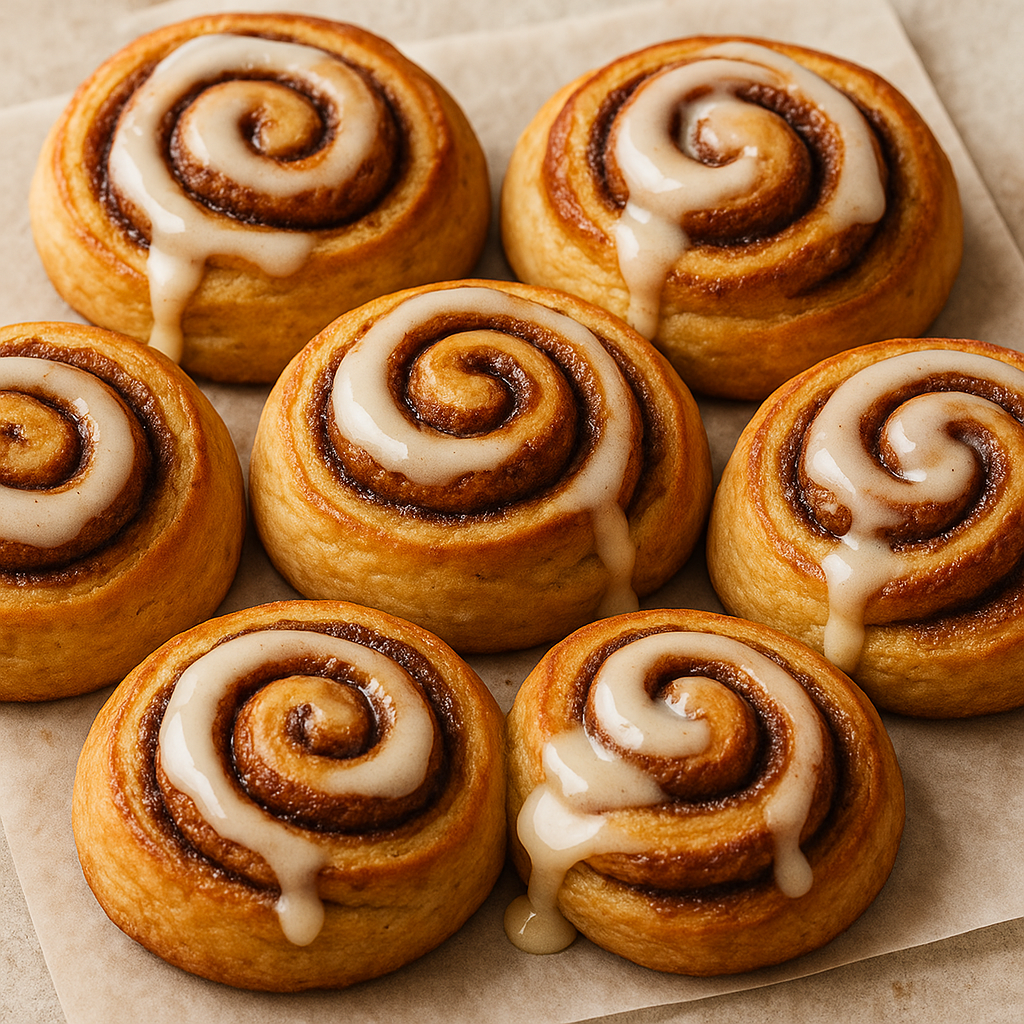
There aren’t many things in life that feel as good as pulling apart a warm, gooey cinnamon roll right out of the oven. The sweet smell of butter, cinnamon, and sugar in the kitchen is enough to make anyone’s day better. Cinnamon rolls are a classic treat that you can eat for breakfast, brunch, or dessert.
This blog will cover everything you need to know about cinnamon rolls, including what they are, what goes into them, the different types of dough and fillings, how to make them step by step, and even some tasty variations you might want to try. By the end, you’ll not only want a batch, but you’ll also be ready to make your own!
What Are Cinnamon Rolls?
Cinnamon rolls are soft, fluffy pastries made with a yeasted dough that is rolled up with a sweet cinnamon-sugar filling and usually topped with a glaze or frosting. The spiral shape isn’t just for looks; it makes sure that every bite has the right amount of dough, butter, and cinnamon.
Cinnamon rolls come from Northern Europe, especially Sweden, where they are called kanelbullar. They have traveled around the world and changed in taste, toppings, and even shape. In the U.S., they are often served too big and dripping with cream cheese frosting. In Scandinavia, they are a little less sweet and have pearl sugar on top.
Yeast – Gives the rolls their signature fluffy rise.
Milk – Adds richness and tenderness.
Butter – Essential for both the dough and the filling.
Sugar – Usually white sugar for the dough and brown sugar for the filling.
Eggs – For structure and richness.
Salt – To balance sweetness.
Cinnamon – The star spice of the recipe.
Method
Making the Dough
Activate the Yeast: Warm milk (not too hot, around 110°F/43°C) with a spoonful of sugar. Stir in the yeast and let it bubble for about 5 minutes.
Mix Wet Ingredients: Add melted butter, eggs, and sugar into the yeast mixture.
Add Dry Ingredients: Gradually mix in flour and salt until a soft dough forms.
Knead the Dough: Knead for 8–10 minutes until smooth and elastic.
First Rise: Place the dough in a greased bowl, cover, and let it rise for 1–2 hours until doubled.
Assembling and Baking the Cinnamon Rolls
Roll It Out: After the first rise, punch down the dough and roll it into a large rectangle.
Spread the Filling: Brush with softened butter, sprinkle with brown sugar and cinnamon (and nuts or chocolate if using).
Roll and Slice: Roll the dough tightly into a log, then cut into even slices.
Second Rise: Place rolls in a greased baking dish, cover, and let rise for 30–45 minutes.
Bake: Bake at 350°F (175°C) for 20–25 minutes until golden brown.
Frost: Spread cream cheese frosting or glaze over warm rolls.
Pro Tip: Don’t frost them when piping hot, or the icing will melt completely into the rolls. Warm is perfect—it seeps in just enough but still looks pretty.
What Are the Different Types of Dough Used for Cinnamon Rolls?
Traditional Yeast Dough: The dough that makes rolls light, airy, and fluffy.
Quick Dough (Baking Powder): This is a faster version that doesn’t use yeast and is great if you don’t have much time.
Brioche dough is extra rich and buttery, which makes rolls that are soft and melt in your mouth.
Whole Wheat Dough: A healthier option with a nutty taste and more fiber.
What Are the Different Types of Fillings for Cinnamon Rolls?
While the classic filling is butter, cinnamon, and brown sugar, the possibilities are endless:
Nutty Delight: Add chopped pecans, walnuts, or almonds.
Chocolate Swirl: Sprinkle cocoa powder or chocolate chips inside.
Apple Cinnamon: Add diced apples for a pie-like flavor.
Pumpkin Spice: Mix in pumpkin puree and warm spices.
Berry Bliss: Layer with raspberries or blueberries for a fruity surprise.
What Are the Different Types of Toppings for Cinnamon Rolls?
The topping can make or break your cinnamon roll experience:
Classic Icing: A simple sugar and milk glaze that sets beautifully.
Cream Cheese Frosting: Rich, tangy, and indulgent.
Caramel Drizzle: For a sticky-sweet finish.
Powdered Sugar Dusting: Light and elegant.
Whipped Cream or Ice Cream: For dessert-style serving.
What Are the Different Flavors of Cinnamon Rolls?
Maple Pecan: Brown sugar filling topped with maple glaze and pecans.
Chai-Spiced: Cinnamon mixed with cardamom, ginger, and cloves.
Orange Zest: Add orange zest to the filling and a citrus glaze.
Nutella Rolls: Swap the cinnamon-sugar filling for Nutella spread.
Coffee Caramel: Infuse the glaze with espresso for a grown-up twist.
What Are the Different Shapes of Cinnamon Rolls?
Classic Spirals: The most common roll shape.
Pull-Apart Bread: Arrange rolls together in a loaf pan.
Twists: Roll and twist strips of dough for a braided look.
Mini Bites: Perfect for parties or snacking.
Giant Skillet Roll: One enormous cinnamon roll baked in a cast-iron skillet.
What Are the Different Ways to Serve Cinnamon Rolls?
Breakfast Treat: Pair with coffee or tea.
Brunch Star: Serve with fresh fruit and eggs.
Dessert Indulgence: Warm with ice cream or caramel drizzle.
On-the-Go Snack: Mini rolls packed in a box.
Holiday Special: Dress them up with festive toppings for Christmas or Easter.
What Are the Nutritional Values of Cinnamon Rolls?
On average, a homemade cinnamon roll (without heavy frosting) contains:
Calories: 250–350 per roll
Carbohydrates: 40–50g
Protein: 4–6g
Fat: 8–12g
Cinnamon itself is rich in antioxidants and may help regulate blood sugar levels. Eggs and milk in the dough also provide protein and calcium.
Can Cinnamon Rolls Be Made Healthier?
Absolutely! Here are some easy swaps:
Whole Wheat Flour: Adds fiber and nutrition.
Natural Sweeteners: Use honey, maple syrup, or coconut sugar.
Greek Yogurt Glaze: Instead of cream cheese frosting.
Less Butter: Use a lighter spread or reduce quantity.
Fruit Fillings: Apples, berries, or bananas add natural sweetness.
You don’t have to give up the joy of cinnamon rolls—just tweak them for balance.
Frequently Asked Questions
1) Which flour is best — all-purpose or bread flour?
Both work. The recipe itself recommends either all-purpose or bread flour, so pick based on texture: bread flour (higher protein) gives slightly chewier, more elastic rolls; all-purpose gives a tender, softer crumb.
If you switch, keep the same weight/volume and use the spoon-and-level method so you don’t accidentally add too much flour.
2) How should I activate the yeast, and at what temperature should the milk be?
Warm the milk to about 110°F (≈43°C), stir in a pinch of sugar, then add the yeast and wait ~5 minutes for it to become foamy — that’s your sign the yeast is alive.
If it doesn’t foam, either the yeast is old or the liquid was too hot/cold; discard and restart (too-hot water kills yeast; too-cold means it won’t activate). If you use instant yeast, you can often skip the proof step and add it straight to the dry ingredients (follow package instructions).
3) My rolls turned out dense — what went wrong and how do I fix it?
Common causes: under-kneading (not enough gluten development), not allowing the dough to rise long enough, too much flour (packed measuring), or cold proofing conditions.
The recipe’s method calls for kneading until smooth and elastic and a first rise of 1–2 hours (until doubled), plus a 30–45 minute second rise after shaping — make sure the dough puffs up during those rests.
Fixes: knead a bit longer, give the dough more time in a warm spot to double, measure flour properly, and avoid overworking the dough after adding the flour.
4) How do I know when the rolls are baked perfectly (not underbaked or dried out)?
Bake at 350°F (175°C) for roughly 20–25 minutes until golden and set. Look for slightly browned edges and a top that springs back gently; a toothpick in the center should come out with moist crumbs (not raw batter).
Because ovens vary, start checking a few minutes early. If you want extra gooey centers, err on the side of taking them out a touch earlier — residual heat will finish the set.
5) Why did my icing melt and sink into the rolls? How should I frost them?
Don’t ice piping-hot rolls. The recipe’s pro tip: frost when the rolls are warm, not hot, so the icing seeps in a bit but still sits prettily on top.
For cream-cheese frostings, wait 10–15 minutes after the rolls come out; for thin sugar glazes you can apply while slightly warmer if you want it to soak in.
If you need a frosting that holds shape on warm rolls, chill the frosting briefly or use a slightly thicker buttercream.
6) Can I make these ahead or freeze them? What’s the best method?
Yes — great for planning ahead. Two common, reliable approaches:
Refrigerate overnight: Shape the rolls in the pan, cover, and refrigerate (second rise slows in the fridge). Next morning, let them rest at room temp 15–60 minutes and bake — perfect for fresh morning rolls.
Freeze (several ways): flash-freeze unbaked cut rolls on a tray and then bag them; thaw in the fridge overnight, let rise, then bake. Or par-bake (10–15 mins until set but not browned), cool, freeze, then finish baking from frozen/thawed state. You can also freeze fully baked rolls (wrapped) and reheat later.
Wrap and label well; frozen rolls are best used within a few weeks. (Trusted guides with step-by-step make-ahead/freezing tips: King Arthur Baking, The Kitchn.)
7) Can I make these vegan or try different fillings/flavors without ruining the texture?
Yes. For vegan: swap plant milk for dairy milk, use vegan butter or coconut oil, and replace eggs with flax/chia “eggs” or commercial replacers (adjust hydration if needed).
For gluten-free, use a tested 1:1 gluten-free flour blend (you may need xanthan gum or slight recipe tweaks). The recipe also suggests many tasty variations that won’t break the base — nuts, chocolate chips, apple bits, pumpkin-spice mixes, Nutella, maple-pecan, etc.
Start with small swaps and keep an eye on dough consistency (you may need slightly more/less liquid).
Final Thoughts
Cinnamon rolls are more than just a baked good; they mean comfort, warmth, and giving in. From mixing the dough to drizzling on the glaze, making them is just as much fun as eating them. There is a cinnamon roll for every occasion and mood, whether you want to stick with the classic recipe or try new flavors, just like me, Nutella, chai spice, or maple pecan.
Don’t buy them from the store. The next time you want something sweet, soft, and good for your soul. Make your own cinnamon rolls instead. The smell alone will make your kitchen feel like home.
“Craving cozy vibes? Check out our Pumpkin Spice Latte blog, packed with tips to make this fall extra flavorful!”
Printable Recipe Card
Want just the essential recipe details without scrolling through the article? Get our printable recipe card with just the ingredients and instructions.
Disclosure: This post may contain affiliate links.
If you make a purchase through these links, I may earn
a small commission at no extra cost to you.
prab chahal
Hi, I’m Prabjot Chahal – the heart (and taste buds) behind this blog!
Food has always been my love language – from experimenting with family recipes to discovering unique flavors from around the world. I believe that cooking isn’t just about following a recipe, it’s about creating moments, sharing stories, and connecting with others over something delicious. Through this blog, I want to build a vibrant food community where we share more than just recipes – we share inspiration, tips, and the joy of making and enjoying good food together. Whether you’re here for quick weekday dinners, festive treats, or creative seasonal ideas, you’re part of this table. So grab a fork (or a whisk!) and let’s cook, bake, and share our love for food – one recipe at a time.