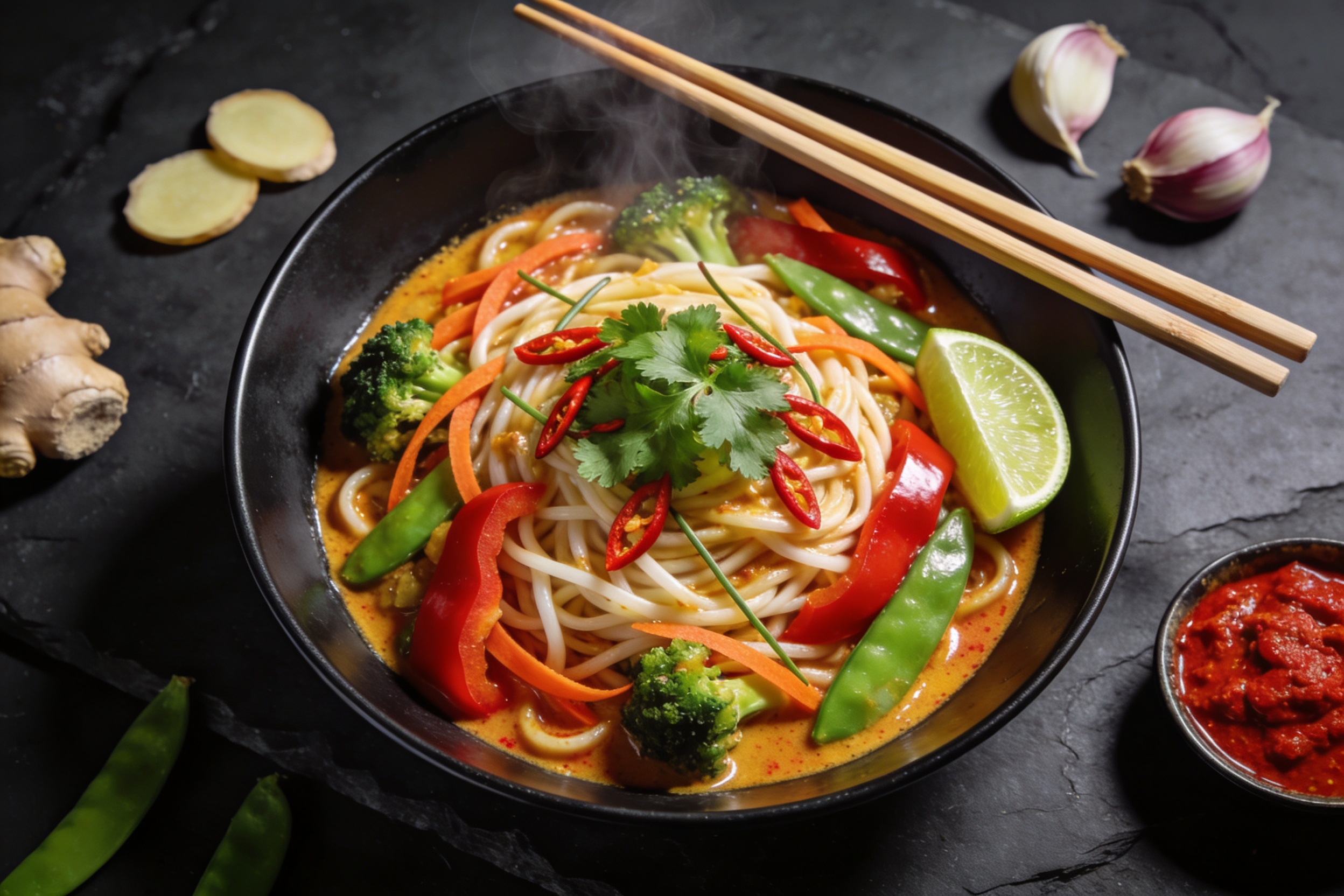
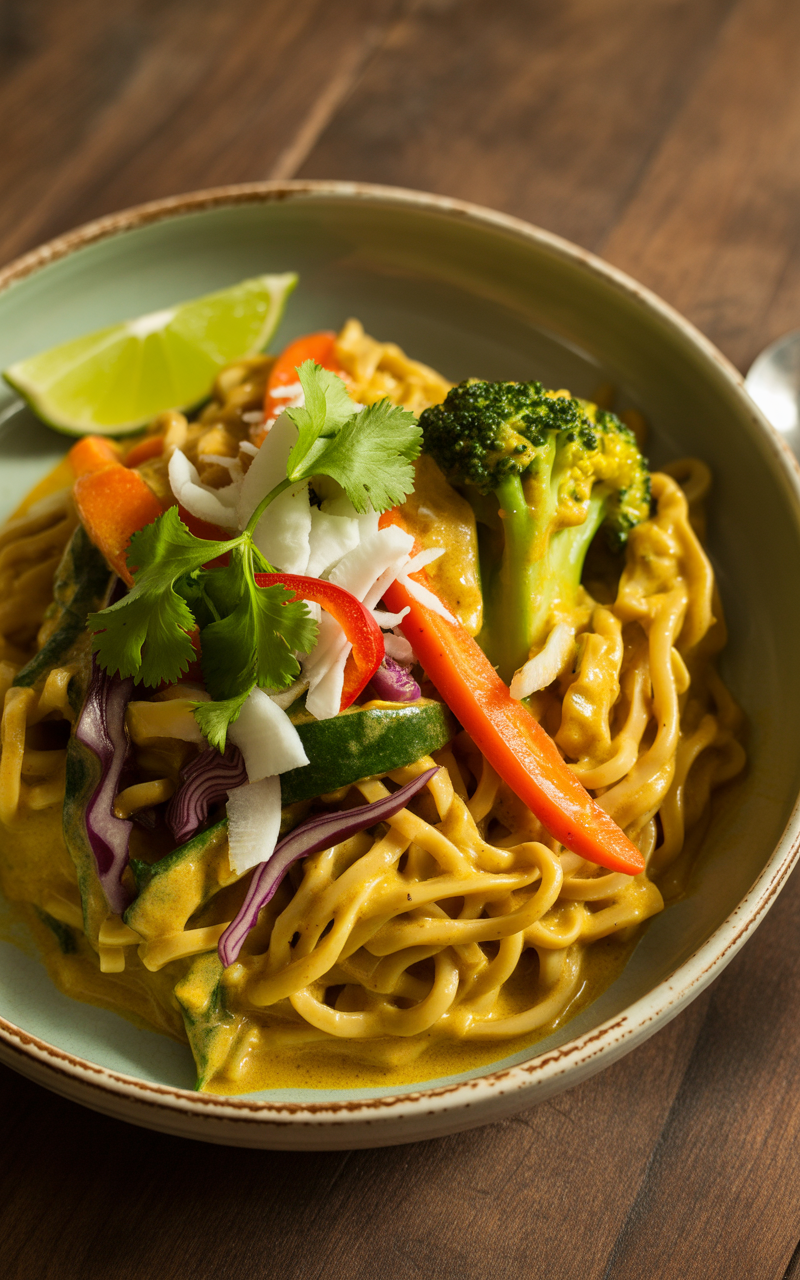
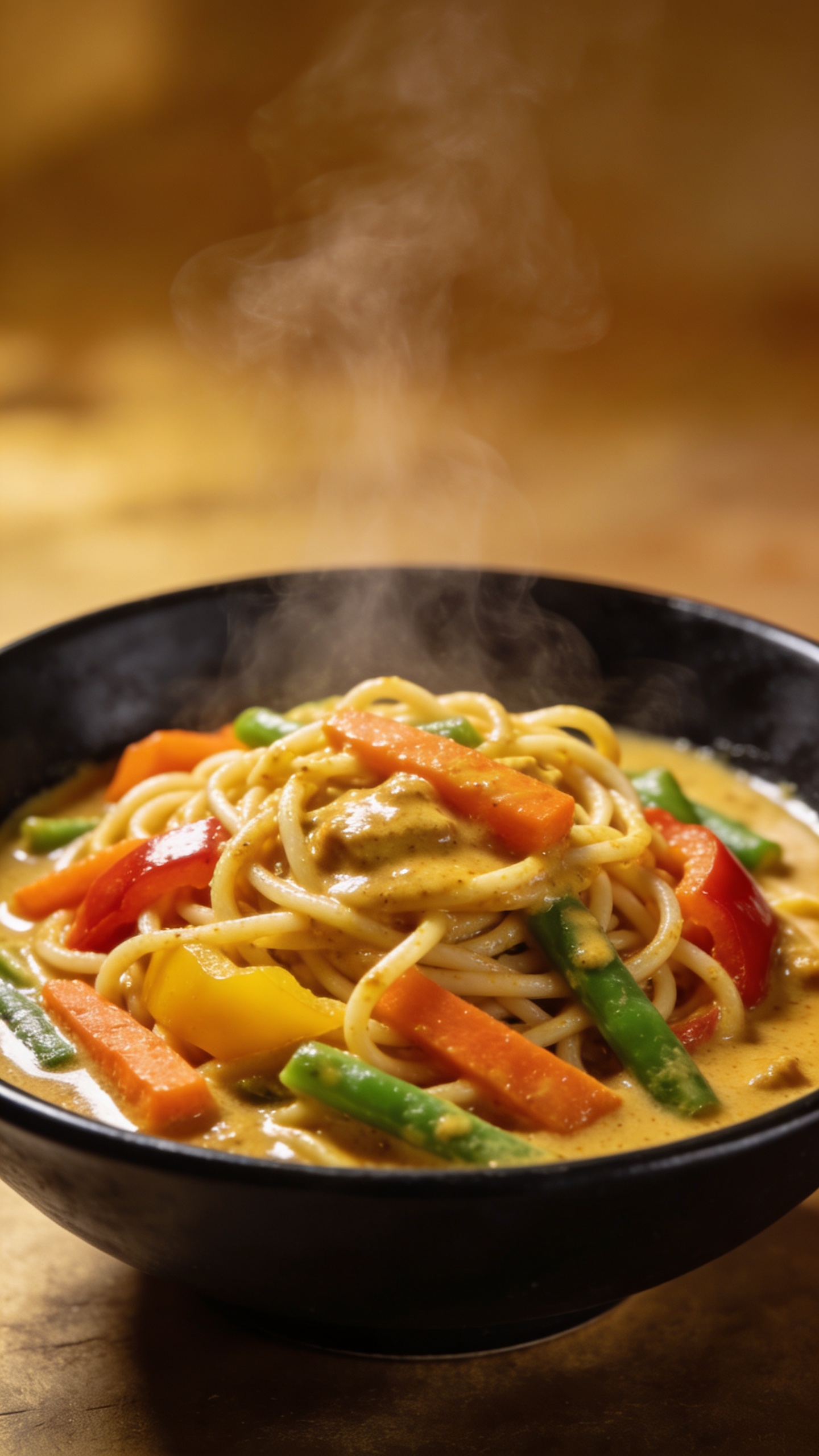
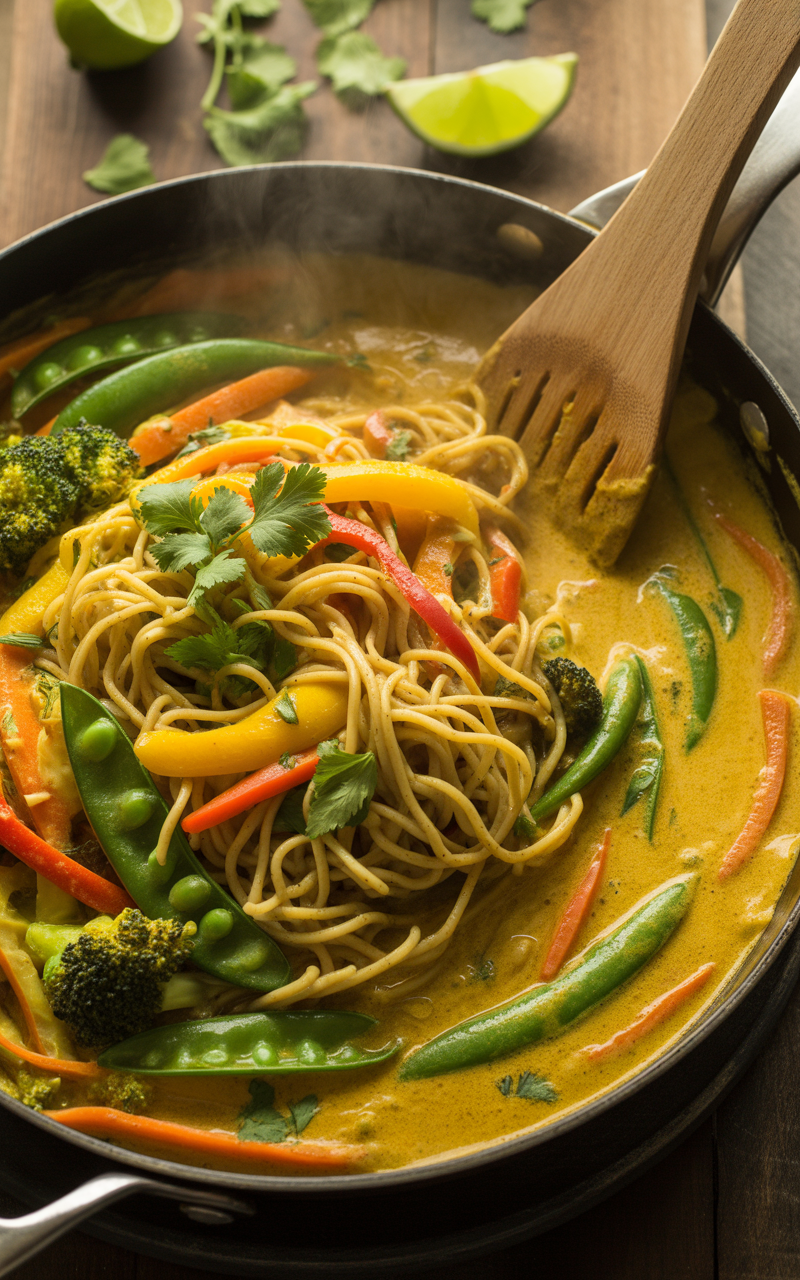
Coconut curry vegetable noodles hit that sweet spot between comfort food and weeknight wizardry. We’re talking slurpable noodles, silky coconut milk, and a rainbow of veggies that don’t feel like a chore. The sauce comes together fast, the flavors taste like you tried hard (you didn’t), and cleanup won’t ruin your evening. Sold yet?
Why Coconut Curry Noodles Just Work
Curry + coconut milk = instant harmony. The fat from coconut milk carries spice beautifully and creates that velvety texture we all pretend we didn’t just drink from the bowl. You can tweak heat levels, swap veggies, and change noodles without the dish falling apart. That’s a weeknight win, IMO. Key idea: Build layers of flavor quickly. Start with aromatics, bloom the curry paste, then add coconut milk and a splash of acid. Simple, but it tastes like you unlocked a secret level.
The Flavor Base: Aromatics, Heat, and Balance
Think of the sauce as your soundtrack. If the bassline thumps, everything else grooves.
Aromatics: Garlic, ginger, and shallot (or onion). You want them soft and fragrant, not brown.
Heat and depth: Thai red curry paste gives warmth and complexity. Yellow or massaman paste works too, just different vibes.
Creamy body: Full-fat coconut milk delivers that luxurious mouthfeel. Light coconut milk works, but it won’t coat the noodles as well.
Acid and salt: Lime juice and fish sauce (or soy sauce for vegan). They wake the whole dish up.
Sweetness: A pinch of sugar or maple balances everything without turning it into dessert.
Choosing Your Curry Paste
– Red curry paste: Balanced heat, classic flavor. – Yellow curry paste: Warmer, turmeric-forward, milder. – Green curry paste: Bright, herby, spicier—great if you love a kick. FYI: Curry pastes vary wildly in salt and spice. Start small, taste, and adjust so you don’t summon the fire department.
Noodles: What to Use (and How Not to Mess Them Up)
You have options, and they all slap in different ways.
Rice noodles (medium or wide): Classic. Soak in hot water until pliable but still a bit firm, then finish in the sauce.
Udon noodles: Chewy and sturdy. Great if you like a heartier bite.
Ramen or egg noodles: Bouncy texture, absorb flavors like champs.
Zucchini or carrot “noodles”: Low-carb twist. Don’t overcook or they’ll cry and turn watery.
Pro tip: Keep noodles slightly underdone before they meet the sauce. They’ll finish cooking as they soak up all that coconutty goodness.
Preventing Clumpy Noodles
– Toss cooked noodles with a tiny drizzle of oil if they’ll sit. – Add noodles to the sauce gradually and toss with tongs. – If things go sticky, splash in hot water or broth to loosen.
Veggies That Shine (and How to Cook Them Right)
You want a mix of crunch, color, and sweetness. The goal: a bowl that looks like it ate the rainbow and lived to brag about it.
Crunchy stars: Bell peppers, snap peas, broccoli, baby corn
Silky softies: Mushrooms, eggplant, zucchini
Sweet pops: Carrots, corn, cherry tomatoes (quick burst of acidity)
Leafy finish: Spinach, kale, or bok choy tossed in at the end
Cook times matter: Add harder veggies first, then the quick-cooking stuff. You want life left in them—no soggy sadness.
– Tofu: Firm or extra-firm, pan-fried until golden, then tossed into the sauce. – Chicken or shrimp: Quick sear, set aside, finish in the sauce. – Chickpeas: Cozy, hearty, and vegan-friendly. Toast them with spices for bonus points.
Let’s Cook: Step-by-Step Game Plan
Ingredients (serves 3-4):
8 oz noodles (rice, udon, or ramen)
1 tbsp neutral oil (plus more as needed)
3 cloves garlic, minced
1 tbsp fresh ginger, minced
1 small shallot, thinly sliced
2-3 tbsp red curry paste (start with 2, add more to taste)
1 can (13.5 oz) full-fat coconut milk
1/2 cup vegetable broth or water
1-2 tsp sugar or maple syrup
1 tbsp fish sauce or 1.5 tbsp soy sauce (for vegan)
Juice of 1 lime, plus extra wedges
4 cups mixed veggies, sliced
Fresh basil or cilantro, chopped
Optional: chili crisp, crushed peanuts, toasted sesame seeds
Method:
Prep everything first. Slice veggies, mince aromatics, and measure sauces. This dish moves fast once it starts.
Cook or soak noodles until just shy of done. Drain and set aside.
Heat oil in a large skillet or wok over medium heat. Sauté shallot 2 minutes, then add garlic and ginger for 30 seconds.
Stir in curry paste and cook 1 minute to bloom. If it sticks, splash a bit of broth to loosen.
Pour in coconut milk and broth. Stir, then add sugar and fish sauce/soy. Simmer 3-4 minutes until slightly thickened.
Add harder veggies (broccoli, carrots). Cook 2-3 minutes. Add softer veggies (peppers, mushrooms) and cook another 2-3 minutes until crisp-tender.
Toss in noodles and lime juice. Use tongs to coat and finish cooking the noodles, 1-2 minutes. Taste and adjust: more salt, sugar, or lime as needed.
Kill the heat. Shower with basil or cilantro. Garnish with peanuts or sesame and a spoon of chili crisp if you like chaos.
Texture checkpoint: Sauce should cling to the noodles, not drown them. If too thick, add a splash of hot water. If too thin, simmer 1 more minute.
Flavor Upgrades You’ll Actually Use
– Umami boost: A teaspoon of miso or a hit of mushroom powder in the sauce. – Sweet heat: Chili jam or sambal + a touch of honey. – Fresh pop: Grate lime zest over the top. – Nutty note: Swirl in a spoonful of peanut or almond butter for a satay-ish vibe. – Crunch factor: Quick-pickle red onions or cucumbers and toss them on before serving. IMO, this makes the dish sing.
Make-Ahead and Leftovers
– Cook the sauce and veggies ahead, store noodles separately. – Reheat sauce, then toss with fresh or reheated noodles to keep texture snappy. – Leftovers keep 2-3 days in the fridge. Loosen with water or broth when reheating.
Common Mistakes (And Easy Fixes)
– Watery sauce? Simmer longer or add a few tablespoons of coconut cream. – Bland flavors? You probably skipped salt or acid. Add soy/fish sauce and a squeeze of lime. – Mushy veggies? You added them too early. Next time, stagger by hardness. – Too spicy? Stir in more coconut milk and a pinch of sugar. – Gloopy noodles? Cook less initially and finish in the sauce with extra liquid on standby.
FAQ
Can I make this completely vegan?
Absolutely. Use soy sauce or tamari instead of fish sauce, and skip animal proteins. Tofu, chickpeas, or tempeh make great protein swaps. Finish with extra herbs for brightness.
What if I don’t have curry paste?
Use curry powder as a backup: 1.5 to 2 tablespoons, bloomed in oil with the aromatics. Add a bit of tomato paste for body. The flavor shifts slightly, but it still tastes wildly good.
Which coconut milk should I buy?
Grab full-fat canned coconut milk for the creamiest texture. Avoid “lite” if you want the sauce to cling. Check labels: some brands pack more stabilizers than coconut—go for one with coconut and water at the top of the list.
How do I make it gluten-free?
Use rice noodles and swap soy sauce for tamari or coconut aminos. Check your curry paste label, too—most are fine, but better safe than sorry, FYI.
Can I freeze leftovers?
Freeze the sauce and veggies without noodles for best results. Noodles turn mealy after thawing. Reheat the sauce, then add freshly cooked noodles and finish with lime.
How spicy should it be?
As spicy as you like. Start with less curry paste, taste, then add more in small amounts. You control the heat—not the other way around.
Conclusion
Coconut curry vegetable noodles deliver bold flavor with weeknight efficiency, and they welcome your fridge’s odd veggies like heroes. Build a solid base, cook your noodles just right, and finish with lime and herbs. Make it once, and you’ll start craving it on repeat—no apology letters to your takeout app required.
Disclosure: This post may contain affiliate links.
If you make a purchase through these links, I may earn
a small commission at no extra cost to you.
prab chahal
Hi, I’m Prabjot Chahal – the heart (and taste buds) behind this blog!
Food has always been my love language – from experimenting with family recipes to discovering unique flavors from around the world. I believe that cooking isn’t just about following a recipe, it’s about creating moments, sharing stories, and connecting with others over something delicious. Through this blog, I want to build a vibrant food community where we share more than just recipes – we share inspiration, tips, and the joy of making and enjoying good food together. Whether you’re here for quick weekday dinners, festive treats, or creative seasonal ideas, you’re part of this table. So grab a fork (or a whisk!) and let’s cook, bake, and share our love for food – one recipe at a time.