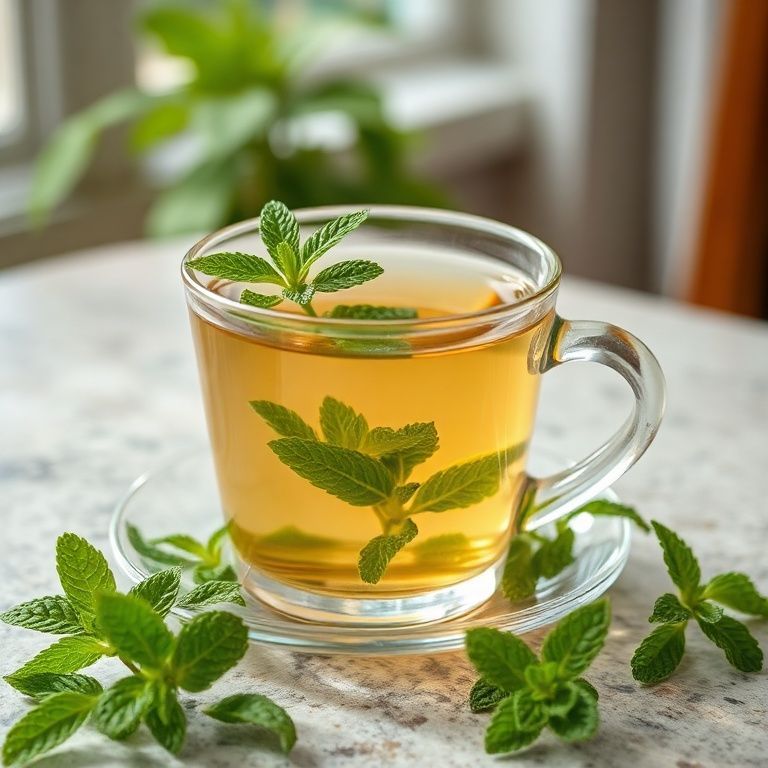
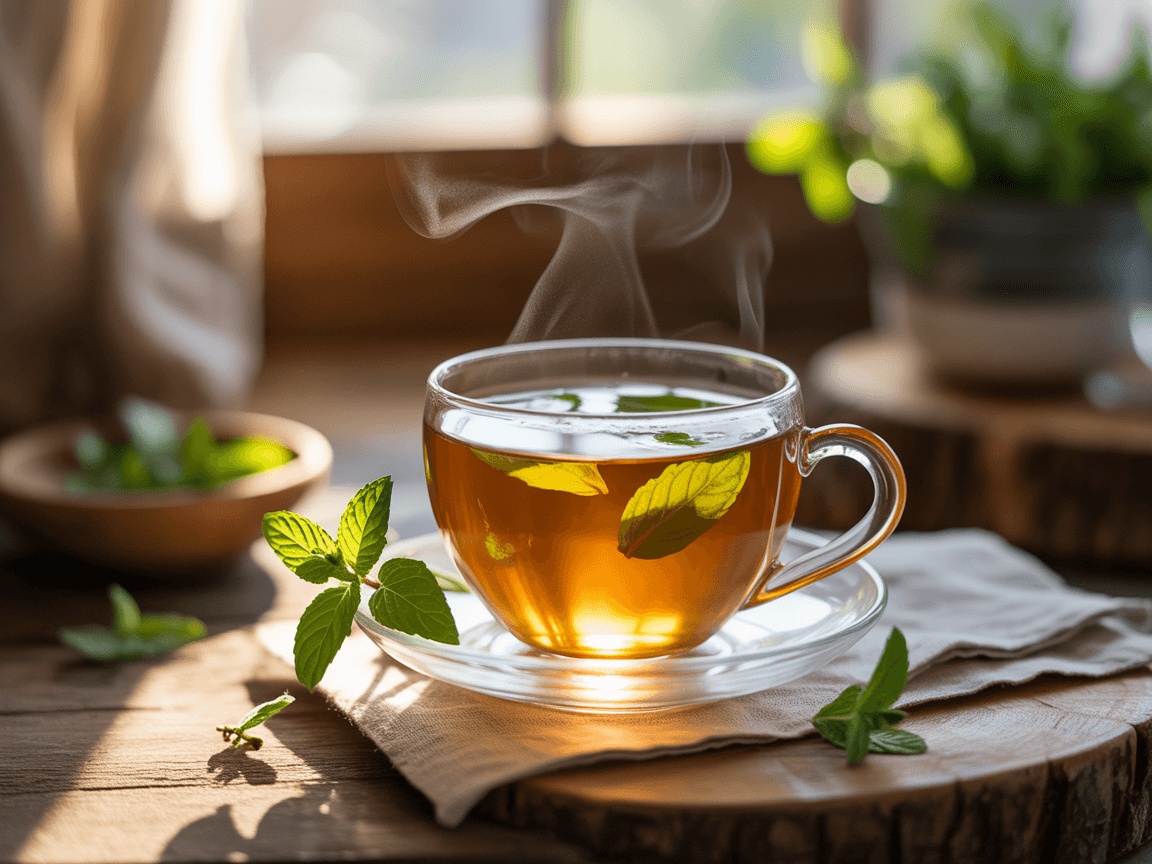
Peppermint tea is the kind of simple pleasure that makes any day feel a little lighter. It’s crisp, cool, and soothing, yet wonderfully warm in your hands. Whether you’re easing a busy mind, helping digestion after a meal, or just taking a quiet moment, this cup delivers.
No fuss, no complicated steps—just clean, bright flavor and comfort you can repeat anytime. Once you make it a habit, you’ll wonder how you ever went without it.
What Makes This Peppermint Tea Recipe So Good
Pure, refreshing flavor: Peppermint has a natural coolness that clears the palate and feels instantly calming.
Fast and fuss-free: You only need hot water and peppermint—fresh or dried—to make a reliably good cup.
Gentle on the stomach: Many people find peppermint helps ease bloating and mild digestive discomfort after meals.
Caffeine-free comfort: Perfect for evenings or any time you want a soothing drink without jitters.
Customizable: Sweeten it, add lemon, or blend with other herbs to match your mood.
Shopping List For Peppermint Tea
Peppermint – fresh leaves or dried loose-leaf (or pure peppermint tea bags)
Filtered water
Optional add-ins: honey or maple syrup, lemon slices, fresh ginger, or a cinnamon stick
Step-by-Step Instructions for Peppermint Tea
Boil the water: Bring filtered water to a rolling boil, then let it sit 30 seconds to settle.
Measure the peppermint: Use 1 heaping tablespoon dried peppermint (or 2 tablespoons fresh leaves) per 8 ounces of water. For tea bags, use one bag per cup.
Prepare the mug or teapot: Warm it with a splash of hot water, then discard the water.
This helps maintain a steady steeping temperature.
Steep: Add peppermint to the mug or teapot and pour in hot water. Steep 5–7 minutes for a smooth flavor. For a stronger, more menthol-forward cup, steep up to 10 minutes.
Strain and taste: Remove the leaves or tea bag.
Taste before adding anything—you might love it plain.
Customize: Sweeten lightly with honey or maple syrup, add a lemon slice for brightness, or a thin slice of ginger for warmth.
Serve hot or iced: For iced tea, make a stronger brew, let it cool, then pour over ice.
How to Store This Peppermint Tea
Fresh leaves: Wrap in a slightly damp paper towel and keep in a breathable produce bag in the fridge for up to 5 days.
Dried peppermint: Store in an airtight jar away from light and heat. It stays potent for 6–12 months.
Brewed tea: Refrigerate in a sealed jar for up to 3 days. Shake or stir before serving cold.
Ice cubes: Freeze extra tea in ice cube trays.
They’re perfect for quick iced tea that won’t get diluted.
Digestive support: Peppermint is commonly used to calm mild bloating, gas, and post-meal discomfort.
Soothing and relaxing: The aroma itself can be calming, which makes it a good wind-down drink.
Refreshes breath: The menthol in peppermint leaves a clean, cooling finish.
Caffeine-free hydration: It’s an easy way to drink more fluids without sugar or stimulants.
Note: If you have acid reflux (GERD), peppermint can sometimes make symptoms worse. If you’re pregnant, nursing, or take medications, check with a healthcare professional before using herbal teas regularly.
Mistakes To Avoid For Perfect Peppermint Tea
Don’t overboil the leaves: Pour boiling water over the leaves, but don’t simmer them on the stove—this can taste bitter.
Don’t use stale herbs: Old or poorly stored peppermint will taste flat and dusty. Freshness matters.
Don’t over-sweeten: Heavy sugar can mask the natural cooling flavor.
Start light and adjust.
Don’t steep in aluminum: Use glass, ceramic, or stainless steel for a clean flavor.
Don’t ignore sensitivities: If peppermint triggers heartburn or discomfort, reduce strength or choose an alternative.
Alternatives For Peppermint Tea
Spearmint: Softer and slightly sweeter than peppermint, great if peppermint feels too intense.
Mint blends: Combine peppermint with chamomile for bedtime, or with lemon balm for calm focus.
Ginger-mint: Peppermint plus fresh ginger slices gives a cozy, warming twist.
Citrus-mint: Add lemon or orange peel for a bright, uplifting cup.
Iced mint-lime: Brew strong peppermint tea, chill, then serve over ice with lime juice and a touch of honey.
FAQ About Peppermint Tea
Can I use fresh mint instead of dried peppermint?
Yes. Fresh leaves make a vibrant, slightly softer cup. Use about double the volume of fresh leaves compared to dried since fresh has more water and a milder concentration.
How long should I steep peppermint tea?
Five to seven minutes gives a balanced flavor.
For a stronger, cooler finish, go up to 10 minutes. Beyond that, it may taste a bit harsh or grassy.
Is peppermint tea safe before bed?
It’s naturally caffeine-free and generally relaxing, so many people enjoy it at night. If it feels too energizing for you, try a shorter steep or switch to chamomile-mint.
Does peppermint tea help with digestion?
Many people find it soothing after meals.
While individual results vary, peppermint is widely used for mild digestive discomfort. If you have GERD, it may aggravate symptoms, so proceed with care.
Can I make a large batch for the week?
Absolutely. Brew a concentrated pot, cool, and refrigerate for up to 3 days.
Dilute to taste and enjoy hot or cold.
What’s the best sweetener for peppermint tea?
Honey or maple syrup both work well in small amounts. They round out the edges without covering the clean mint flavor.
What water temperature should I use?
Just-off-the-boil water is ideal. Bring water to a boil, then wait 20–30 seconds before pouring to protect the delicate aromatics.
How do I avoid a weak-tasting cup?
Use enough peppermint and a full steep time.
For dried leaves, a heaping tablespoon per cup is a good baseline. For tea bags, choose high-quality, pure peppermint and consider two bags for iced tea.
Wrapping Up on Peppermint Tea
Peppermint tea is simple, calming, and endlessly reliable. With a few fresh or dried leaves and hot water, you get a soothing cup you can tailor any way you like.
Keep it straight, sweeten lightly, or blend with other herbs—whatever helps your day feel a little easier. Once it’s part of your routine, that cool, comforting sip will be something you look forward to, again and again.
Disclosure: This post may contain affiliate links.
If you make a purchase through these links, I may earn
a small commission at no extra cost to you.
prab chahal
Hi, I’m Prabjot Chahal – the heart (and taste buds) behind this blog!
Food has always been my love language – from experimenting with family recipes to discovering unique flavors from around the world. I believe that cooking isn’t just about following a recipe, it’s about creating moments, sharing stories, and connecting with others over something delicious. Through this blog, I want to build a vibrant food community where we share more than just recipes – we share inspiration, tips, and the joy of making and enjoying good food together. Whether you’re here for quick weekday dinners, festive treats, or creative seasonal ideas, you’re part of this table. So grab a fork (or a whisk!) and let’s cook, bake, and share our love for food – one recipe at a time.