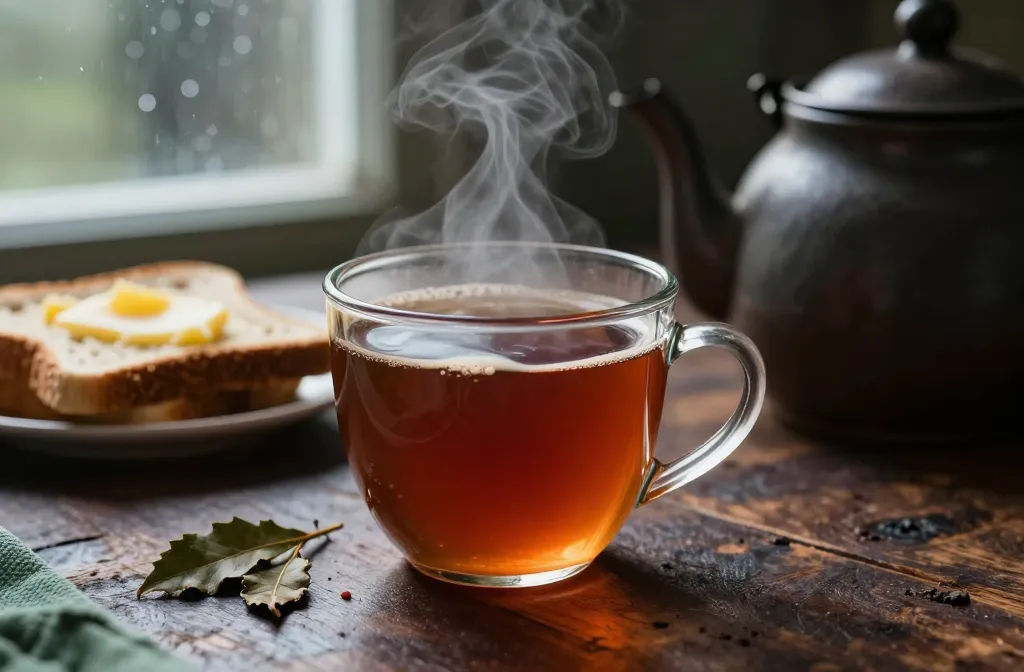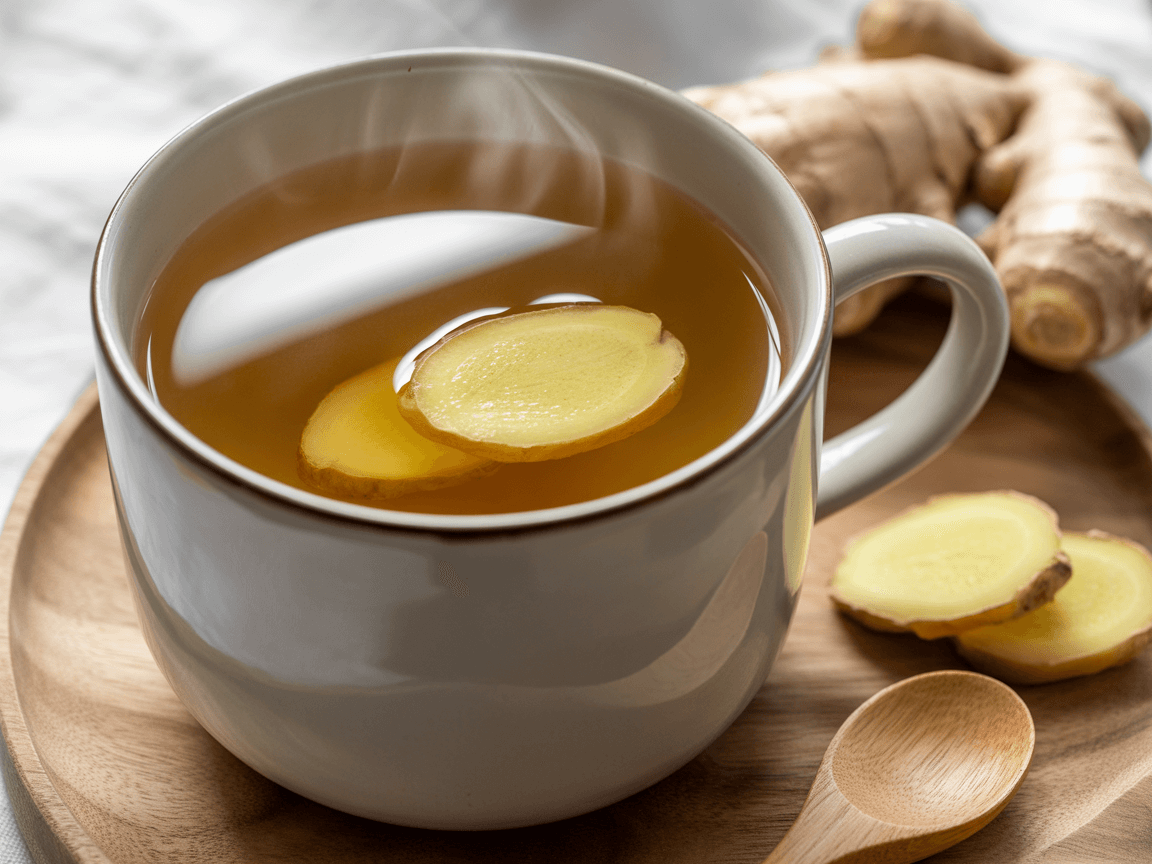
If your stomach needs a break but your day still calls for something warm and steadying, this mild ginger tea fits the moment. It’s gentle, lightly spiced, and smooth—no harsh bite, no heavy sweetness. You get the cozy warmth of ginger without overwhelming heat, plus a few calming extras that help your body settle.
It’s simple to make, easy to sip, and kind to sensitive days. Think of it as a soft blanket in a mug.
What Makes This Mild Ginger Tea Special
This tea is intentionally mild—less heat, more calm.
- Balanced ginger flavor: Thin slices and a shorter simmer keep it soothing, not spicy.
- Stomach-friendly add-ins: A hint of honey and a touch of lemon add comfort without sharpness.
- Flexible strength: You can steep longer for more warmth or keep it light for extra sensitivity.
- Comfort-first approach: No caffeine, no heavy ingredients, just simple, whole flavors.
Shopping List For Mild Ginger Tea
- Fresh ginger root (about 2–3 inches)
- Filtered water (4 cups)
- Honey or maple syrup (to taste)
- Lemon (optional, a few thin slices or a small squeeze)
- Cinnamon stick (optional, for gentle warmth)
- Chamomile tea bag (optional, for extra calm)
- Pinch of sea salt (optional, to round the flavor)
How to Make This Mild Ginger Tea
- Prep the ginger: Rinse and gently peel the ginger with the edge of a spoon. Slice it thinly.
Aim for about 12–15 thin slices for a mild brew.
- Start with cool water: Add the ginger slices and 4 cups of water to a small pot. If using a cinnamon stick, add it now.
- Heat gently: Bring to a bare simmer over medium heat, then reduce to low. Let it gently bubble for 8–10 minutes for a mild tea.
For a bit more warmth, go up to 15 minutes.
Related Posts:
- Optional calm boost: Turn off the heat and add a chamomile tea bag. Steep for 2–3 minutes, then remove.
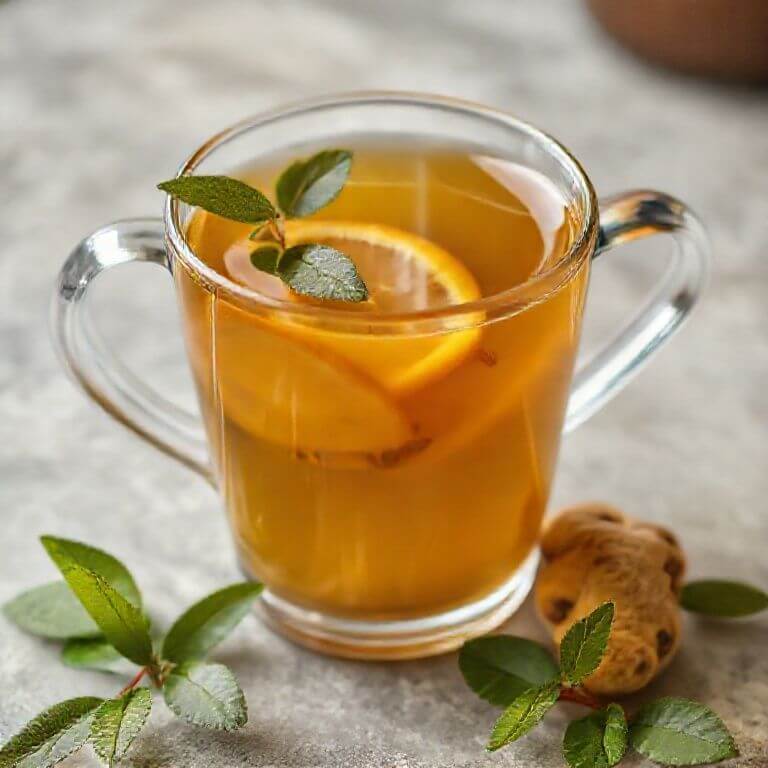
- Strain and taste: Strain into mugs or a teapot. Add a small squeeze of lemon if you like, and a pinch of sea salt to round the flavor.
- Sweeten lightly: Stir in honey or maple syrup to taste.
Start with 1–2 teaspoons per cup. Keep it light so the tea stays gentle.
- Serve warm: Sip slowly. Notice the warmth in your chest and the smooth, calm finish.


How to Store Mild Ginger Tea
- Refrigerate: Store leftover tea in a sealed jar or bottle for up to 3 days.
- Reheat gently: Warm on the stovetop over low heat or in a mug in the microwave.
Avoid boiling; it can sharpen the flavor.
- Freeze for later: Pour into ice cube trays and freeze. Drop cubes into hot water for a quick cup.
- Add sweetener fresh: For best flavor, add honey or lemon after reheating, not before storing.
Why This Mild Ginger Tea is Good for You
- Ginger supports digestion: It’s known for easing nausea and helping settle an uneasy stomach.
- Warm, not harsh: The low simmer and thin slices keep it smooth and easy to tolerate.
- Hydration with comfort: Warm fluids can relax the body and help with bloating and tension.
- Gentle add-ins: Honey can soothe the throat, and chamomile brings a calming note without caffeine.
Pitfalls to Watch Out For: Mild Ginger Tea
- Over-steeping the ginger: Too long and the tea can turn sharp or spicy. Stay in the 8–10 minute range for mildness.
- Too much lemon: Citrus can be irritating for sensitive stomachs.
Use just a small squeeze or skip it.
- Boiling after sweetening: Heating honey at a boil can dull its flavor and scent. Sweeten at the end.
- Using powdered ginger: It’s stronger and can taste dusty. Fresh ginger gives a clean, gentle flavor.
- Adding dairy: Milk can make the tea heavy and less stomach-friendly.
Keep it clear.
Recipe Variations In Mild Ginger Tea
- Ultra-Gentle Ginger Water: Use half the ginger and steep only 5–6 minutes. Skip lemon. Sweeten lightly or not at all.
- Ginger-Pear Comfort: Add a few slices of fresh pear during the simmer.
It softens the ginger and adds a soothing sweetness.
- Ginger-Mint Calm: Add 3–4 fresh mint leaves after turning off the heat. Steep 2 minutes for a cooling edge.
- Golden Ginger: Add a tiny pinch of ground turmeric at the end and whisk well. Keep it light to avoid bitterness.
- Spice-Soft Chai Vibe: Add one cardamom pod and a small piece of cinnamon during the simmer for gentle warmth without caffeine.
- Cold-Soaked Ginger: For a very mellow cup, soak thin ginger slices in room-temperature water for 1–2 hours, then warm gently.
Soft flavor, no bite.
FAQ About Mild Ginger Tea
Can I use ground ginger instead of fresh?
You can, but it will taste stronger and slightly earthy. If using ground ginger, start with 1/4 teaspoon per cup, whisk well, and strain. Fresh ginger gives a cleaner, softer flavor that’s easier on the stomach.
Is this safe during pregnancy?
Many people use mild ginger tea for nausea, but it’s always best to check with your healthcare provider.
Keep the ginger quantity modest and avoid very strong brews.
Can I make it without any sweetener?
Yes. The tea is naturally pleasant, especially if you keep it mild. If you want subtle sweetness without sugar, simmer a couple of pear slices or a small piece of apple with the ginger.
What if I don’t have fresh lemon?
Skip it or use a few drops of apple cider vinegar to brighten the flavor.
Just a tiny splash is enough—too much can be harsh for sensitive stomachs.
How do I make a single cup?
Use 1 cup of water and 3–4 thin ginger slices. Simmer for 8 minutes, strain, and sweeten lightly. Adjust to taste.
Can I drink this cold?
Yes.
Chill it after straining and sip it cool or at room temperature, which can be easier on some stomachs. Add honey only after it cools slightly so it blends smoothly.
Will this help with a sore throat?
It can. Warm fluids, ginger’s gentle heat, and a bit of honey can be soothing.
For extra relief, add a small pinch of sea salt and a spoon of honey.
What if it still tastes too strong?
Dilute with hot water and add a touch more honey. Next time, cut the simmer time or use fewer ginger slices. You can also add a slice of pear to soften the edges.
Can I add black tea?
You can, but it adds caffeine and a more robust flavor.
If your stomach is sensitive, try chamomile or keep it herbal.
How do I choose good ginger?
Look for smooth skin and firm flesh. Young ginger is less fibrous and milder. Avoid shriveled or soft pieces.
Final Thoughts On Mild Ginger Tea
This mild ginger tea is less about flash and more about feeling good.
It’s a steady, soothing cup that meets you where you are—tired, queasy, or just needing warmth. Keep the method simple, listen to your taste, and adjust the strength to match your day. With a few slices of ginger and a calm simmer, you’ve got comfort you can count on.