You want a Chai Tea Latte that tastes like a cozy hug and not like spiced bathwater? Same. Let’s skip the vague advice and go straight to the good stuff: balanced spices, strong tea, creamy milk, and just enough sweetness to make it sing. You’ll learn the basics, a foolproof method, and a few clever tweaks so your mug always tastes cafe-level (minus the $6 price tag).
What Makes Chai “Chai” (and Why Lattes Need Extra Love)
Chai literally means “tea,” but when people say “chai,” they usually mean a spiced tea, often called masala chai. A latte-style chai adds milk and foam, which can mute flavors. So we need a stronger base and smarter spice choices. The goal: warmth, not heat. You want cinnamon and cardamom up front, ginger and black pepper for a little kick, and clove to bring the cozy. Too much clove or star anise? You built a potpourri. Not today.
Your Chai Tea Latte Dream Team: Ingredients That Matter
Here’s the core setup. Use whole spices when possible. They taste cleaner, and you control the punch.
Black tea: Assam or CTC tea gives a strong, malty flavor. Avoid delicate Darjeeling. 2–3 tsp loose leaf (or 2 strong tea bags) per mug.
Spices (whole preferred):
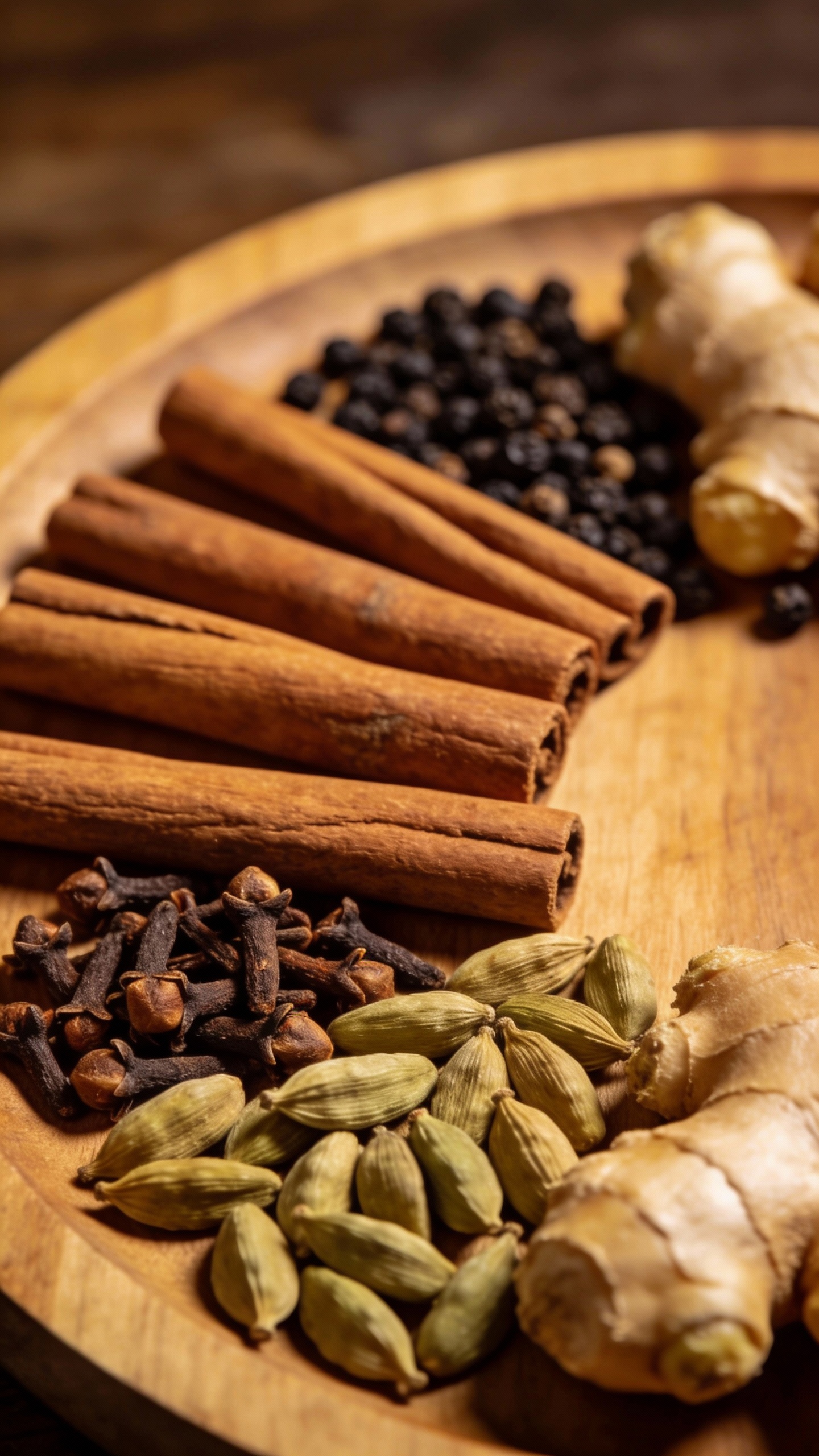
2–3 green cardamom pods
1 small cinnamon stick (or 1/2 if it’s a big chunky one)
Optional: a small piece of star anise or a strip of orange peel
Milk: Whole milk for extra creamy texture. For non-dairy, oat or barista almond works best.
Sweetener: Sugar, honey, or maple syrup. Start with 1–2 tsp per cup, adjust to taste.
Water: Filtered, because flavor matters.
Vanilla (optional): A drop for dessert vibes. Don’t overdo it.
Chai Tea Latte: Spice Ratios That Actually Work
For two mugs:
2 cups water
2–3 tsp strong black tea (or 2 tea bags)
2–3 cardamom pods, lightly crushed
1 small cinnamon stick
3–4 peppercorns
1–2 cloves
1 inch fresh ginger, sliced and smashed
1.5–2 cups milk
Sweetener to taste
FYI: You can double ginger if you like heat, or skip cloves if they taste too “holiday” for you. IMO, peppercorns make it pop.
The Foolproof Method To Chai Tea Latte(AKA: How to Avoid Sad, Watery Chai)
We build flavor in layers: toast, simmer, steep, then marry the milk. Resist shortcuts. They cost flavor.
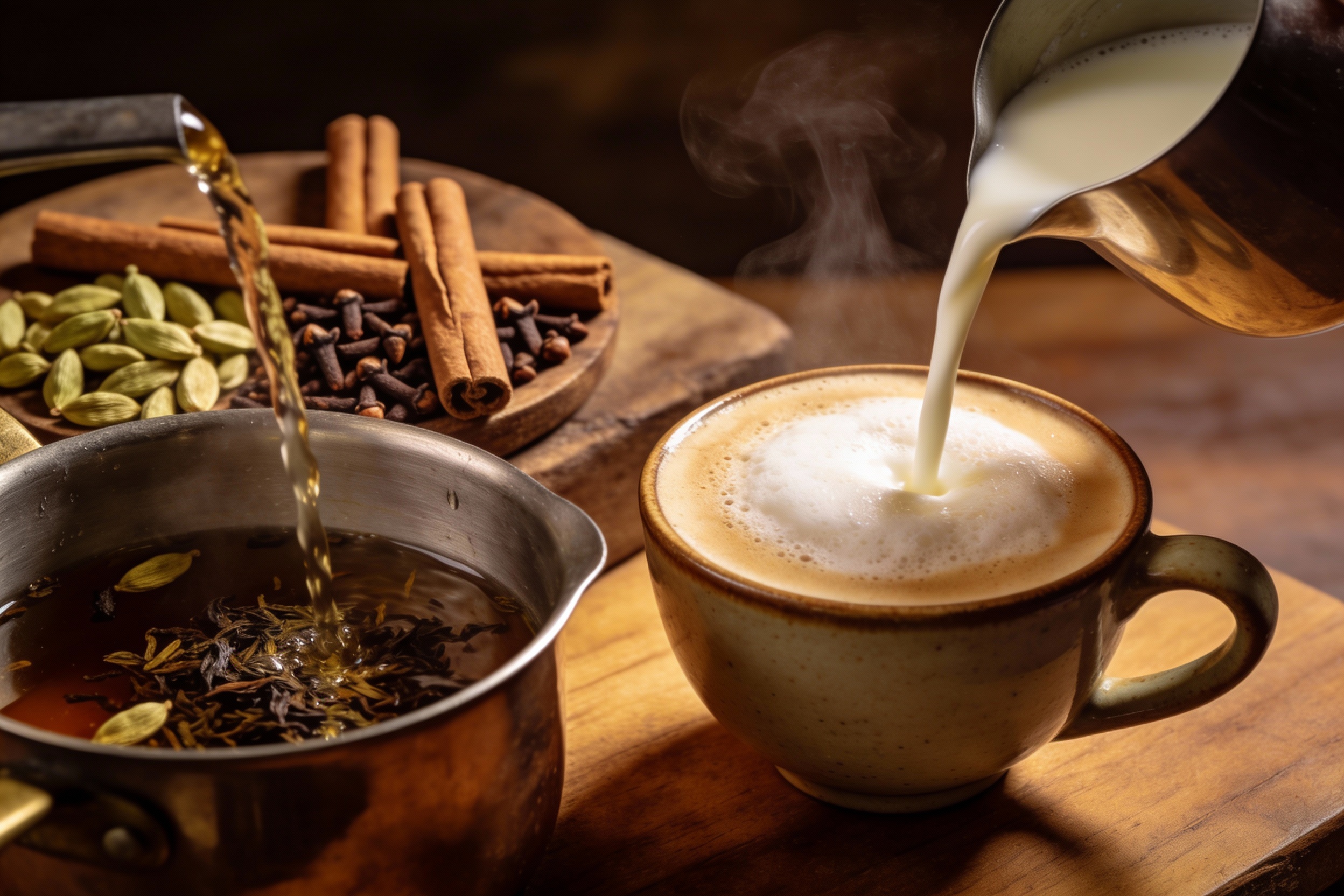
Smash and toast the spices: Lightly crush cardamom, peppercorns, and cloves with the side of a knife. Add them to a saucepan with the cinnamon and sliced ginger. Dry-toast over medium heat for 60–90 seconds until fragrant. Don’t burn them; you want aroma, not smoke.
Simmer with water: Add 2 cups water. Bring to a gentle simmer for 5–7 minutes. This pulls deep flavor from whole spices. Strong base = less sugar needed later.
Add tea and steep: Kill the heat. Add tea leaves or bags. Steep 3–5 minutes. Taste at 3 minutes; keep going if you want bolder. Over-steeping turns bitter fast, so watch it.
Add milk and sweeten: Add 1.5–2 cups milk and your sweetener. Return to a low simmer for 2–3 minutes, stirring. Do not let it rage-boil unless you enjoy cleaning starchy milk lava off your stove.
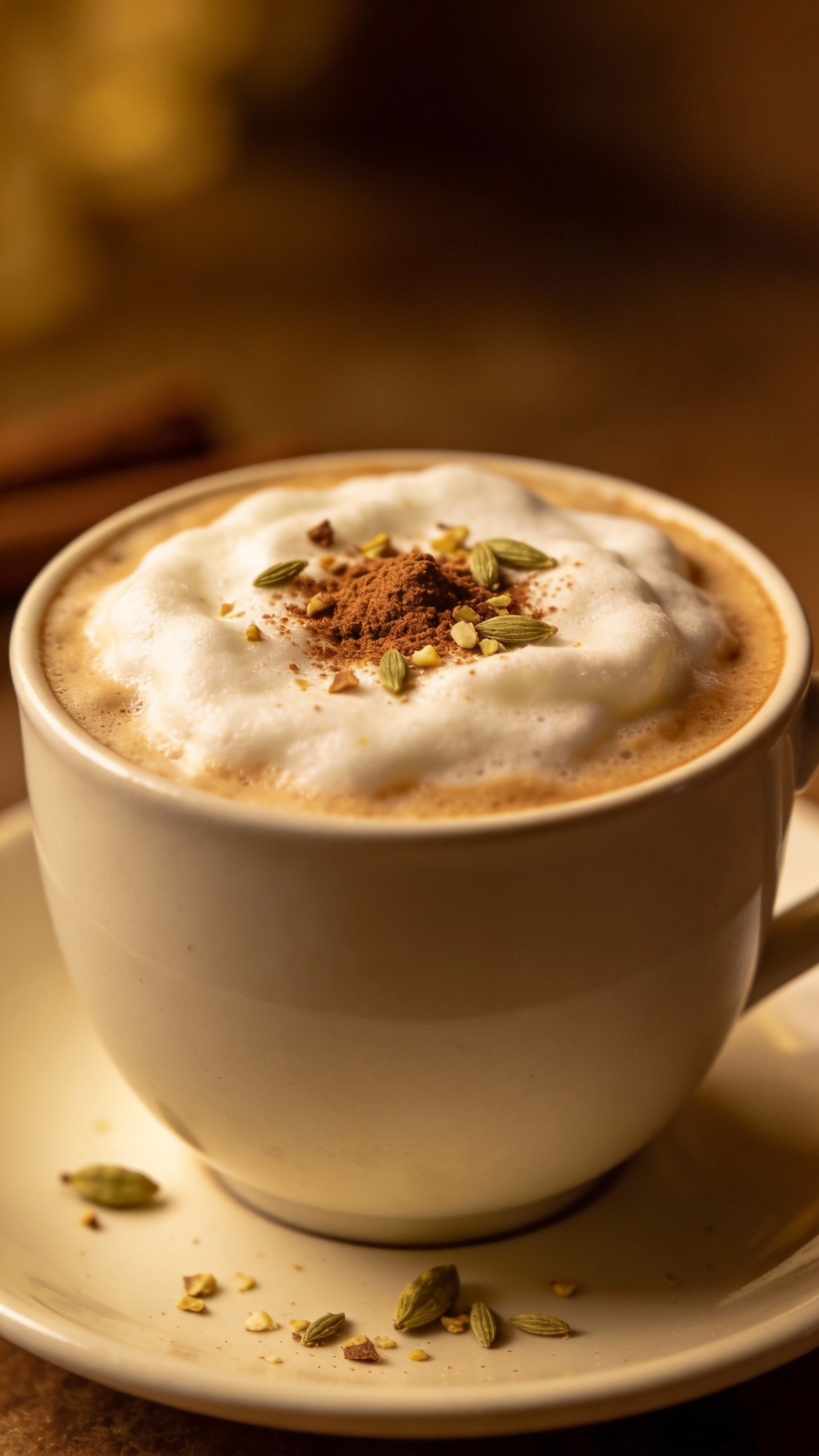
Strain and froth: Strain into mugs. Optional: froth a bit of extra hot milk for a latte finish. Sprinkle cinnamon or grate fresh nutmeg if you feel fancy.
Chai Tea Latte: Pro Tips for Consistency
Crush, don’t grind: Powdered spices go muddy and gritty. Whole spices give clarity.
Heat control matters: Violent heat can make tea bitter and milk weird. Gentle simmer wins.
Sweeten the milk: Dissolving sugar or honey into hot milk blends flavors better than sweetening after.
Taste as you go: Adjust steep time and sugar like a barista. Your mug, your rules.
Chai Tea Latte: Milk Matters More Than You Think
Milk changes texture and flavor massively. Let’s pick the right one for your vibe.
Whole milk: The classic. Creamy, froths well, carries spice beautifully.
Oat milk: Best non-dairy for body and sweetness. Choose a barista version for stable foam.
Almond milk: Light and nutty. Can split if overheated; keep temps moderate.
Coconut milk: Fun twist, but goes tropical fast. Use half coconut, half other milk for balance.
Frothing Without a Fancy Machine
Whisk vigorously in the pot for 30 seconds.
Use a handheld frother (cheap, magical, 10/10 recommend).
Shake hot milk in a heat-safe jar (hold a towel, and don’t sue me).
Dial In Your Sweetness and Spice
Chai tastes best when sweet supports spice. Not when sugar steamrolls it.
Sugar: Neutral and easy. Great for control.
Honey: Adds floral notes. Watch the heat so you don’t dull the flavor.
Maple syrup: Earthy, cozy, slightly caramely. Pairs beautifully with cinnamon.
When Your Chai Tastes “Off”
Too weak: Longer spice simmer. Stronger tea. Less milk.
Too bitter: Reduce tea steep time. Lower heat. Add a pinch more sugar or a splash more milk.
Too spicy: Cut cloves/pepper next time. Add more milk now to soften.
Tastes flat: Add a pinch of salt. Yes, salt. It wakes up flavors.
Shortcuts That Don’t Taste Like Shortcuts
We all rush sometimes. Here’s how to cheat smart.
Make a chai concentrate: Double the spices and tea. Simmer with water only, sweeten, strain. Refrigerate up to 5 days. Mix 1:1 with hot milk on demand.
Use good-quality chai bags: Add extra fresh ginger and cardamom to boost them. Simmer with water before adding milk for depth.
Pre-crush a spice blend: Lightly crush spices and store in an airtight jar for a week. Faster, still fragrant.
My Favorite Flavor Twists (Because Variety)
Vanilla bean scrape: Tiny amount, huge payoff.
Orange peel: Zesty, bright, great with maple.
Pinch of fennel seed: Sweet, subtle lift. Don’t overdo it.
Cocoa nibs: Add during the water simmer for a chocolatey note without making hot cocoa.
Step-by-Step Recap To Chai Tea Latte (For When Your Brain Needs a Checklist)
Lightly crush spices; toast 60–90 seconds.
Add water; simmer 5–7 minutes.
Remove from heat; steep tea 3–5 minutes.
Add milk and sweetener; gently simmer 2–3 minutes.
Strain, froth, sip, grin.
IMO: That little toast at the start turns good chai into great chai.
Absolutely. Use decaf black tea or rooibos. Rooibos brings a naturally sweet, earthy base that pairs beautifully with the same spice lineup. Just simmer the spices as usual, then steep rooibos 5–6 minutes before adding milk.
Why does my chai taste watery?
You likely used too much milk for the tea strength or didn’t simmer spices long enough. Use a stronger tea like Assam or CTC, simmer spices 5–7 minutes, and keep a 1:1 or 1:1.5 water-to-milk ratio. Also, don’t skimp on ginger.
Do I need whole spices?
You’ll get cleaner, brighter flavor with whole spices. Ground spices tend to make the brew muddy and can leave grit. If ground is all you have, use tiny amounts (like a pinch), simmer gently, and strain through a fine filter.
How sweet should a chai latte be?
Sweetness should support the spice and tea, not mask it. Start with 1–2 teaspoons per cup and adjust. Milk, especially oat, already adds natural sweetness, so taste before you dump in more sugar.
Can I batch this for a crowd?
Yes. Scale the recipe, simmer spices in water ahead of time to make a concentrate, and keep it warm. When serving, mix concentrate with hot milk 1:1, sweeten to taste, and froth individual portions for that cafe finish.
What’s the difference between chai and masala chai?
“Chai” means tea. “Masala chai” means spiced tea. A chai latte is basically masala chai with extra milk and foam. Names aside, balance matters more than labels.
Conclusion On Chai Tea Latte
Perfect chai lattes don’t hide behind sugar or syrups. They hit with bold tea, warm spices, and silky milk that all play nice together. Toast your spices, respect the steep, and sweeten with intention. Do that, and your kitchen becomes the best chai shop in town—no tipping jar required, unless you’re tipping yourself.
Disclosure: This post may contain affiliate links.
If you make a purchase through these links, I may earn
a small commission at no extra cost to you.
prab chahal
Hi, I’m Prabjot Chahal – the heart (and taste buds) behind this blog!
Food has always been my love language – from experimenting with family recipes to discovering unique flavors from around the world. I believe that cooking isn’t just about following a recipe, it’s about creating moments, sharing stories, and connecting with others over something delicious. Through this blog, I want to build a vibrant food community where we share more than just recipes – we share inspiration, tips, and the joy of making and enjoying good food together. Whether you’re here for quick weekday dinners, festive treats, or creative seasonal ideas, you’re part of this table. So grab a fork (or a whisk!) and let’s cook, bake, and share our love for food – one recipe at a time.