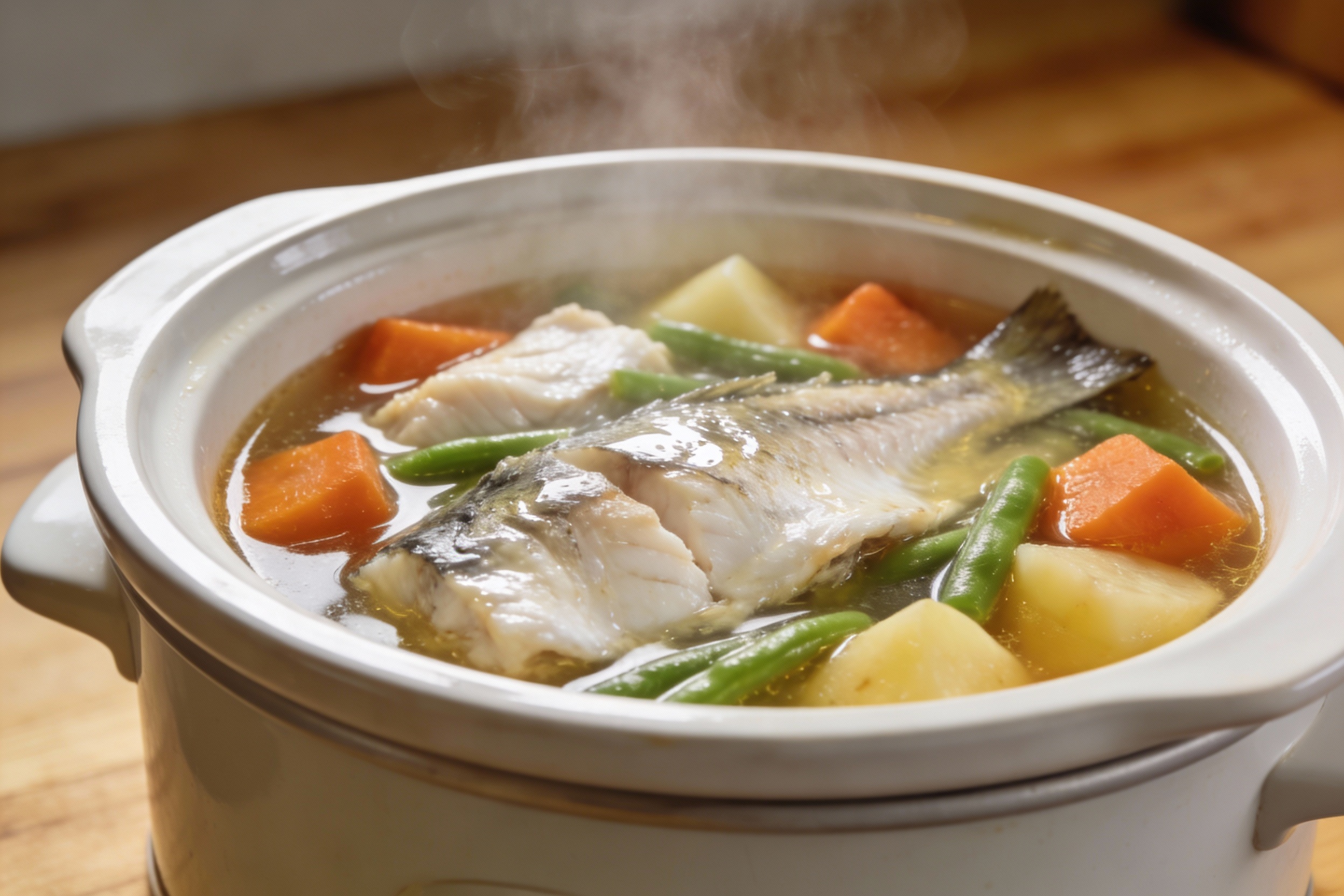
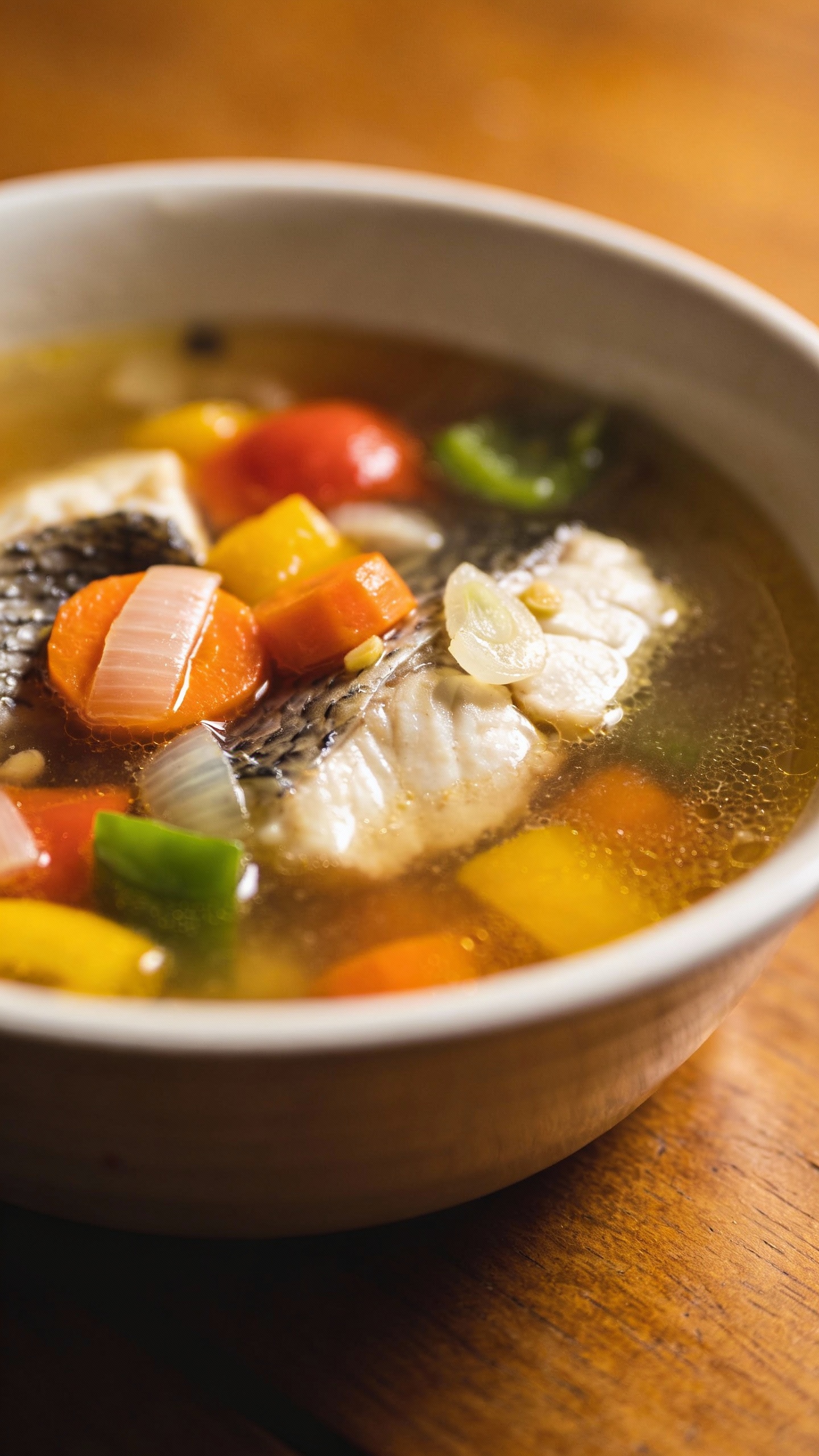
Think fish stew means slaving over a hot stove? Hard pass. This slow cooker version simmers itself into something cozy, bright, and light while you live your life. You get silky fish, tender veggies, and a brothy base that tastes like you actually tried. Spoiler: you mostly chopped and walked away.
Why Slow Cooker Fish Stew Works (And Doesn’t Turn to Mush)
Fish in a slow cooker sounds like a breakup waiting to happen, right? Not if you do it smart. You let the veggies and broth get cozy first, then you slide the fish in at the end. Boom—flaky, not overcooked. You also get a broth that tastes like it got hours of love—because it did. The slow cooker coaxes sweetness out of onions and peppers while the tomatoes soften and enrich everything. It’s low effort, high reward, and surprisingly light.
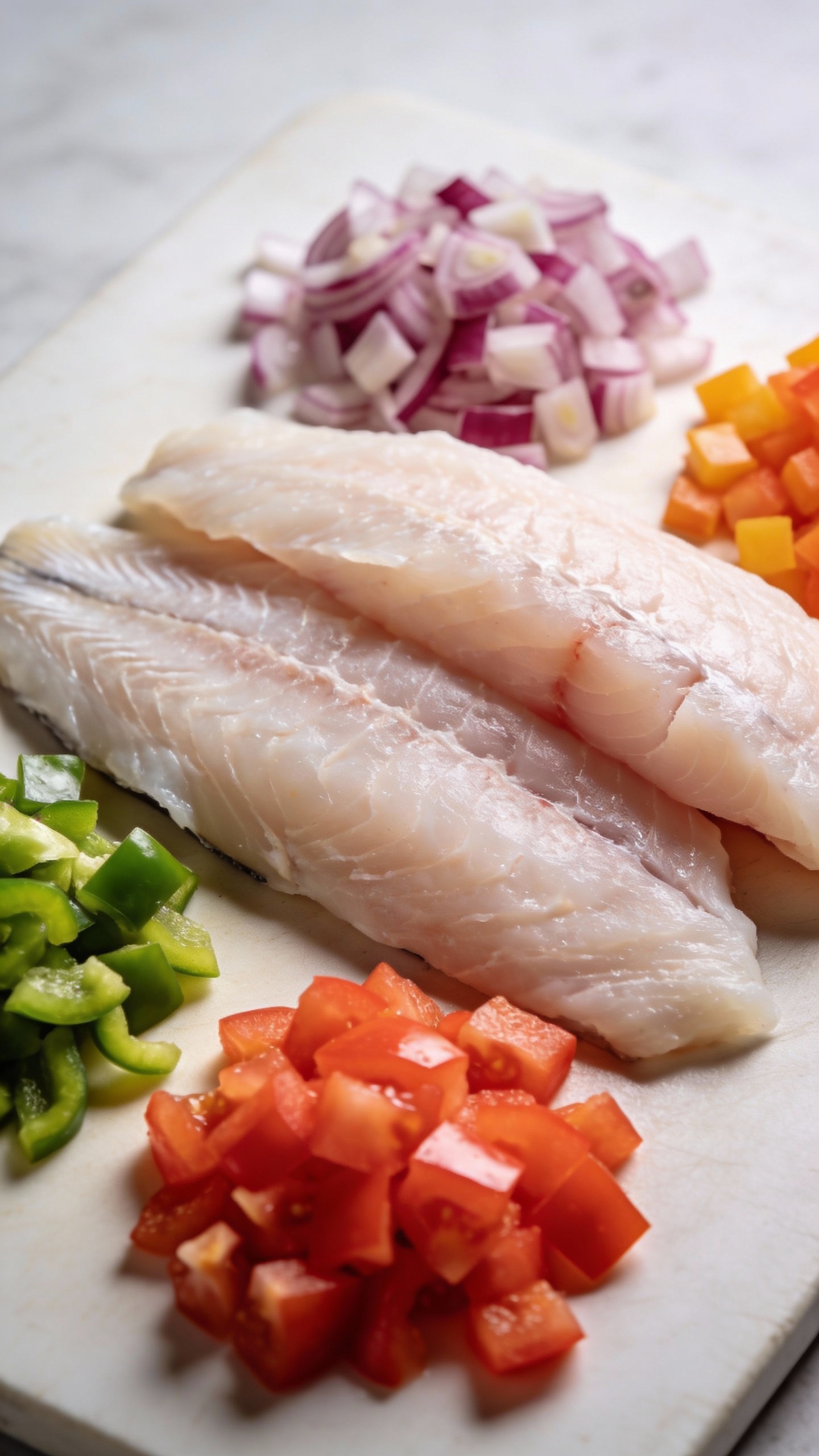
What You’ll Need For Fish Stew(Simple, Fresh, Flexible)
Keep it clean and colorful. Here’s a base that works every time:
Fish: Firm, mild white fish like cod, haddock, halibut, pollock, or snapper. Cut into 2-inch chunks.
Aromatics: Onion, garlic, celery. Classic, reliable, and budget-friendly.
Veggies: Bell pepper, carrots, zucchini, and fennel (optional but chef-y).
Tomato: Crushed or diced tomatoes (canned works). Adds body without heaviness.
Broth: Low-sodium seafood or chicken broth.
Potatoes or beans: Baby potatoes or a can of cannellini for substance.
Brighteners: Lemon zest/juice, fresh parsley, and a splash of olive oil.
Spices: Smoked paprika, red pepper flakes, bay leaf, and a pinch of saffron if you’re feeling fancy.
Salt & pepper: Taste as you go (near the end, IMO).
Flavor Boosters (Optional, But Worth It)
Anchovy paste: One teaspoon melts in and adds umami. No fishy taste, promise.
White wine: A splash in the base adds acidity and depth.
Olives or capers: Stir in at the end for briny pop.
Fish Stew Step-by-Step: Your Low-Effort Plan
You’ll layer, walk away, then finish with the fish. That’s the whole strategy.
Prep the base: Add to the slow cooker: 1 diced onion, 3 minced garlic cloves, 2 chopped celery stalks, 1 chopped bell pepper, 1 sliced carrot, and 1 small sliced fennel bulb (if using).
Build the broth: Stir in 1 can (14–15 oz) crushed tomatoes, 3–4 cups low-sodium broth, 1 bay leaf, 1 teaspoon smoked paprika, pinch of red pepper flakes, 1 teaspoon anchovy paste (optional), and a splash of white wine (optional).
Add substance: Toss in 1 pound baby potatoes (halved) or 1 can drained cannellini beans. Not both unless you want stew for a crowd.
Cook the base: Cover and cook on Low for 5–6 hours or High for 2.5–3 hours, until veggies are tender.
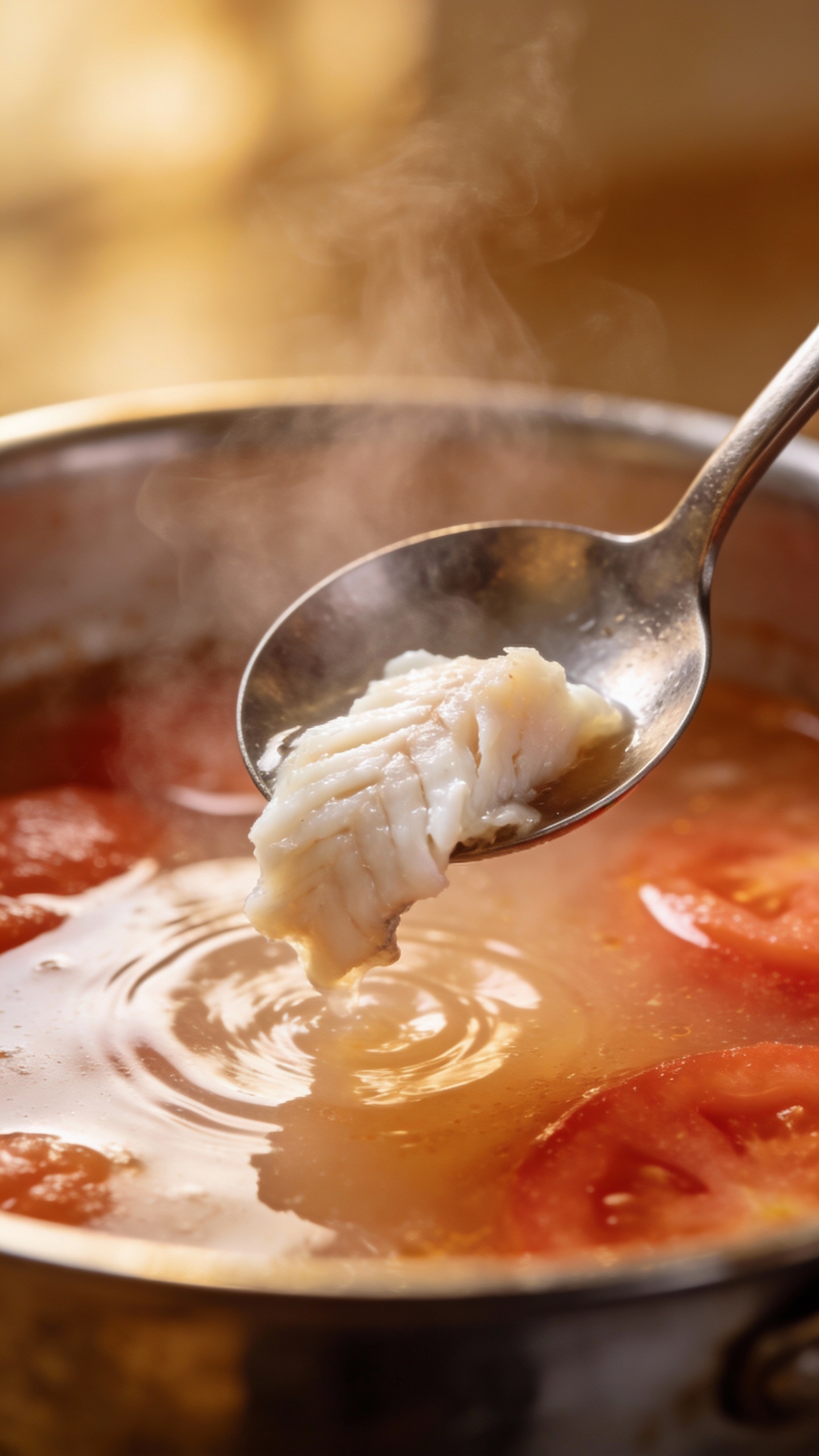
Add the fish: Season 1.5–2 pounds of firm white fish (2-inch pieces) with salt and pepper. Nestle on top of the stew. Cook on Low for 20–30 minutes or High for 10–15 minutes, until the fish flakes easily.
Finish bright: Stir in zest of 1 lemon, juice of 1/2 lemon, 2–3 tablespoons chopped parsley, and 1 tablespoon olive oil. Taste and adjust salt, pepper, and heat.
Texture Tips So It Doesn’t Fall Apart
Cut fish larger than you think. Those 2-inch chunks stay intact.
Add fish late and don’t stir aggressively. Gently fold once, then let it finish.
Skip delicate fish like tilapia or sole. They vanish into the ether.
Make Fish Stew Mediterranean, Latin, or Cozy Coastal
Because you’re the boss of your bowl.
Mediterranean: Add olives, capers, extra fennel, saffron, and a drizzle of good olive oil. Serve with crusty bread.
Latin-ish: Swap smoked paprika for cumin and a pinch of oregano. Add corn and a chopped jalapeño. Finish with cilantro and lime.
Coastal comfort: Add Old Bay, a splash of cream or coconut milk at the end, and a handful of spinach. Serve over rice.
Veg Swap Ideas
Zucchini or green beans: Add with the fish so they don’t go mushy.
Sweet potatoes: Cube small and add with the base; they need time.
Kale or spinach: Stir in during the last 5 minutes until wilted.
Healthy, Light, and Still Satisfying
This stew checks the boxes without feeling like a compromise. You get lean protein, fiber-rich veggies, and a broth that feels indulgent without heavy cream. Potatoes or beans give it staying power, but you can absolutely skip them for an extra-light version. FYI, a bowl sits nicely in the 250–350 calorie range depending on your add-ins. The olive oil at the finish gives mouthfeel and helps you absorb fat-soluble vitamins. Science and flavor holding hands—cute.
Serving Moves That Make It Shine
You can eat it straight out of the bowl and call it a day. But if you want it to pop, try these:
Top with crunch: Toasted breadcrumbs or chopped toasted almonds.
Herb shower: Parsley, dill, or basil—fresh makes a difference.
Citrus finish: Extra lemon wedges at the table. People always want more.
Carb support (optional): Crusty bread, garlicky rice, or a scoop of farro.
Wine Pairing (If You’re Into That)
A crisp white like Sauvignon Blanc or Vermentino plays nice with the lemony, herby profile. If you went spicier, try a dry rosé. IMO, bubbles never hurt anyone.
Fish Stew: Make-Ahead, Storage, and Reheating
You can prep most of this ahead, but treat the fish kindly.
Make-ahead: Chop everything and store the base veggies together. You can even cook the tomato-broth-veggie base a day in advance and refrigerate.
Add fish day-of: Warm the base in the slow cooker, then add fish and finish as directed.
Storage: Refrigerate leftovers up to 2 days. Fish texture softens but still tastes great.
Reheat gently: Low heat on the stove until warm. Don’t boil unless you like fish confetti.
Freezing: Freeze the base without fish for up to 3 months. Add fresh fish after thawing and reheating the base.
FAQ About Fish Stew
Can I use frozen fish?
Yes—thaw it fully and pat it dry. Frozen fish releases extra moisture, so drying helps keep the broth from getting watery. Then add as directed near the end.
Use low-sodium chicken or vegetable broth. Add a dash of fish sauce or a bit more anchovy paste for depth, but go light and taste as you go.
Can I add shrimp or mussels?
Absolutely. Add shrimp with the fish and cook until pink and curled, about 10 minutes. Mussels need high heat on the stovetop, so IMO they’re better steamed separately and stirred in at serving.
How do I keep it from getting too spicy?
Go easy on red pepper flakes and smoked paprika. You can always add heat at the table with chili oil or hot sauce. Easier to add than to subtract, right?
Can I make this dairy-free and gluten-free?
It already is—win. Just watch your broth label for hidden gluten and skip bread or choose a gluten-free loaf. If you thicken with anything, use potato or a gluten-free option.
What if my fish broke apart?
It still tastes great! Next time, cut bigger chunks, use firmer fish, and stir less after adding it. Also, avoid cooking the fish longer than needed.
Conclusion On Fish Stew
This slow cooker fish stew hits that sweet spot: fresh, vibrant, and weeknight-easy. You build a flavorful base, tuck in the fish at the end, and finish with lemon and herbs for that “wow, I cooked” moment. It’s cozy without being heavy and flexible enough for whatever’s in your fridge. Ladle it up, pass the bread (or don’t), and soak up the compliments.
Disclosure: This post may contain affiliate links.
If you make a purchase through these links, I may earn
a small commission at no extra cost to you.
prab chahal
Hi, I’m Prabjot Chahal – the heart (and taste buds) behind this blog!
Food has always been my love language – from experimenting with family recipes to discovering unique flavors from around the world. I believe that cooking isn’t just about following a recipe, it’s about creating moments, sharing stories, and connecting with others over something delicious. Through this blog, I want to build a vibrant food community where we share more than just recipes – we share inspiration, tips, and the joy of making and enjoying good food together. Whether you’re here for quick weekday dinners, festive treats, or creative seasonal ideas, you’re part of this table. So grab a fork (or a whisk!) and let’s cook, bake, and share our love for food – one recipe at a time.