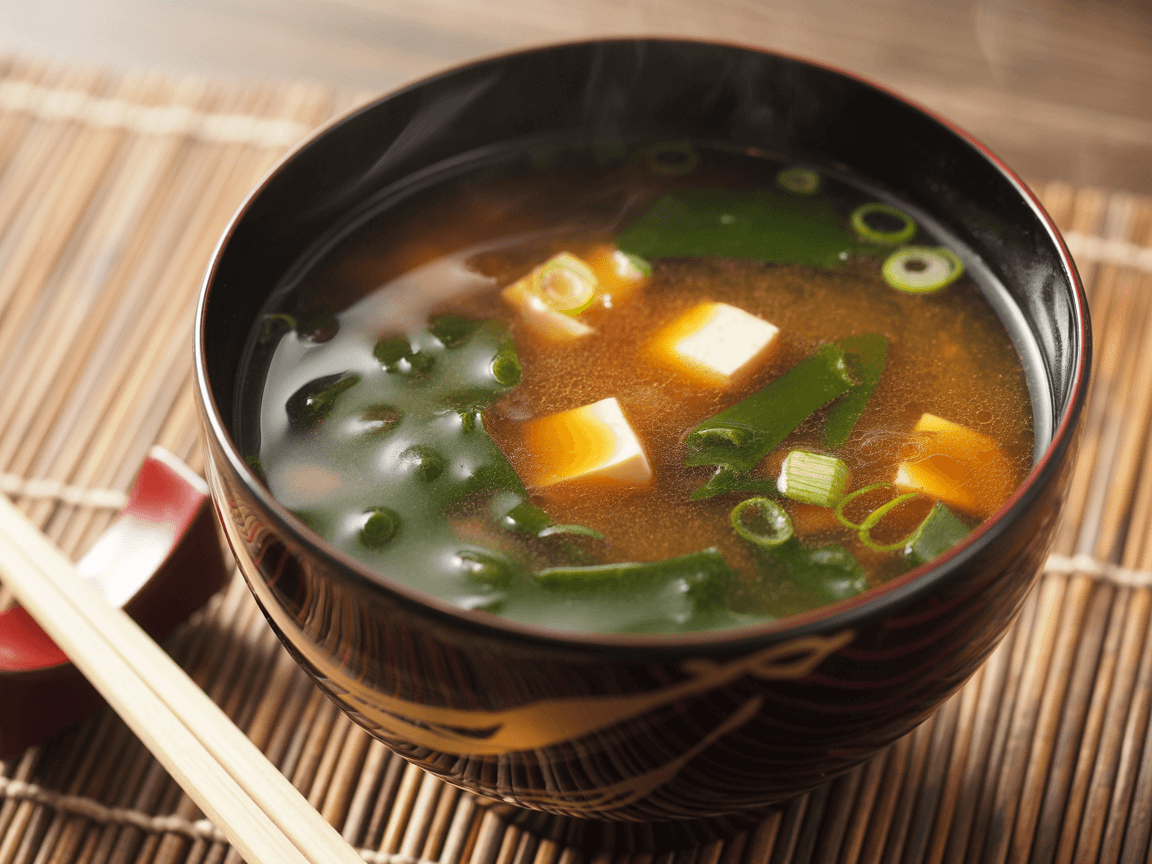
Miso soup is the kind of comfort you can make in minutes, yet it feels deeply nourishing. It’s warm, savory, and loaded with umami thanks to a delicate broth called dashi. With just a few ingredients, you get a soup that’s clean, satisfying, and soothing any time of day.
This version sticks to the basics you’d find at a Japanese home table. It’s quick, honest, and easy to adapt once you learn the rhythm.
What Makes This Authentic Miso Soup Special
This recipe keeps the heart of miso soup intact: a clear, aromatic dashi base and gentle miso flavor that doesn’t overwhelm. We use kombu (dried kelp) and katsuobushi (bonito flakes) to make a classic stock with real depth.
The miso is added off the heat to keep it fresh and alive in flavor. No shortcuts that dull the taste. Just a few ingredients, handled with care, for a bowl that tastes like the real thing.
Ingredients Needed For Authentic Miso Soup
- Kombu (dried kelp), about 4–5 inches
- Katsuobushi (bonito flakes), 1 cup loosely packed
- Miso paste, 2–3 tablespoons (white/shiro miso for mild sweetness; red/aka miso for stronger, saltier flavor; or a blend)
- Soft tofu (silken or medium-firm), 1/2 block, cut into small cubes
- Wakame seaweed (dried), 1–2 teaspoons
- Scallions, 2–3, thinly sliced
- Water, 4 cups (1 liter)
- Optional: mushrooms (shiitake or enoki), daikon, spinach, or seasonal greens
Step-by-step Instructions For Authentic Miso Soup
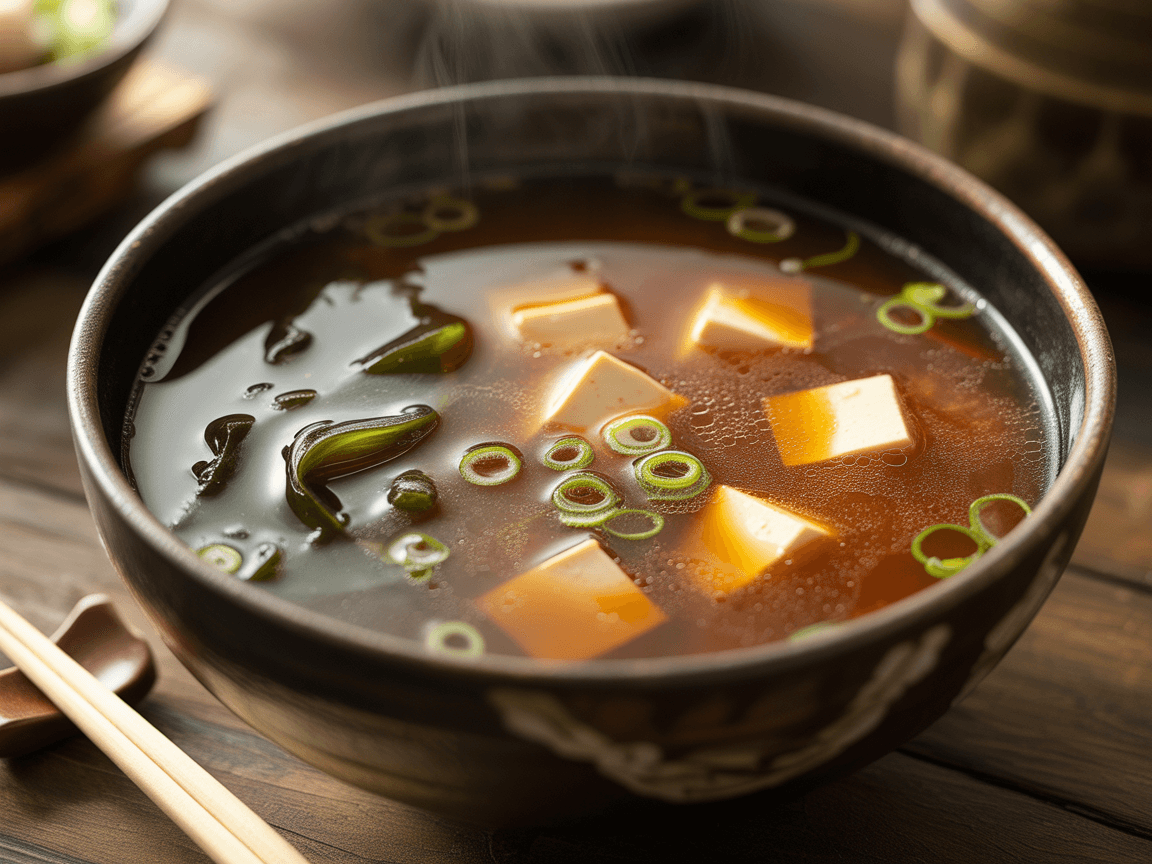
- Soak the kombu. Place the kombu in a pot with 4 cups of cold water.
Let it sit for 10–15 minutes to soften and start releasing flavor.
Related Posts:
- Heat the kombu gently. Warm the pot over medium heat until small bubbles appear around the edges. This should take about 8–10 minutes. Do not boil the kombu—overheating will make the broth bitter and slimy.
- Remove the kombu. Just before the water boils, lift out the kombu and discard or save for another use (like simmered dishes). You now have kombu dashi.
- Add katsuobushi. Bring the kombu dashi to a gentle boil, then turn off the heat.
Add the bonito flakes and let them steep for 2–3 minutes until they sink and the broth turns a light amber.
- Strain the dashi. Pour the broth through a fine strainer or cheesecloth into a clean pot. Discard the flakes. You now have fresh dashi, the backbone of your soup.
- Hydrate the wakame. In a small bowl, soak the dried wakame in water for 5 minutes.
It will expand quickly. Drain and set aside.
- Warm the tofu and wakame. Bring the dashi back to a gentle simmer. Add the tofu cubes and wakame.
Simmer on low for 2–3 minutes to warm through, not boil.
- Prepare the miso. In a small bowl or ladle, mix the miso paste with a scoop of hot dashi until smooth. This prevents clumps.
- Stir in the miso off the heat. Turn off the burner. Stir the dissolved miso into the pot. Don’t boil miso; high heat dulls its flavor and kills beneficial enzymes.
- Finish and serve. Add sliced scallions.
Taste and adjust with a bit more miso if needed. Ladle into bowls and serve immediately while fragrant and hot.






Storage Instructions For Authentic Miso Soup
Miso soup is best enjoyed fresh, but you can store it with a few tweaks. If you plan to make ahead, keep the dashi separate and add the miso right before serving.
Dashi will keep in the fridge for up to 4 days or in the freezer for a month. If storing already mixed soup, cool it quickly and refrigerate up to 2 days. Reheat gently over low heat and avoid boiling.
Add a little fresh miso at the end to revive flavor if needed.
Health Benefits Of Authentic Miso Soup
- Probiotics from miso: Unboiled miso contains live cultures that support gut health and digestion.
- Minerals from seaweed: Kombu and wakame offer iodine, calcium, magnesium, and trace minerals often missing in everyday diets.
- Lean protein: Tofu adds plant-based protein without heaviness, keeping the soup light and satisfying.
- Low in calories, high in flavor: A bowl feels warming and complete while staying gentle on the stomach.
- Umami satisfaction: The savory depth can reduce the need for extra salt and help curb cravings.
Common Mistakes to Avoid In Authentic Miso Soup
- Boiling the miso: Heat destroys its delicate flavors and probiotics. Always add miso off the heat.
- Overcooking kombu: Boiling creates a murky, slippery broth. Keep it below a boil and remove it as the water nears a simmer.
- Using too much miso: Miso is salty.
Start with less, taste, and add more gradually.
- Skipping the dashi: Water plus miso alone tastes flat. Dashi provides depth and balance.
- Big tofu cubes: Smaller cubes soak up flavor and are easier to eat with chopsticks or a spoon.
Recipe Variations In Authentic Miso Soup
- Mushroom Miso Soup: Add sliced shiitake or enoki after straining the dashi. Simmer gently for 3–4 minutes before adding tofu and miso.
- Greens and Daikon: Thinly slice daikon and simmer in the dashi until tender, then add spinach or mitsuba for a bright finish.
- Mixed Miso: Blend white and red miso for a balanced flavor—start with 1 tablespoon white miso and 1 tablespoon red miso, then adjust.
- Vegan Dashi: Skip katsuobushi and use kombu plus dried shiitake.
Soak kombu and shiitake in cold water for 30 minutes, warm gently, remove kombu before boiling, then simmer the shiitake 5 minutes and strain.
- Clam Miso Soup: Steam scrubbed littleneck clams in the dashi until they open, remove any grit, then stir in miso off heat.
- Spicy Kick: Add a touch of yuzu kosho or a small pinch of shichimi togarashi just before serving.
FAQ About Authentic Miso Soup
What kind of miso should I use?
White (shiro) miso is mild and slightly sweet, great for beginners. Red (aka) miso is deeper and saltier with a stronger umami punch. A blend gives balance.
Start with white miso if you prefer a lighter, gentler soup.
Can I use instant dashi granules?
Yes, in a pinch. Follow the package instructions and choose a brand with simple ingredients. Fresh kombu and katsuobushi dashi tastes cleaner and more nuanced, but instant dashi is fast and serviceable.
Is miso soup gluten-free?
Often, but check labels.
Some miso pastes include barley or other grains with gluten. If you need gluten-free, look for miso made from rice or soybeans only and confirm with the manufacturer.
Why did my soup taste bitter?
It likely boiled with kombu or over-reduced. Keep kombu below a boil, remove it before boiling, and avoid simmering miso.
Fresh, good-quality ingredients also matter.
Can I reheat miso soup?
Yes, gently. Warm over low heat and stop before it simmers. If the flavor dulls, stir in a teaspoon of fresh miso off the heat to brighten it up.
What if I don’t have tofu?
Skip it or swap in thin-sliced mushrooms, greens, or soft poached egg added to the bowl.
The soup will still be satisfying with dashi, miso, and wakame alone.
How salty should it be?
Miso soup should taste savory and balanced, not aggressively salty. Start with 2 tablespoons miso for 4 cups dashi, taste, and add up to 1 more tablespoon if needed. Different miso brands vary in saltiness.
Can I freeze miso soup?
Freeze the dashi, not the finished soup.
Tofu changes texture when frozen, and miso is best added fresh after reheating the broth.
Wrapping Up On Authentic Miso Soup
Authentic miso soup is all about gentle technique and quality basics. Make a clean dashi, add simple garnishes, and stir in miso at the very end. Once you master this flow, you can create endless variations without losing the soul of the dish.
Keep it light, keep it hot, and enjoy the calm it brings to the table.
Related Post: Easy Vegetable Soup with Herbs: A Bowl of Comfort in Minutes
Printable Recipe Card
Want just the essential recipe details without scrolling through the article? Get our printable recipe card with just the ingredients and instructions.