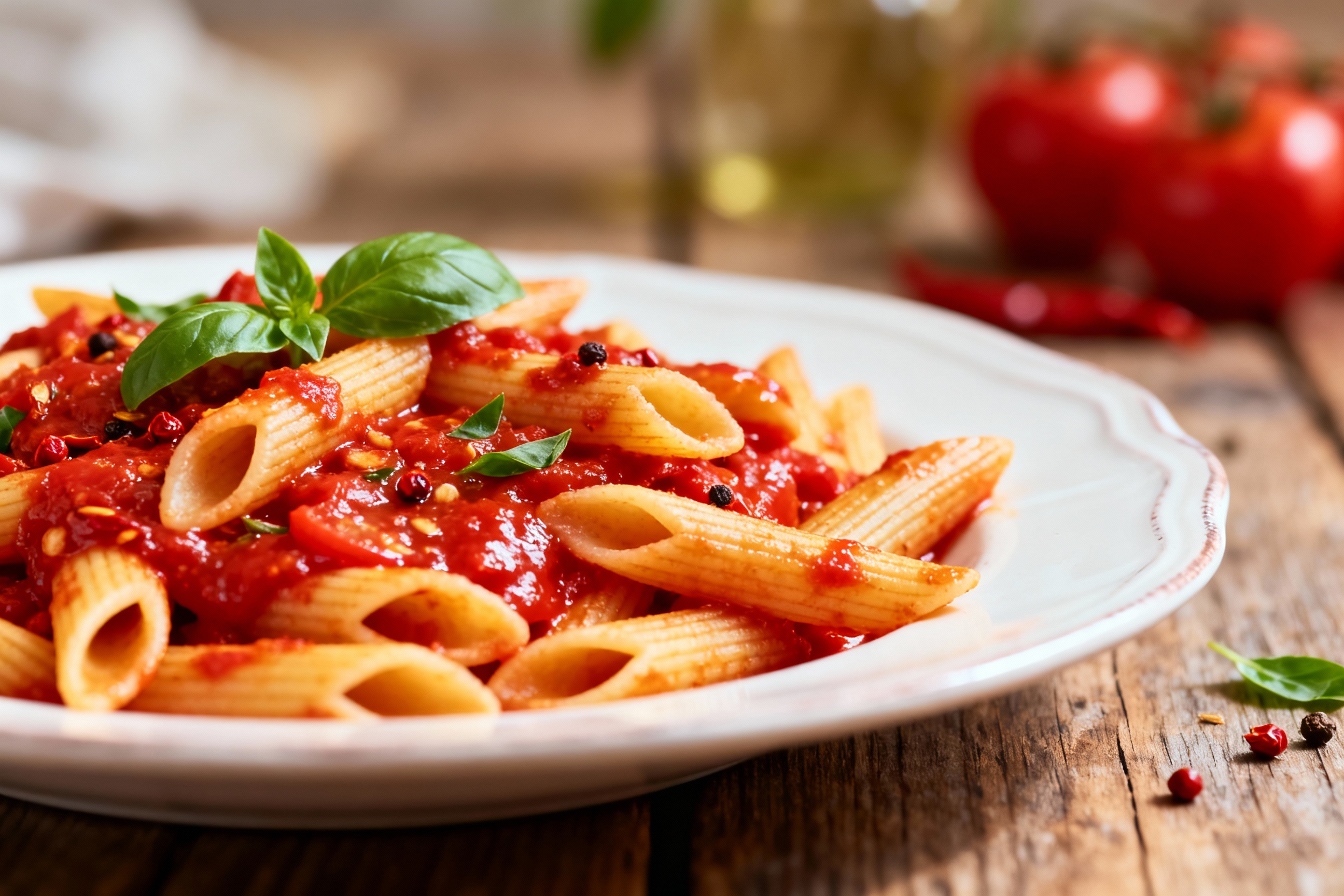
Penne all’arrabbiata doesn’t whisper. It shows up, slaps your taste buds (lovingly), and says, “Dinner’s ready.” This is Rome’s fiery red sauce at its most honest: a few ingredients, big flavor, zero fluff. If you’ve got tomatoes, garlic, chili, and good pasta, you’re basically done. Ready to make a sauce that tastes like it took all day but didn’t?
Why Penne Arrabbiata Works (And Why You’ll Crave It)
Arrabbiata means “angry,” which tells you everything you need to know. It’s a bright, garlicky tomato sauce with a confident kick from dried chili. No meat, no cream, no complicated tricks. Just clean heat, acidity, and a glossy finish that clings to every ridge of penne.
It also respects your time. You’ll simmer the sauce while the pasta cooks. That’s dinner in under 30 minutes, which leaves you more time to pretend you made something elaborate.
The Core Ingredients Needed For Penne Arrabbiata (Keep It Simple, Keep It Real)
Here’s what you need to nail an authentic, simple arrabbiata:
- Penne: The tubes trap sauce like tiny flavor vaults. Use bronze-cut if you can for better sauce cling.
- Olive oil: Good extra virgin, but don’t break the bank. You’re heating it, not finishing a salad.
- Garlic: Thinly sliced. You want flavor in the oil, not burnt bits of sadness.
- Dried red chili flakes or whole dried chiles: Traditional, reliable heat. Adjust to taste, but arrabbiata should bite a little.
- Tomatoes: Whole canned San Marzano or quality Italian plum tomatoes. Crush by hand or in the pan.
- Salt: Season the sauce and the pasta water generously. Like, the sea level is generous.
- Parsley: Fresh and chopped for a sprinkle at the end. Optional, but adds welcome brightness.
Penne Arrabbiata Ingredient Upgrades (If You Want to Flex)
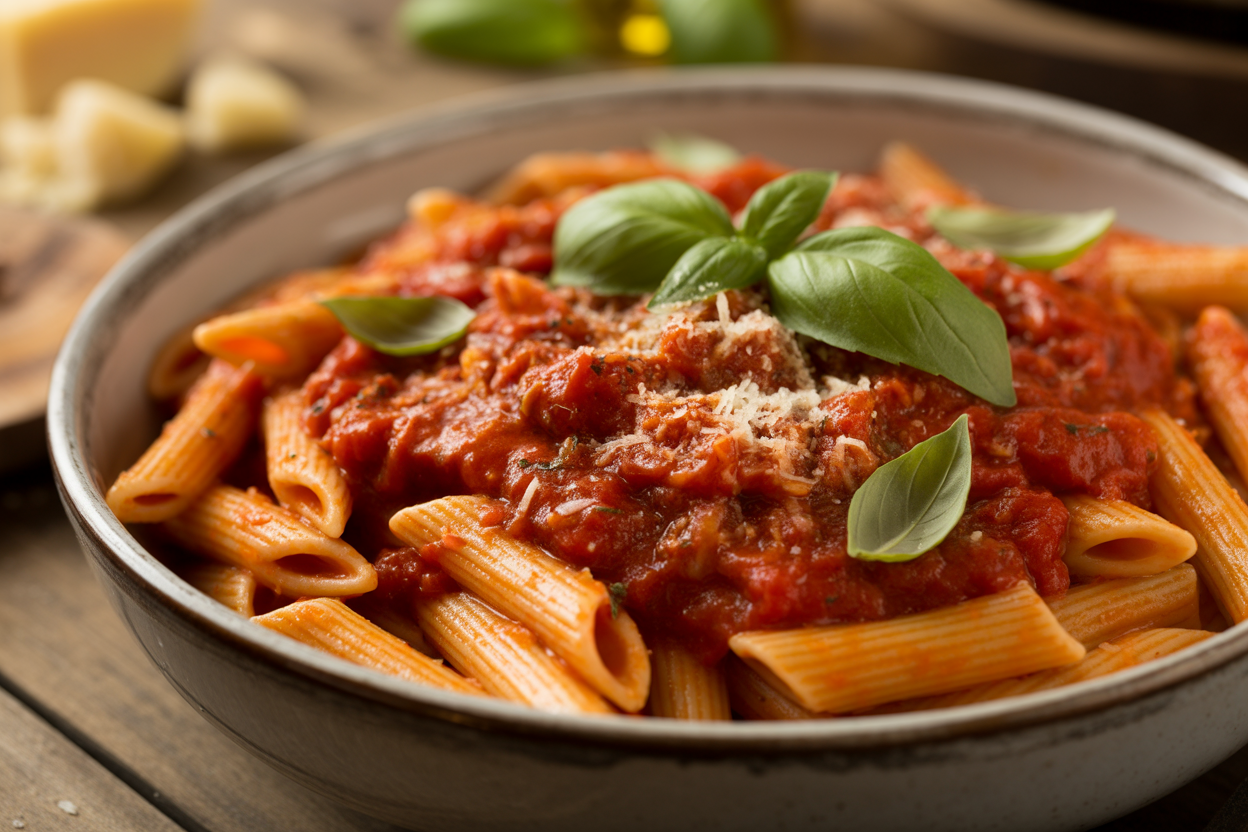
- Anchovy fillet: Melts into the oil and adds savory depth. Not traditional, but IMO, delicious.
- Tomato paste: A spoonful in the oil boosts sweetness and color.
- Whole dried pepperoncini: More aromatic heat than generic flakes.
The 20-Minute Method (Authentic and Unfussy)
You’ll cook the sauce while the pasta boils. Timing is the whole game here.
- Salt the water: Bring a large pot to a boil and add enough salt so it tastes like the sea. FYI, under-salted water = sad pasta.
- Garlic and chili in oil: In a wide pan, warm olive oil over medium. Add sliced garlic and chili. Stir and watch closely—light golden edges, not brown. If it smells nutty, you’ve gone too far.
- Tomatoes in: Crush tomatoes by hand or add them crushed. Season with salt. Simmer vigorously until thick and glossy, 10–12 minutes. Stir occasionally.
- Cook penne to very al dente: About 1–2 minutes shy of the package time. Reserve a cup of pasta water.
- Marry pasta and sauce: Transfer penne to the sauce. Add a splash of pasta water and toss until the sauce emulsifies and coats every piece, about 1–2 minutes.
- Finish: Taste. Adjust salt and heat. Add chopped parsley and a drizzle of good olive oil for shine.
Pro Tips For Maximum Flavor
- Keep the garlic moving: If it burns, start over. Burnt garlic = bitterness you cannot fix.
- Reduce the sauce properly: It should look thick and almost jammy, not watery. The pasta water will loosen it later.
- Don’t rinse the pasta: The starch helps the sauce cling. Rinsed pasta is sauce-repellent. We don’t do that here.
Heat Levels: From Flirty to Furious
Arrabbiata deserves some heat, but you control the drama.
- Mild(ish): 1/2 teaspoon chili flakes. You’ll feel it, but you won’t cry.
- Classic kick: 1 teaspoon flakes. The name “arrabbiata” finally makes sense.
- Spicy-spicy: 1 1/2 to 2 teaspoons or a couple whole dried chiles. Respect your limits and your dinner guests.
Balancing Heat with Brightness
Too hot? Add a splash of pasta water and a pinch of sugar or extra olive oil. Not hot enough? Warm more chili in oil separately and stir it in. Never dump raw flakes directly into the finished sauce—bloom them first for better flavor.
Tomatoes: The Heart of the Sauce
Tomatoes make or break arrabbiata. Choose well, and your sauce basically cooks itself.
- Best choice: Whole peeled San Marzano or good Italian plums. They taste sweet, not sour, and break down beautifully.
- Crushed tomatoes: Works fine if high quality. Watch for excess liquid and reduce longer.
- Fresh tomatoes: In peak season, use ripe Roma or San Marzano-style. Blanch, peel, and chop. Add a teaspoon of tomato paste for depth.
How to Crush Like a Pro
Squeeze whole tomatoes by hand in the pan. It’s messy in a fun way and gives you the perfect chunky texture. If you use a blender, pulse gently—smooth arrabbiata tastes flat.
Related Posts:

Penne Arrabbiata: Serving Ideas and Toppings (Yes, We’re Going There)
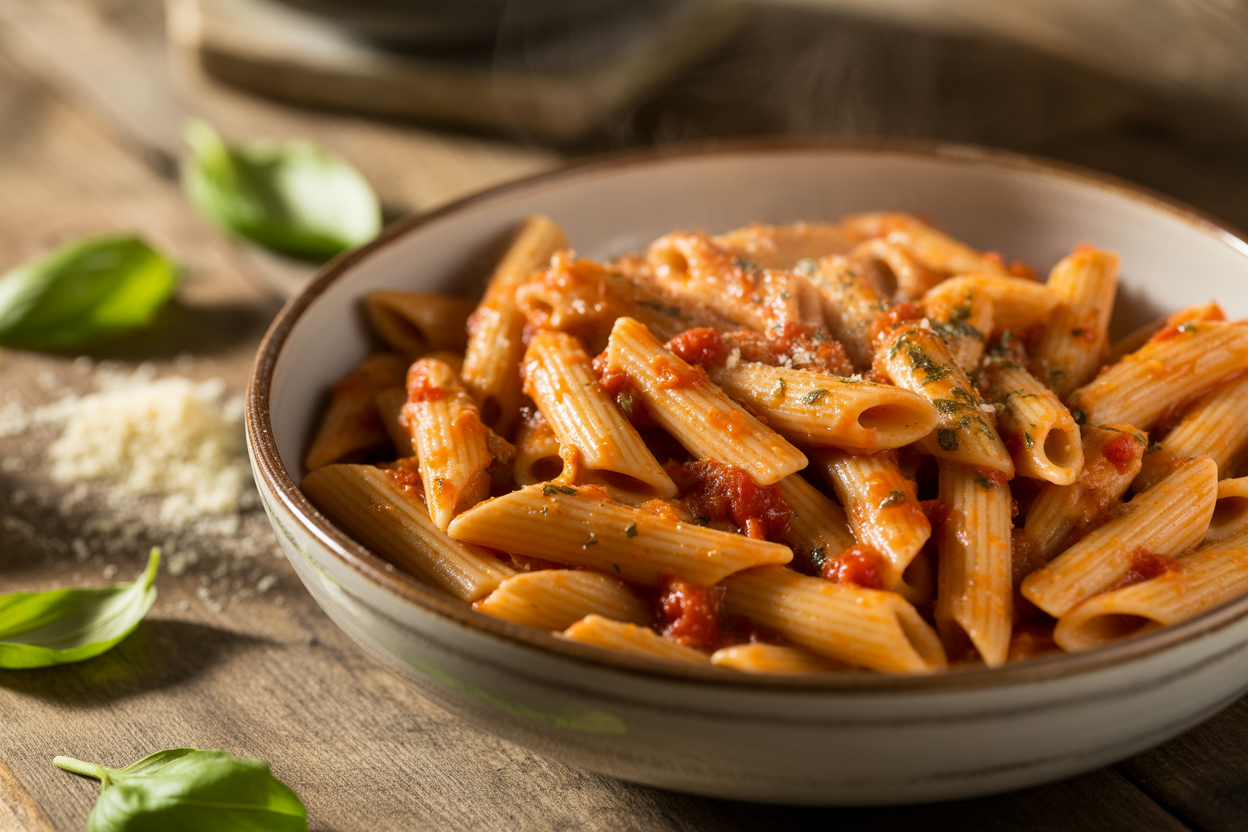
Traditionalists keep it minimal, and honestly, they have a point. But I won’t tattle if you riff a little.
- Classic finish: Parsley and a glug of nice olive oil. That’s it.
- Pecorino Romano: Not strictly “authentic,” but salty cheese on spicy pasta? Hard to argue.
- Breadcrumbs: Toasted in olive oil with garlic. Adds crunch if you’re skipping cheese.
- Protein pairing: Grilled shrimp or roasted chicken on the side, not in the pasta. Let the sauce stay the star.
- Wine: A bright Sangiovese or Montepulciano handles the heat and acidity like a champ.
Penne Arrabbiata Mistakes To Aviod: Fix It Fast
Because sauce meltdowns happen.
- Too acidic: Simmer longer to concentrate sweetness. Add a tiny pinch of sugar only if needed.
- Too thick: Loosen with hot pasta water and toss until glossy.
- Too mild: Bloom more chili in a spoon of oil, then stir it in.
- Sauce won’t cling: You overcooked the pasta or under-reduced the sauce. Toss longer with pasta water to emulsify.
FAQ About Penne Arrabbiata
Can I use fresh chili instead of dried?
Yes, but the flavor shifts. Dried chili gives classic arrabbiata’s clean, toasty heat. Fresh chili tastes greener and fruitier. If you use fresh, slice it thin and bloom it with the garlic in oil so the heat infuses the sauce.
Is onion allowed in arrabbiata?
Traditionally, no. Roman-style arrabbiata keeps it tight: garlic, chili, tomatoes. Onion sweetens the sauce and changes the vibe. If you love onion, go for it, but you’ve wandered into nonna-debated territory, FYI.
Do I need to peel fresh tomatoes?
If you want a silky sauce, yes. The skins get tough and float around like confetti you didn’t ask for. Quick blanch-and-peel solves it. Or use good canned tomatoes and call it a day—no shame.
Can I make it ahead?
Absolutely. The sauce keeps in the fridge for 3–4 days and freezes well for a month. Reheat gently, then cook fresh pasta and finish together with a splash of pasta water. Don’t pre-mix and store—you’ll lose that glossy emulsion.
What if I don’t have penne?
Use rigatoni, ziti, or even fusilli. You want ridges or tubes to trap sauce. Spaghetti works in a pinch, but it feels like arrabbiata cosplaying as amatriciana’s cousin. Still tasty, just different.
How spicy should it be?
Spicy enough to make you sip water, not question your life choices. Start with 1 teaspoon chili flakes and adjust to taste. Remember, the heat blooms more as the sauce reduces.
Conclusion On Penne Arrabbiata
Penne all’arrabbiata proves that simple hits hardest. A handful of honest ingredients, a little heat, and a fast simmer deliver a sauce with swagger. Keep the technique tight, taste as you go, and don’t fear the chili. Cook it once and, IMO, you’ll wonder why dinner ever needed to be complicated.
Related Recipe: Baked Ziti with Ricotta and Mozzarella That Tastes Like a Family Favorite